This page is archived and no longer updated — see the current guide: See the current guide
Pingtan Island平潭岛
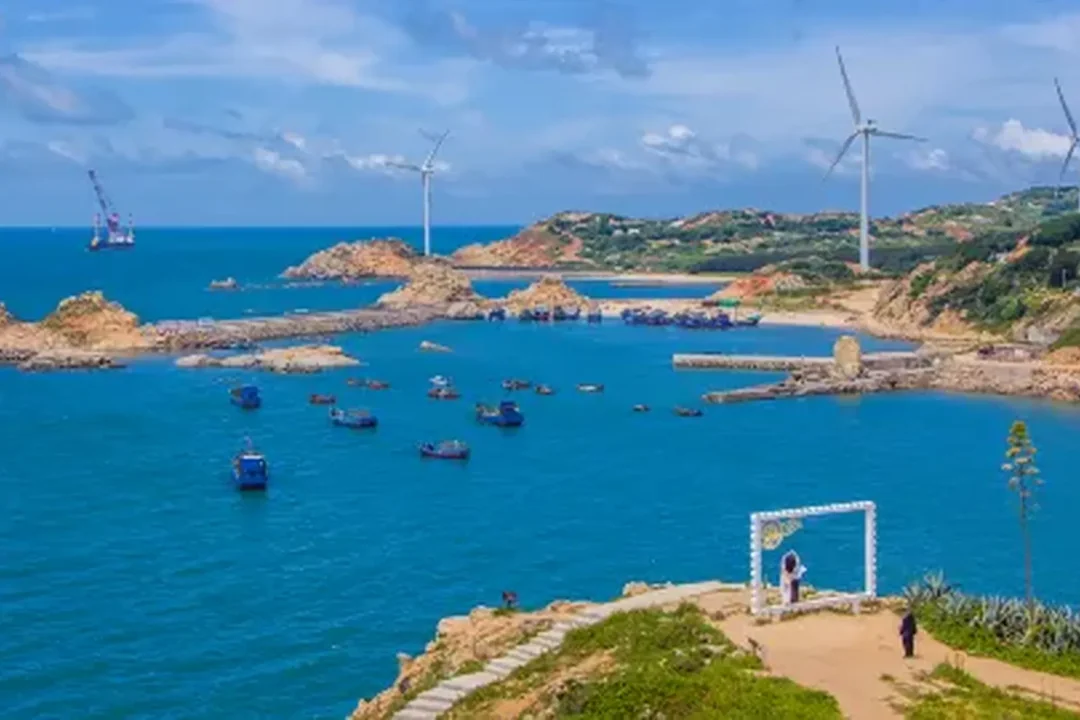
Pingtan Island, Fujian's largest, joined to the mainland by bridge since 2010: wind farms, east-coast beaches, haitan reefs and China's largest seaside Buddha.
Fuzhou · Visitor Guide2026-10-19
Quick Answer
Is Pingtan Island worth visiting?
Fujian's largest island, connected by bridge to the mainland. Sea breeze, windmills, beaches, and China's largest seaside Buddha. Free to drive onto; plan a full day or 2 with an overnight.
Quick facts
| Ticket | Free to drive onto the island (as of 2026). Beach entries: free. Changjiang Bay Buddha: ¥35. Wind farm viewing area: free. |
|---|---|
| Hours | Island is always open. Buddha statue and beach areas: accessible 24 hours. Wind farm visitor center: 9:00–17:00. |
| Recommended duration | Full day to weekend (best with overnight stay). |
| Best time to visit | April–October for beach season. July–August for the strongest sea breeze and best wind farm views. Autumn for clear skies. Avoid typhoon season (July–September). Spring for wildflowers on the coastal road. |
| How to get there | Drive or take a bus from Fuzhou South Bus Station (福州南站) to Pingtan (平潭), approximately 1.5 hours via the Pingtan Bridge (¥60–80). Alternatively, take Metro Line 1 to Fuzhou South Railway Station, then the bus. From Fuzhou city center, a DiDi costs ¥150–200 one way. |
| English signage | Partial |
| Wheelchair accessible | Partial |
| Island area | 372 km² (Fujian's largest island) |
| Wind turbines | 200+ turbines, among China's largest onshore wind farms |
| Buddha statue | 30-meter seated Buddha at Changjiang Bay — largest seaside Buddha in China |
| Connection | Pingtan Bridge to mainland (2010) |
| Beach length | 60+ km of sandy coastline |
What to expect
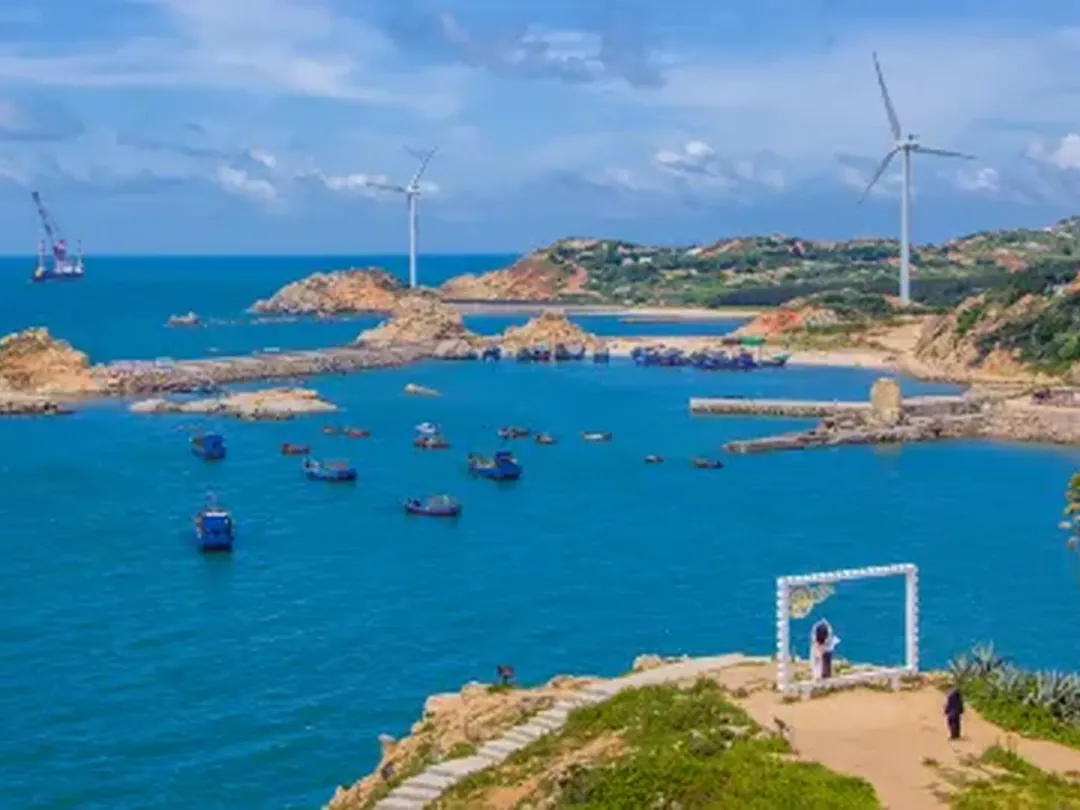
Pingtan is a large, windswept island off the Fuzhou coast, separated from the mainland by a stretch of the Taiwan Strait. Its geography — a relatively flat island exposed to consistent maritime winds — made it historically isolated and poor. That changed with the construction of the Pingtan Bridge in 2010, which connected Pingtan to the mainland and opened the island to weekend tourism from Fuzhou and beyond. The island's strong, consistent winds also made it ideal for wind farms, and rows of modern wind turbines now dot the island's interior and coastal ridges.
The island's eastern coast faces the open Taiwan Strait and has long been known to surfers for its consistent wind and waves — Pingtan has been developed as a wind-surfing and kitesurfing destination. The northern coast features dramatic haitan (reef) rock formations — wave-carved cliffs, sea stacks, and natural arches that are particularly impressive after storms. The most famous geological feature is the Longjiangxikeng (龙江湖坑), a massive sea cave that can be entered at low tide.
At Changjiang Bay (长江澳) on the northern coast stands the island's most famous sight: a 30-meter white Buddha statue seated on a lotus pedestal overlooking the sea. It is the largest seaside Buddha statue in China. The surrounding Changjiang Bay area is also home to one of Pingtan's main wind farms, with turbines standing against the coastal sky.
How to get there
The Pingtan Bridge connects the island directly to the mainland highway network. From Fuzhou South Bus Station, take a direct bus to Pingtan County (平潭县) — ¥60–80, 1.5 hours. Alternatively, drive from Fuzhou via the G15 Hangzhou–Shenzhen Expressway to the Pingtan exit. From Fuzhou city center by DiDi: ¥150–200, 1.5 hours. Within the island, a car or DiDi is necessary — public transport is infrequent.
Best photo spots
- The 30-meter Buddha at Changjiang Bay with wind turbines in the background — the classic Pingtan image
- The haitan reef formations on the northern coast at sunset — wave-carved cliffs in golden light
- The wind turbine rows on the eastern coastal road — minimalist landscape photography
- Longjiangxikeng sea cave at low tide — dramatic geological formation
Tips
- Rent a car or hire a DiDi for the day — the island is too large to explore by public transport
- Stay overnight at a beachside hotel in the south of the island near the coastal resorts
- Check the wind forecast before visiting — strong wind (15+ knots) means great wind farm views and kitesurfing but difficult beach conditions
- Bring sun protection — the island has little shade and the sea breeze can mask sunburn risk
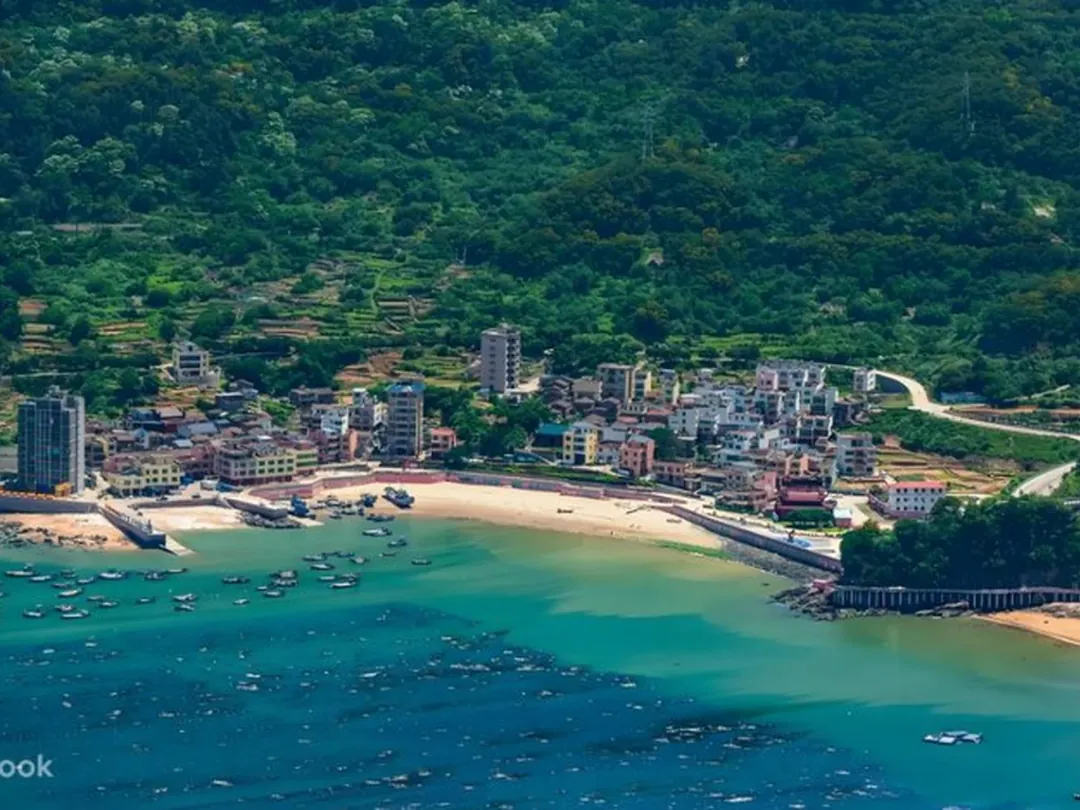
- Try the local seafood at one of the fishing villages on the west coast
Scams to avoid
- "Local guides" at the beach areas who offer to show hidden spots — these are usually unnecessary; the island is straightforward to navigate with a map
- Overpriced seafood at tourist-oriented restaurants near the beach — ask locals or Fuzhou residents for recommendations
Frequently asked questions
Is Pingtan Island worth visiting?
Yes, if you have a car or DiDi and enjoy coastal scenery. It is one of the most accessible and dramatic coastal areas near Fuzhou. The Buddha statue, wind farms, reef formations, and beaches are all distinctive. It is less developed for international tourists than other Chinese coastal destinations.
Do I need a car to visit Pingtan?
Yes, strongly recommended. The island is large and public transport is limited. The most practical options are renting a car in Fuzhou and driving, or hiring a DiDi for the day.
Is Pingtan accessible for wheelchair users?
Partially. The beaches and most outdoor areas are not accessible. The Buddha statue area has paved paths. The wind farm viewing areas are on roadsides. For a meaningful visit, you need a companion who can navigate uneven terrain.
When is the best time to visit Pingtan?
April–June for wildflowers and mild weather. July–August for wind sports and the most dramatic wind farm scenery (but also hottest). September–October for comfortable temperatures and beach season. Avoid typhoon season (July–September) and winter (December–February) when winds are too strong and the island is cold.
Read next
Other things to do in Fuzhou
Drum Mountain
Covering about 48 square kilometers on the east bank of the Min River, Drum Mountain rewards a half-day trip with the 783-meter peak, a 1,000-year-old Yongquan Temple, cliff carvings, and a cable car.
Gushan (Drum Mountain)
Forested mountain park east of Fuzhou with ancient temples, pavilions, and city views. Cable car to summit. Free to enter; ¥70 cable car.
Fuzhou West Lake
1,700-year-old imperial garden in the city center. Free. Lotus ponds, pavilions, and Fuzhou's best urban green space.
Min River (Minjiang River)
Fujian's largest river, flowing past Fuzhou's colonial riverfront. Night cruise shows city's illuminated skyline. ¥100+ for cruise.
Three Lanes and Seven Alleys
Fuzhou's 1100-year-old heritage district of Ming and Qing courtyard houses and scholar gardens; free to wander the lanes, historic-house tickets from 120 yuan, on Metro Line 1 at Dongjiekou.
Fujian Tulou — Nanjing Cluster
Clusters of rammed-earth round towers in tea-growing hills 130 km southwest of Xiamen — about 90 yuan gets you into Tianluokeng and Yunshuiyao for a long, slow day of stepping into courtyards.
Yongding Tulou Cluster
The Yongding cluster holds roughly 23,000 earthen roundhouses inside one Fujian county; budget 1 long day (about 10 hours door-to-door from Xiamen) for the three headline towers — Chengqi, Zhenc.
Museums in Fuzhou
Fujian Museum
Fujian's provincial museum in Fuzhou, strong in Min culture, overseas Chinese history, maritime heritage and the Jian-kiln Fujian blue ceramics. Free; verified in 2026.
Fuzhou Three Lanes and Seven Alleys Museum
The museum of Fuzhou's Three Lanes and Seven Alleys, China's best-preserved Song-dynasty alley network, some 1,600 years old. Free with district entry; verified in 2026.