This page is archived and no longer updated — see the current guide: See the current guide
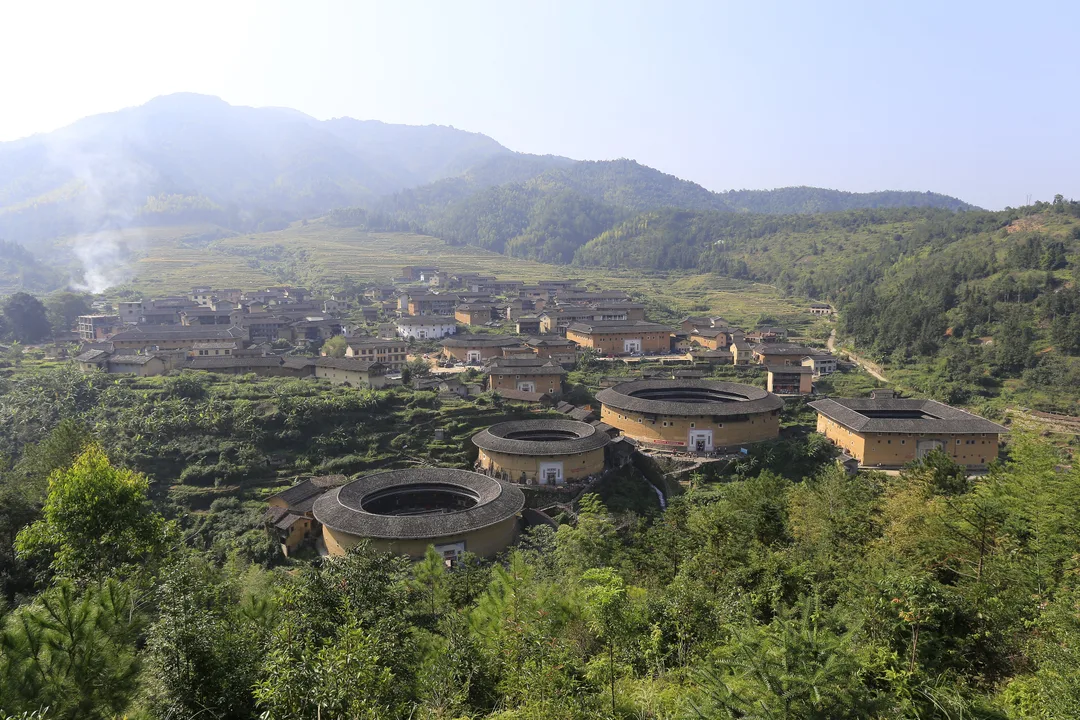
Yongding Tulou Cluster永定土楼
Yongding's Hakka tulou villages — Hongkeng (Zhencheng), Gaobei (Chengqi), Nanxi (Rusheng) — show round, square and palatial earth fortresses; UNESCO 2008.
Longyan · Visitor Guide2026-10-19
Quick Answer
Is Yongding Tulou Cluster worth visiting?
The Yongding cluster holds roughly 23,000 earthen roundhouses inside one Fujian county; budget 1 long day (about 10 hours door-to-door from Xiamen) for the three headline towers — Chengqi, Zhenc.
Quick facts
| Ticket | 90 CNY combined scenic-area ticket per person (as of 2026); individual towers sometimes charged 5 CNY–10 extra inside. Verify on the day. |
|---|---|
| Hours | 07:30–19:00 (last entry around 17:30, verify) — Yongding township officially does not sleep. |
| Recommended duration | Allow a full day (10–12 hours including Xiamen round-trip) or an overnight in Yongding town if you want sunrise shots of Chengqi. |
| Best time to visit | Late September to early November: rice harvest in the surrounding paddies turns golden and frames the towers; avoid the first week of October National Day holiday, when ticket queues can stretch 90 minutes. |
| How to get there | No metro. From Xiamen: take the Xiamen–Yongding Tulou express tourist bus from Jimei or Wucun bus stations (~3 hours, CNY 65–80 one-way). From Longyan railway station, a regular K-bus to Hukeng town takes about 90 minutes (CNY 25). From Hukeng to Hongkeng village, DiDi/taxi runs CNY 30–50. |
| English signage | Partial |
| Wheelchair accessible | No |
| UNESCO Inscription | 2008 (criterion iii/v), part of the Fujian Tulou serial site with Nanjing and Hua'an clusters |
| Earliest Tulou | Round variants in Yongding date to the Song dynasty (12th–13th c.); Chengqi Lou built 1709 (Qing, Kangxi era) |
| Ring Diameter | Chengqi Lou: 62.6 m outer, 4-storey, 400 rooms — largest of its kind in Fujian |
| Wall Thickness | Outer rammed-earth walls up to 2 m thick at the base |
| Hakka Inhabitants | About 1,200 residents still living inside Chengqi Lou as of 2024 (verify) |
| County Count | Yongding District holds roughly 23,000 earthen structures, 6,000 of them round |
What to expect
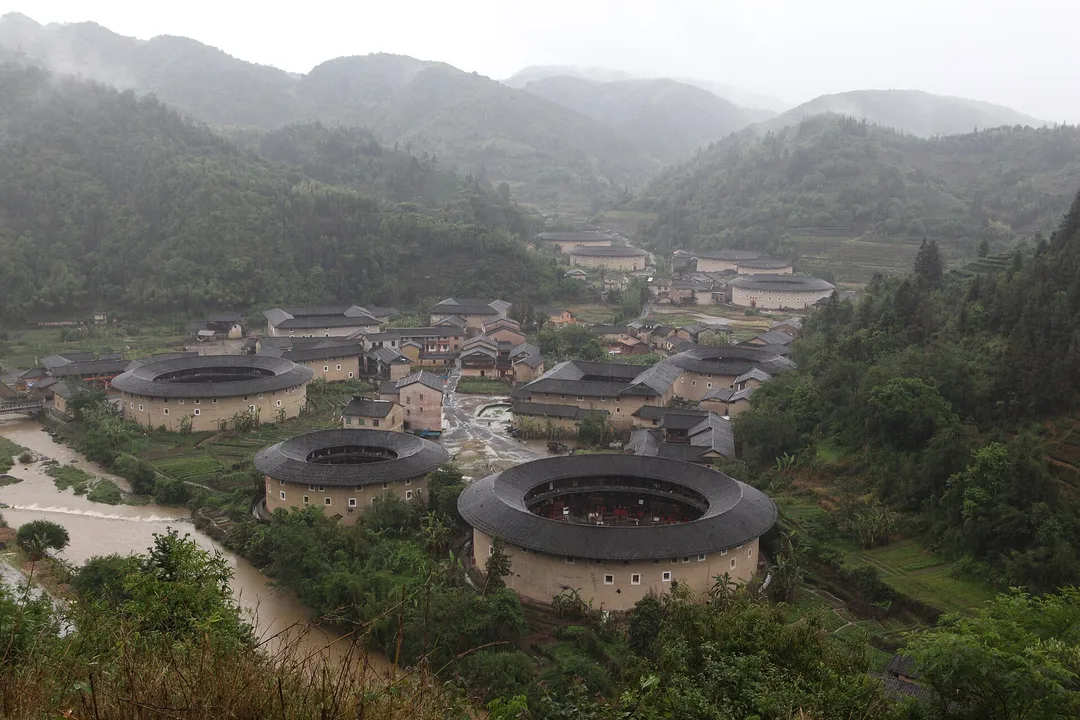
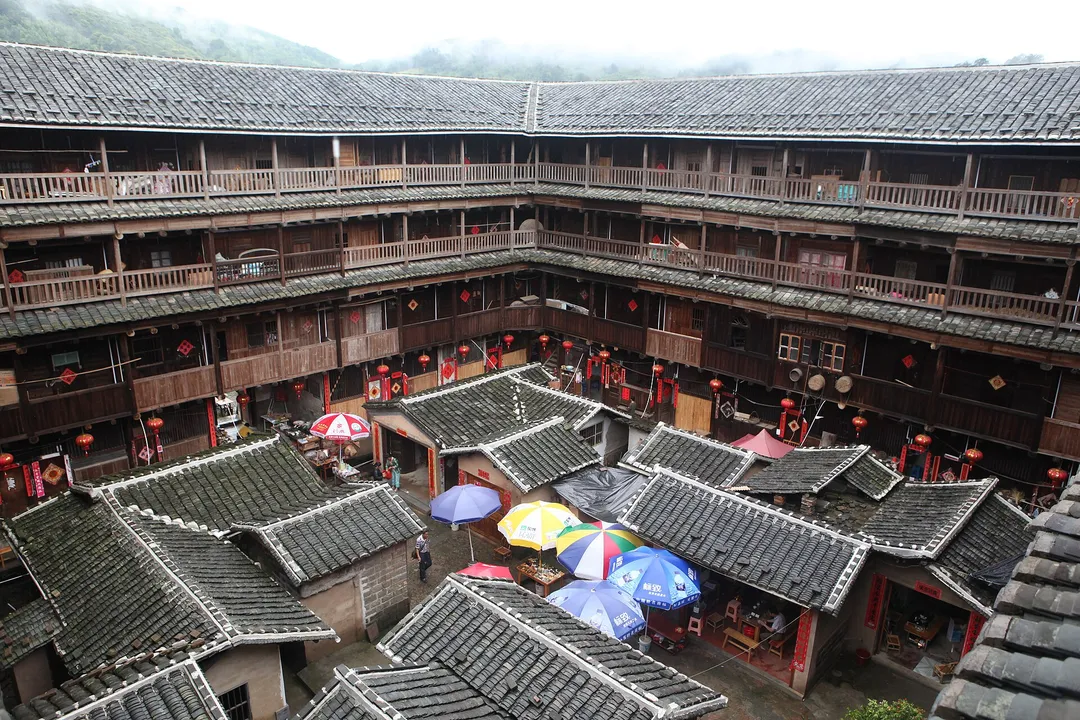
Expect three very different villages rather than a single open-air museum. Hongkeng (Zhencheng Lou, 1912) is the most 'stage-managed' and the easiest for first-timers, with a stream running under the front wall and a village of smaller tulou you walk between. Gaobei (Chengqi Lou) is the brute: 62.6 m across, four storeys, 400 rooms, plus an inner ring wall added later — a tulou-inside-a-tulou. Nanxi (Rusheng Lou, built 1961–1972) is the odd one, a five-ring concentric mini-city that took 11 years because of the Cultural Revolution. Allow at least 90 minutes inside Chengqi; it dwarfs anything you saw in photos.
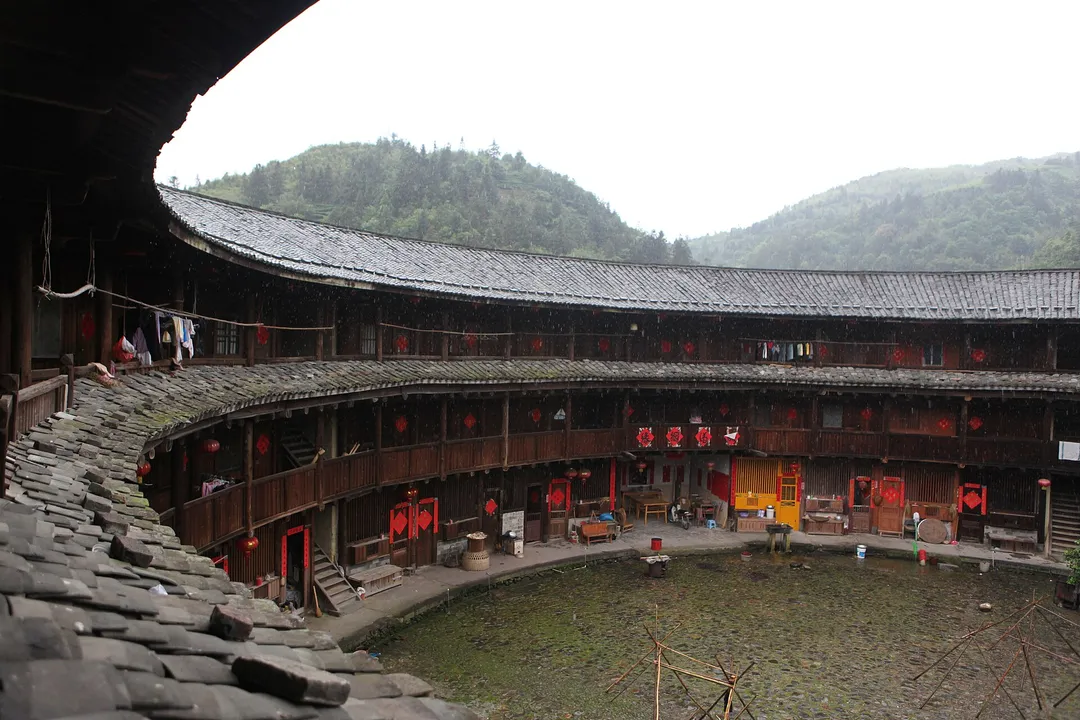
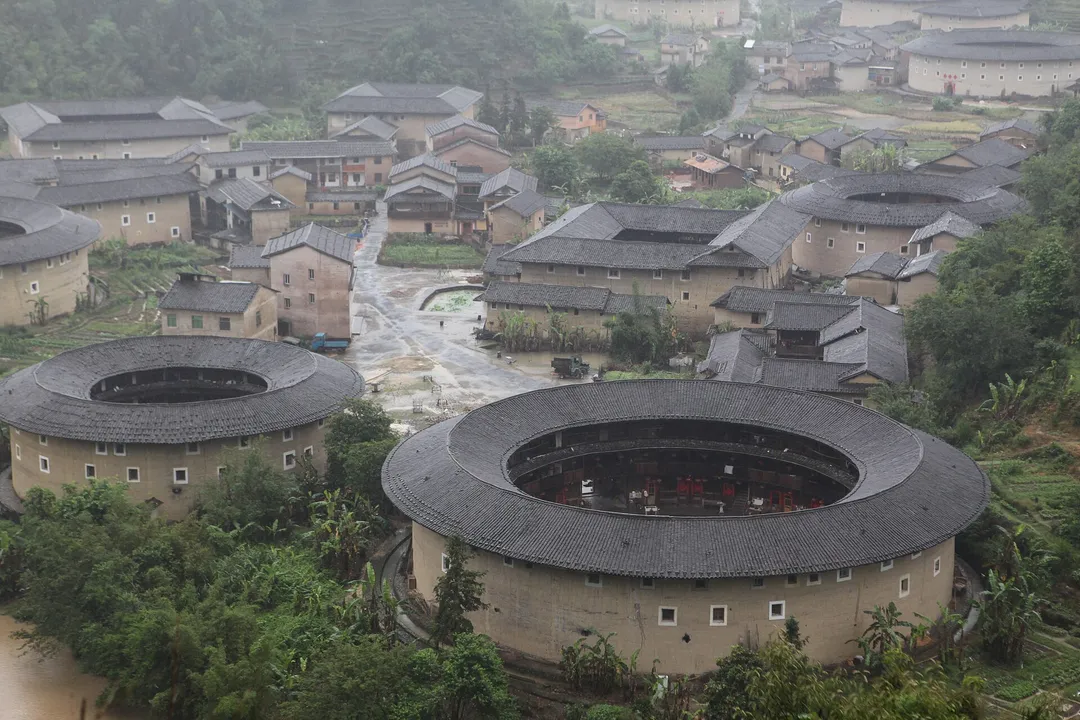
These are not period-piece houses — they are still inhabited. Grandmothers sell peanut brittle from the ground-floor corridor, third-generation families light incense at the central ancestral hall, and a few residents rent out upstairs rooms for CNY 50–100 per night. The Hakka built them as defensive clan compounds after migrating south from the Central Plains between the 4th and 13th centuries: rammed earth walls up to 2 m thick, single fortified entrance, communal well, and grain stores to outlast sieges. UNESCO recognised 46 buildings across Fujian in 2008, with 11 of them in Yongding.
Practical reality: roads are narrow and twisty, mobile signal drops in Hongkeng, and the 'Fujian Tulu' spelling on old guides is wrong (it's 土楼, tǔ lóu, 'earth building'). Most visitors come on a same-day coach tour from Xiamen — fine if you only want to tick the towers, miserable if you care about light. Stay overnight in Yongding town or, if you can book ahead, in Chengqi Lou itself for early-morning access before tourist coaches arrive. The combined ticket covers all three villages but local electric carts between them cost extra (CNY 10–15 per hop).
How to get there
From Xiamen: Tulou Express tourist coaches depart Jimei Bus Station (集美汽车站) and Wucun Bus Station (梧村汽车站) at roughly 07:00 and 08:30 daily — confirm times the night before as they shift seasonally. Fare CNY 65–80, journey 3 hours, drops you at the Hongkeng scenic-area gate. From Longyan Railway Station (high-speed, 2.5 hr from Xiamen North): bus 2 or a taxi to Longyan Bus Station, then K-bus to Hukeng Town (90 min, CNY 25). From Hukeng, DiDi or a red-top taxi to Hongkeng runs CNY 30–50 (15 min) — there is no fixed-route bus and drivers will try for CNY 80, so agree before boarding. From Hukeng to Chengqi (Gaobei village), another 20 km west, expect CNY 80–100 by DiDi or CNY 15 per seat on a shared minivan from the Hukeng roundabout. No metro, no ride-share apps that consistently match; cash for the Hukeng→Gaobei hop is the safer bet.
Best photo spots
- Hongkeng village bridge facing Zhencheng Lou at low morning light — the stream mirrors the front façade.
- Chengqi Lou interior courtyard at midday, standing at the well-head looking up across all four timber-ringed storeys.
- Gaobei overlook (small paved platform 200 m east of Chengqi) for the classic 'ringed fortress from above' angle.
- Rusheng Lou ring-bridge, looking down the five concentric circles from the inner ring's upper floor — best with a 24–35 mm lens.
Tips
- Buy the combined CNY 90 ticket rather than per-village tickets — same price on the gate, less paperwork.
- Stay overnight in Chengqi Lou itself if you can arrange it through a Yongding travel agent; sunrise from the 4th-floor corridor with zero tourists is the reason people do this trip twice.
- Bring cash (CNY 200–300 in small notes). Card readers are unreliable in Hongkeng and Nanxi, and the local peanut brittle and Hakka rice wine stalls prefer notes.
- Skip the first three days of the National Day holiday (Oct 1–3) and Spring Festival week — Chengqi's 4-storey ring holds about 400 rooms but only two staircases, and gridlock is real.
- Eat the stuffed tofu (酿豆腐) and salt-baked chicken in Hukeng town on the way back; the village food inside Hongkeng is aimed at tour buses and priced accordingly.
Scams to avoid
- Generic tout warning: at Xiamen Jimei Bus Station, anyone in a reflective vest waving a 'Tulou tour' placard before you reach the official counter is selling an overpriced day tour (CNY 280–350) that you can replicate independently for under CNY 150 in transport and entry.
- Some drivers at Hukeng roundabout will quote CNY 200 for the Hukeng→Gaobei hop (legitimate DiDi fare is CNY 80–100) — agree on the meter or a fixed price before getting in.
- A few Hongkeng homes advertise 'antique Hakka silver' at the village entrance — it is mostly modern zinc alloy from Jinjiang; the genuine 19th-century pieces live in the Zhencheng Lou ancestral hall upstairs.
Frequently asked questions
How much does the Yongding Tulou ticket cost in 2026?
The combined scenic-area ticket is CNY 90 per person (as of 2026). A few individual towers charge an extra CNY 5–10. Verify on the day at the Hongkeng gate.
When was Fujian Tulou added to the UNESCO World Heritage list?
July 2008, under cultural criteria (iii) and (v), as a serial site of 46 buildings across Yongding, Nanjing, and Hua'an.
How do I get from Xiamen to Yongding Tulou without a tour?
Tulou Express coaches leave Xiamen's Jimei and Wucun bus stations at around 07:00 and 08:30, take about 3 hours and cost CNY 65–80 one way. No direct train or metro.
Can you stay overnight inside a tulou?
Yes — a handful of Chengqi Lou residents rent out upstairs rooms for CNY 50–100 per night. Book through a Yongding travel agency or via Ctrip at least one week ahead.
How big is Chengqi Lou?
62.6 m outer diameter, 4 storeys, 400 rooms, and a wall roughly 2 m thick at the base. It is the largest single-ring tulou in Fujian.
Is Yongding Tulou wheelchair accessible?
No. Staircases inside the towers are narrow (often under 1 m wide) and there is no elevator in any of the three main villages.
How many tulou are in Yongding county?
About 23,000 earthen structures in total, of which roughly 6,000 are round — the densest tulou concentration on earth.
What is the best time of year to visit?
Late September to early November, when the rice harvest turns the surrounding paddies golden. Avoid October 1–3 (National Day) and Spring Festival week.
Do people still live in Chengqi Lou?
Yes — about 1,200 Hakka residents lived there as of 2024 (verify on the day), mostly elderly. Most upper floors remain in active family use.
Is English signage available?
Partial. The Hongkeng and Chengqi scenic gates have English summary boards, but inside the towers almost everything is Chinese. A translation app helps.
Read next
Other things to do in Longyan
Drum Mountain
Covering about 48 square kilometers on the east bank of the Min River, Drum Mountain rewards a half-day trip with the 783-meter peak, a 1,000-year-old Yongquan Temple, cliff carvings, and a cable car.
Pingtan Island
Fujian's largest island, connected by bridge to the mainland. Sea breeze, windmills, beaches, and China's largest seaside Buddha. Free to drive onto; plan a full day or 2 with an overnight.
Gushan (Drum Mountain)
Forested mountain park east of Fuzhou with ancient temples, pavilions, and city views. Cable car to summit. Free to enter; ¥70 cable car.
Fuzhou West Lake
1,700-year-old imperial garden in the city center. Free. Lotus ponds, pavilions, and Fuzhou's best urban green space.
Min River (Minjiang River)
Fujian's largest river, flowing past Fuzhou's colonial riverfront. Night cruise shows city's illuminated skyline. ¥100+ for cruise.
Three Lanes and Seven Alleys
Fuzhou's 1100-year-old heritage district of Ming and Qing courtyard houses and scholar gardens; free to wander the lanes, historic-house tickets from 120 yuan, on Metro Line 1 at Dongjiekou.
Fujian Tulou — Nanjing Cluster
Clusters of rammed-earth round towers in tea-growing hills 130 km southwest of Xiamen — about 90 yuan gets you into Tianluokeng and Yunshuiyao for a long, slow day of stepping into courtyards.
Museums in Longyan
Fujian Museum
Fujian's provincial museum in Fuzhou, strong in Min culture, overseas Chinese history, maritime heritage and the Jian-kiln Fujian blue ceramics. Free; verified in 2026.
Fuzhou Three Lanes and Seven Alleys Museum
The museum of Fuzhou's Three Lanes and Seven Alleys, China's best-preserved Song-dynasty alley network, some 1,600 years old. Free with district entry; verified in 2026.