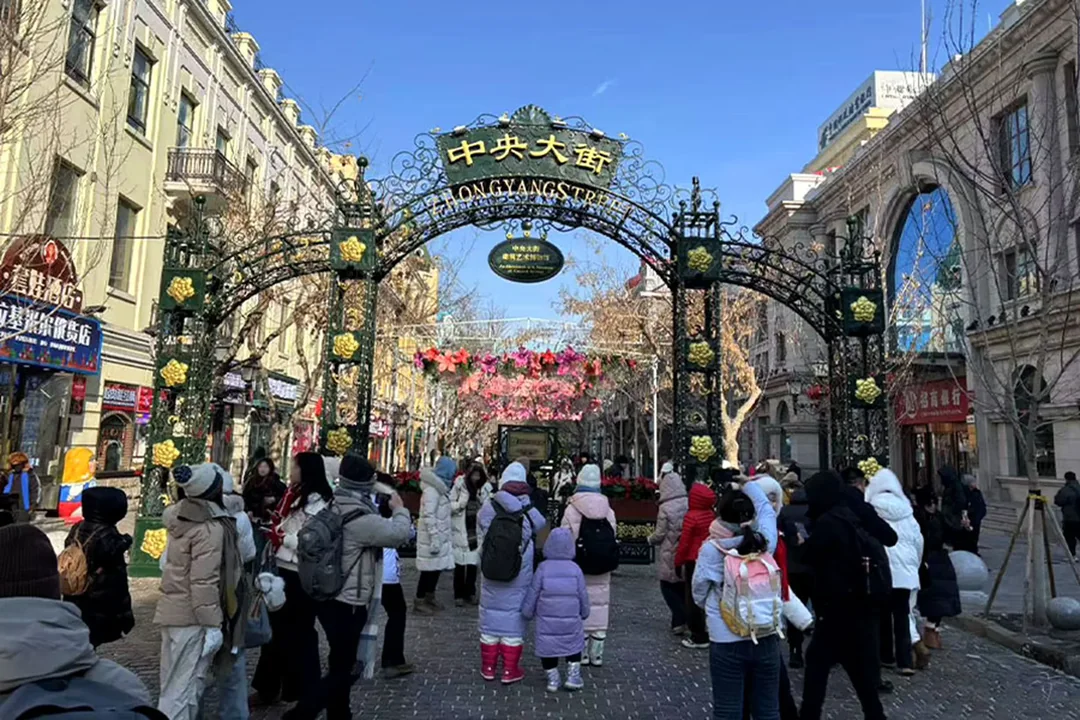
Central Street中央大街
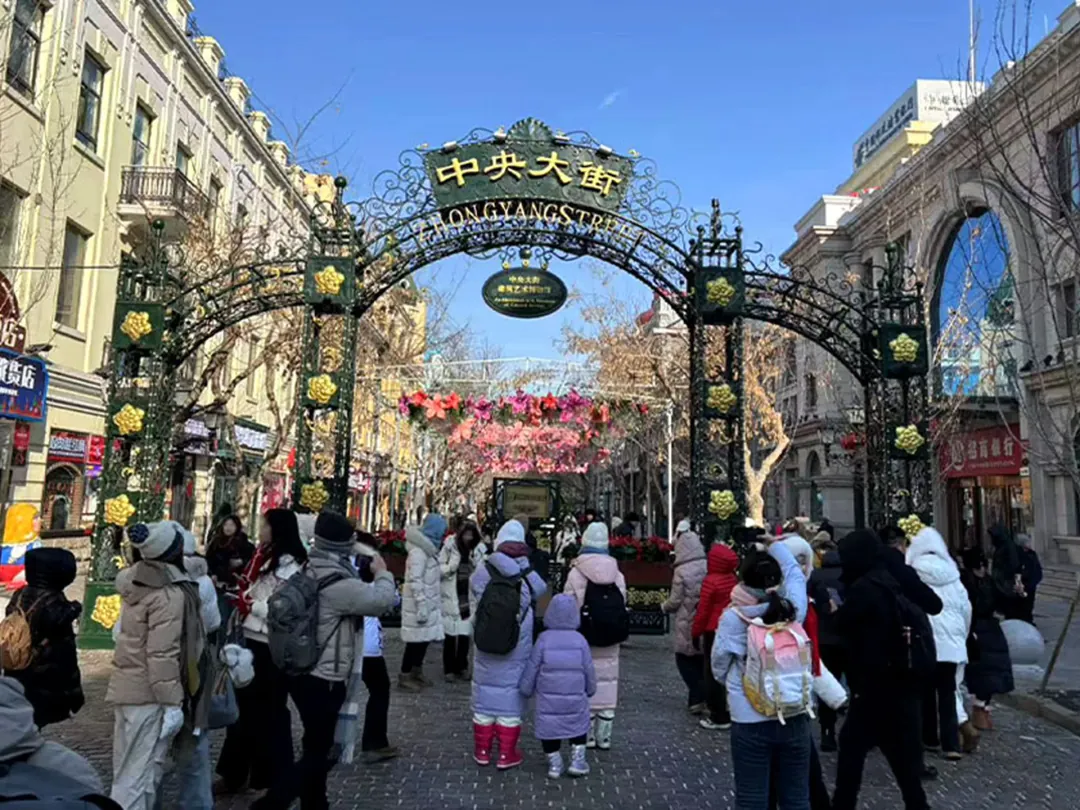
A 1,450-m pedestrian street laid in 1898 and lined with 71 protected buildings in Renaissance, Baroque and eclectic styles — Harbin's Russian-flavored heart.
Harbin · Visitor Guide2026-10-18
Quick Answer
Is Central Street worth visiting?
Century-old Russian-style pedestrian street in Harbin, 1450 m long, built in 1898 with 71 historic buildings; free to stroll, shops 10:00-22:00, best in winter for ice sculptures.
Quick facts
| Ticket | Free to stroll; Modernel ice cream about 10 yuan a stick |
|---|---|
| Hours | Open around the clock; shops 10:00-22:00 |
| Recommended duration | 1.5-3 hours |
| Best time to visit | December to February (Ice and Snow Festival); June to August for cool summers |
| How to get there | Metro Line 1 to Central Street station; buses 2, 12, 16, 64, 85 or 94 to Zhongyang Dajie |
| English signage | Partial |
| Wheelchair accessible | Partial |
| Historic buildings | 71 total, 15 nationally protected |
| Paving | Bread-stone granite blocks |
| Length | 1,450 m |
| Main styles | Renaissance, Baroque, Eclectic |
| Founded | 1898 |
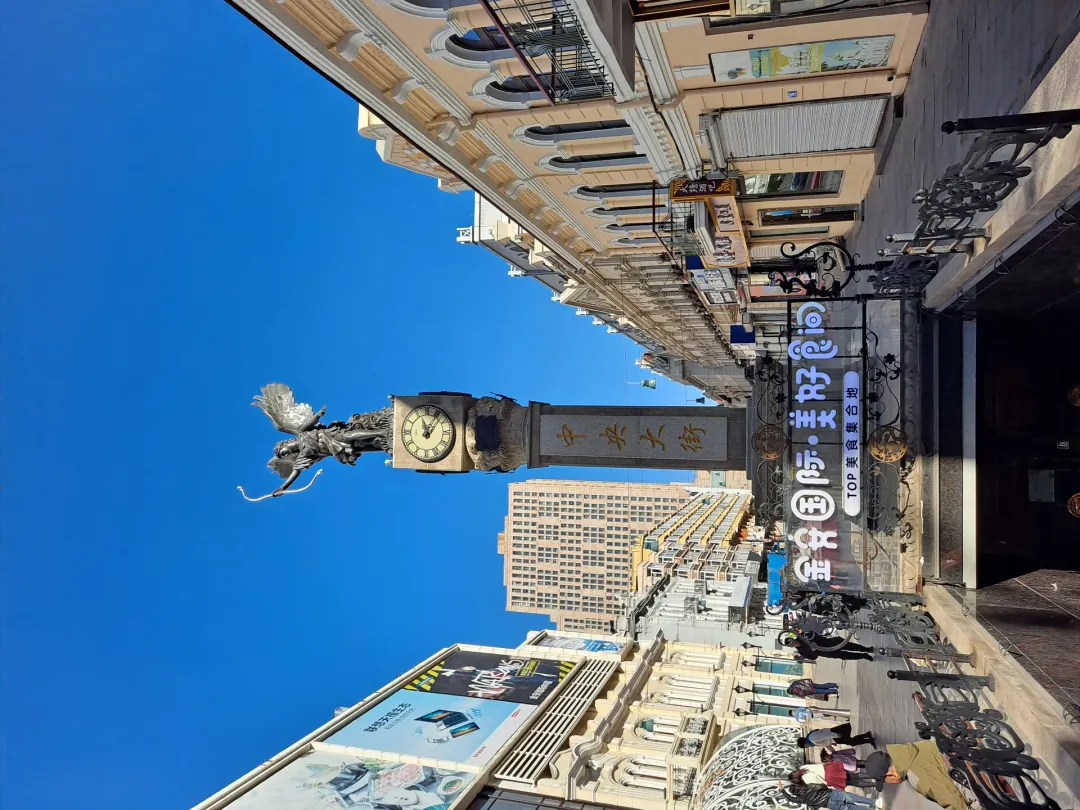
| Nearby landmarks | Saint Sophia Cathedral, Flood Control Memorial Tower |
What to expect
Central Street compresses Harbin's story into 1,450 m: a fishing village that grew into an international trading city within a few decades. Its well-kept buildings span Russian, Gothic and Byzantine styles, making it the most European-flavored century-old shopping street in Northeast China.
The street is paved with granite blocks 18 cm long, 10 cm wide and 12 cm deep, known locally as "bread stones". Legend says they were quarried by the Songhua River and cost one silver dollar each — a hundred times the price of an ordinary brick at the time. Walking them, you feel the history underfoot.
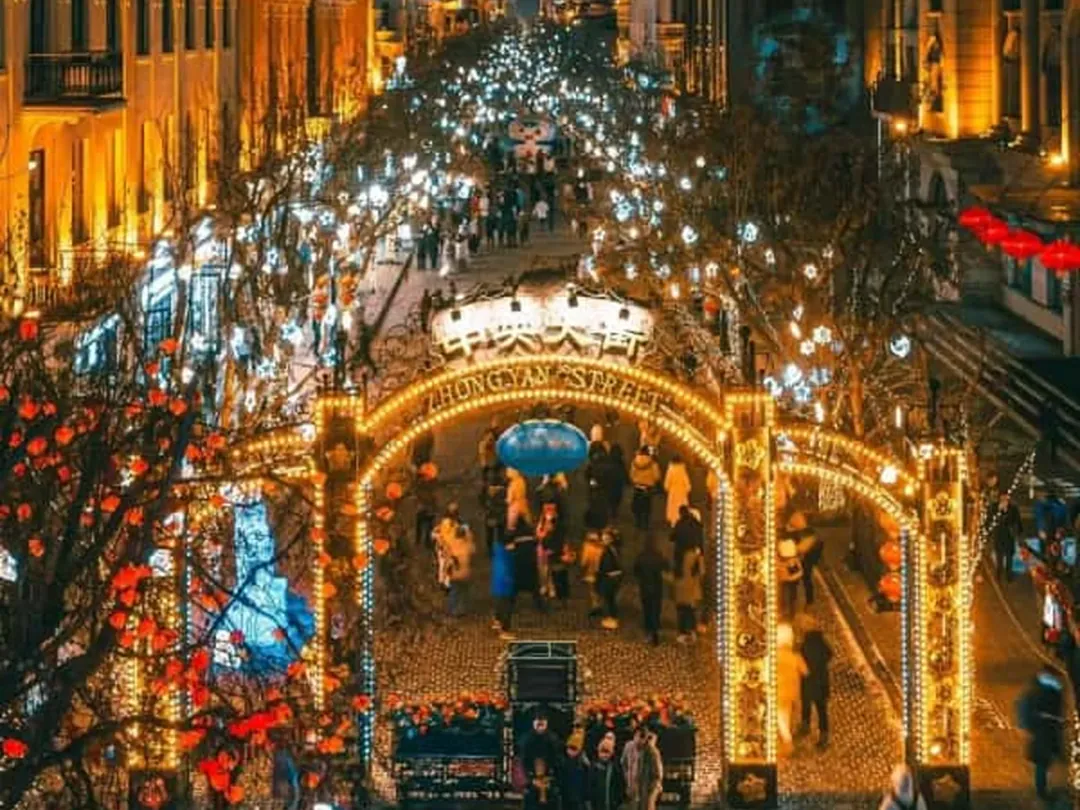
Shopfronts line both sides, from century-old brands to modern chains. Modernel ice cream, the Huamei Russian restaurant and Qiulin Company all predate the street's boom. Neon fills the street at night, and in winter ice and snow sculptures add a distinctly northern character.
How to get there
Take Metro Line 1 to Central Street station, Exit 2, then about 3 minutes on foot. Buses stop at the junction of Zhongyang Dajie and West Qidao Street. Drivers can park in the Jin'an International underground lot nearby.
Best photo spots
- The junction with Xier Street (classic angle)
- Outside the Modernel ice cream shop
- Street scenes under the evening neon
- Winter snow scenes and ice sculptures
Tips
- Dress in serious layers in winter — temperatures reach -30°C
- Try an authentic Modernel ice cream; even in winter there is a queue
- Huamei's Russian cuisine is worth a meal; book ahead
- For red sausage and Russian-style bread (lieba), head to Qiulin Company
Scams to avoid
- Some street stalls inflate prices, especially for hot drinks and snacks in winter — ask first
- Fake Russian goods are common; buy amber or other valuables only from proper shops with receipts
Frequently asked questions
Does Central Street need a ticket?
No — it is a free public pedestrian street; you only pay for shops and restaurants.
How far is Central Street from Saint Sophia Cathedral?
Very close — about 8 minutes on foot.
Does the pavement get icy in winter?
Snow and ice are the norm; wear grippy shoes and take it slowly.
Can I take photos on the street?
Freely — the buildings and street scenes are very photogenic.
Read next
Other things to do in Harbin
Harbin International Ice and Snow Festival
The world's largest ice and snow art festival — open from January 5 to late February, best over 2-4 days, drawing tens of millions of visitors.
Harbin Polar Park
China's first polar aquarium, opened in 2005; adults CNY 160. The original beluga show, Ocean Love, runs about 15-20 minutes and is genuinely moving. Allow 2-3 hours.
Harbin Ice and Snow World
The world's largest ice-and-snow theme park in Harbin, founded in 1999 using 120,000+ cubic metres of ice each winter; tickets 298-499 yuan, open 11:00-22:00, mid-December to mid-February.
Saint Sophia Cathedral
Harbin's largest Orthodox church, completed in 1907 with a dome 53.35 m high; entry 20 yuan, students 10 yuan, open 8:30-17:00, a 5-minute walk from Shangzhi Dajie metro station.
Songhua River
The Songhua River, Harbin's mother waterway, runs 1927 km with about 70 km through the city; free riverside, boat rides 60-120 yuan, ice over 1 m thick in winter.
Harbin Railway Station
A living relic of the Chinese Eastern Railway, built in 1899 in Art Nouveau style — about 70,000 sq m, 8 platforms, 14 tracks and some 100,000 daily passengers. Free and open around the clock.
Museums in Harbin
Heilongjiang Provincial Museum
Northeast China's northernmost provincial museum — documenting the Amur river frontier, Manchu culture, and the Russian border trade. Free with passport; 1.5–2.5 hours.
Songhua River Museum
The museum of the Songhua River (松花江) — the Amur River's main Chinese tributary and Harbin's defining waterway. Allow 1 hour.