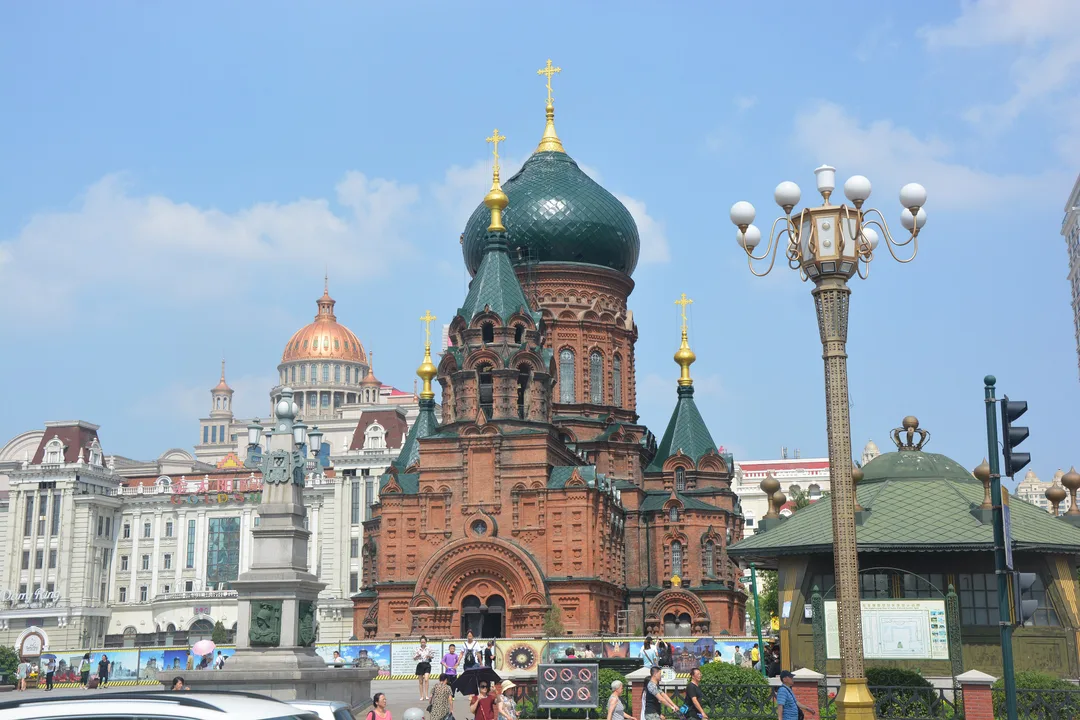
Saint Sophia Cathedral圣索菲亚教堂
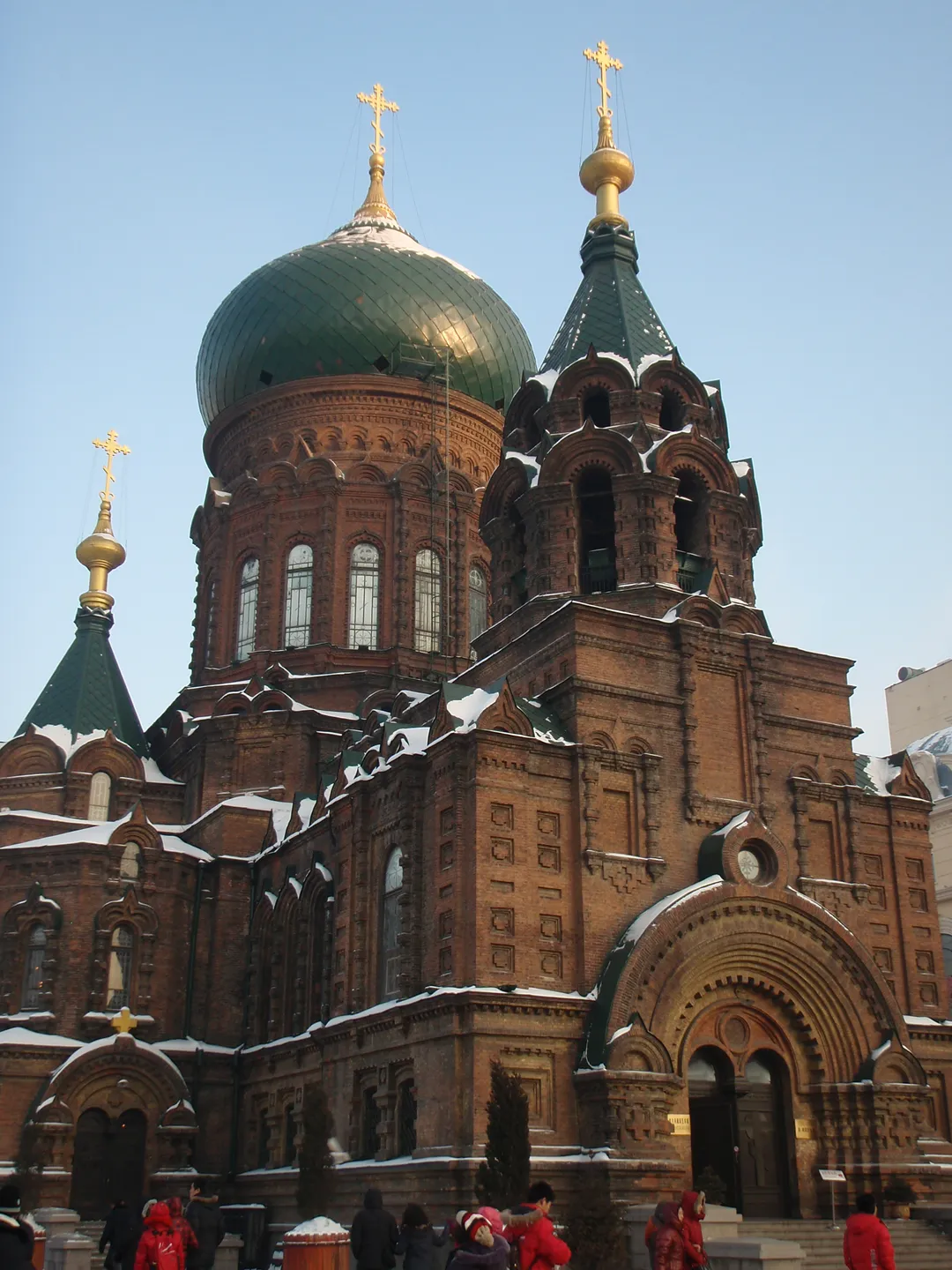
A Byzantine-style Orthodox church first raised in 1907 with a 53.35-m onion dome, now the Harbin Architecture Art Museum and a defining city landmark.
Harbin · Visitor Guide2026-10-18
Quick Answer
Is Saint Sophia Cathedral worth visiting?
Harbin's largest Orthodox church, completed in 1907 with a dome 53.35 m high; entry 20 yuan, students 10 yuan, open 8:30-17:00, a 5-minute walk from Shangzhi Dajie metro station.
Quick facts
| Ticket | Adults 20 yuan; students 10 yuan; free for seniors over 70 |
|---|---|
| Hours | 8:30-17:00 (until 18:00 in summer) |
| Recommended duration | 1-1.5 hours |
| Best time to visit | Any time of year; November to March for snow scenes |
| How to get there | Metro Line 2 to Shangzhi Dajie station; buses 1, 5, 20, 61, 85 or 113 to Sophia Cathedral stop |
| English signage | Yes |
| Wheelchair accessible | Partial |
| Height | Main dome 53.35 m |
| Floor area | 721 sqm |
| Style | Byzantine Orthodox |
| Built | 1907 |
| Structure | Brick and stone |
| Today | Harbin Architecture Art Museum |
What to expect
Saint Sophia Cathedral is one of Harbin's — and Northeast China's — best-known landmarks. The onion dome is quintessentially Russian, and a golden cross gleams above it. The complex gathers the chapel, the bell tower and annexes in a strict, symmetrical layout that conveys the gravity of Byzantine building.
The interior once housed the Saint Sophia icon; it is no longer used for worship and now operates as the Harbin Architecture Art Museum, with photographs and models tracing the city's building history. The square in front is a favorite with locals and one of the most popular photo stops in town.
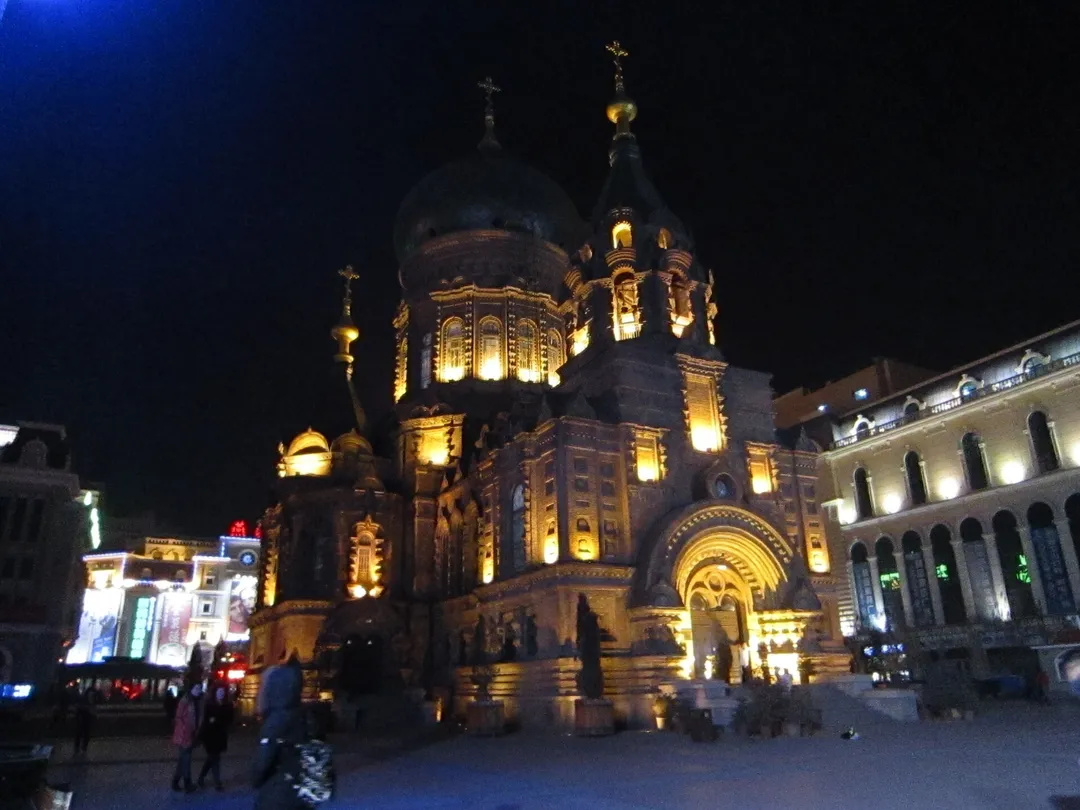
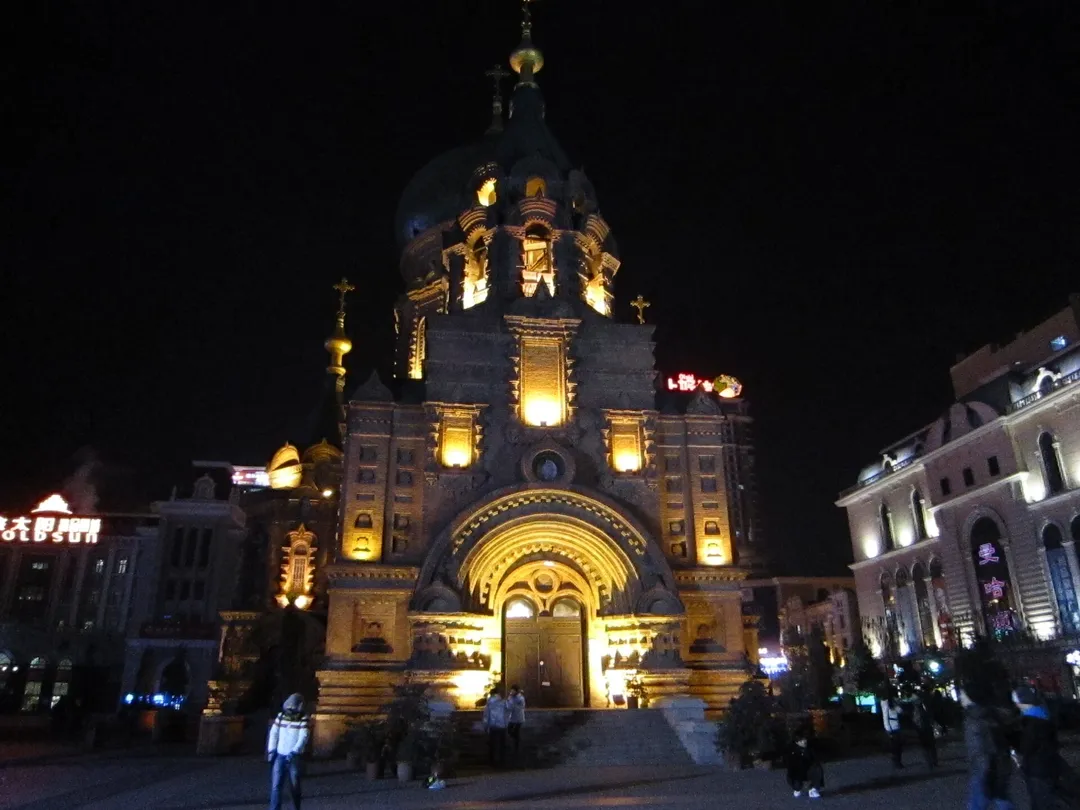
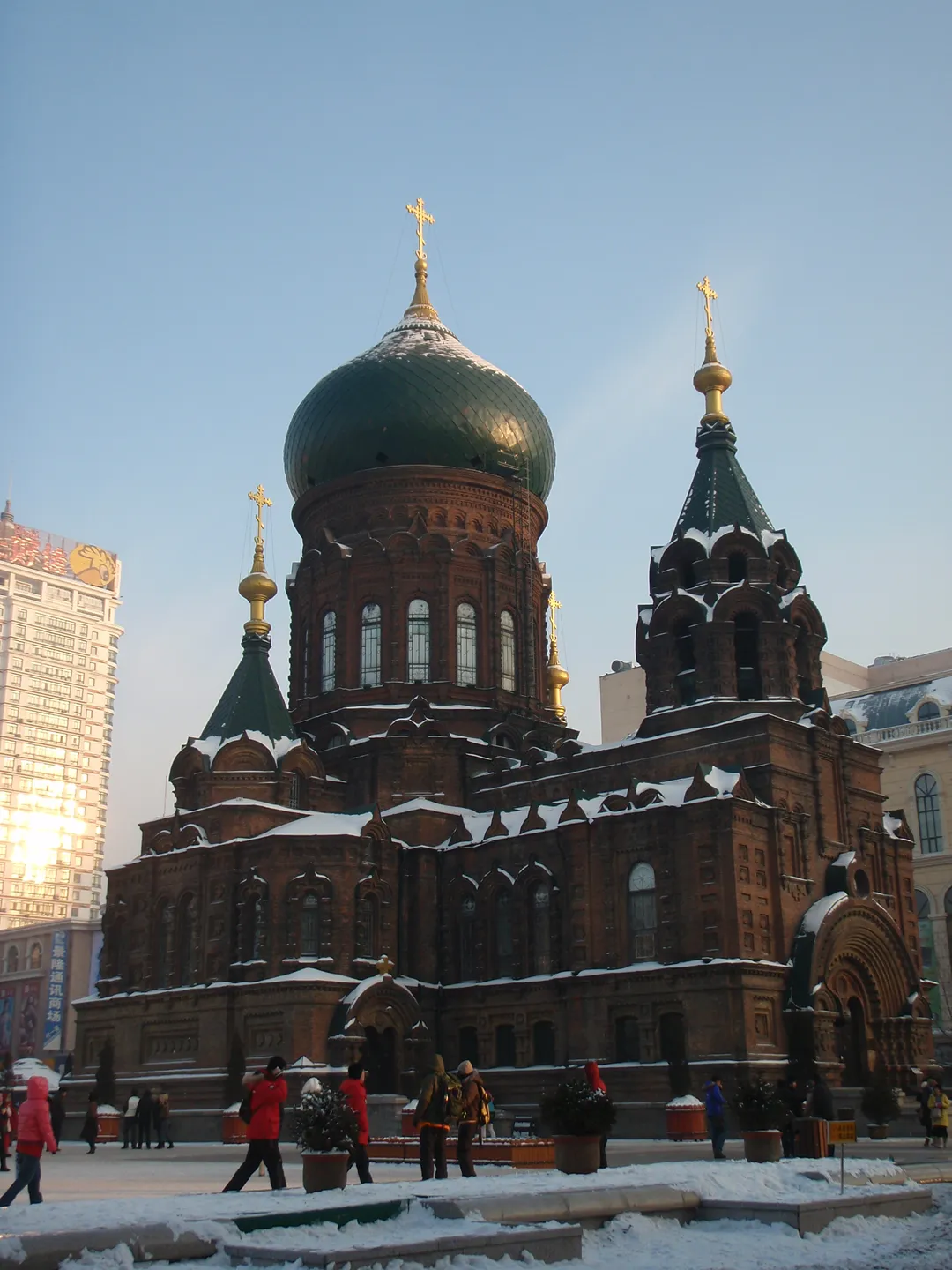
In winter, snow drapes the church and sharpens its exotic air; at night the floodlit outline stands out against the dark. Together with adjacent Central Street it forms the core of Harbin's sightseeing district.
How to get there
Take Metro Line 2 to Shangzhi Dajie, Exit G, then a 5-minute walk. Buses to the Sophia Cathedral stop set you down right by it.
Best photo spots
- The square in front (full front view)
- The church's side and bell tower
- The dome under night floodlights
- Snow scenes in winter
Tips
- You can go inside; allow about an hour
- Parking is hard nearby — come by public transport
- Early morning or dusk gives the best light for the full facade
- Pigeons fill the square; buy bird feed for interactive photos
Scams to avoid
- No notable scam risk — this is a properly run sight
Frequently asked questions
Is Saint Sophia Cathedral still a church?
No — it is now the Harbin Architecture Art Museum and no longer hosts religious services.
Can I enter the interior?
Yes, it is open as a museum with exhibits on Harbin's architectural history.
Does photography cost extra?
No, photography is included in the ticket.
Read next
Other things to do in Harbin
Central Street
Century-old Russian-style pedestrian street in Harbin, 1450 m long, built in 1898 with 71 historic buildings; free to stroll, shops 10:00-22:00, best in winter for ice sculptures.
Harbin International Ice and Snow Festival
The world's largest ice and snow art festival — open from January 5 to late February, best over 2-4 days, drawing tens of millions of visitors.
Harbin Polar Park
China's first polar aquarium, opened in 2005; adults CNY 160. The original beluga show, Ocean Love, runs about 15-20 minutes and is genuinely moving. Allow 2-3 hours.
Harbin Ice and Snow World
The world's largest ice-and-snow theme park in Harbin, founded in 1999 using 120,000+ cubic metres of ice each winter; tickets 298-499 yuan, open 11:00-22:00, mid-December to mid-February.
Songhua River
The Songhua River, Harbin's mother waterway, runs 1927 km with about 70 km through the city; free riverside, boat rides 60-120 yuan, ice over 1 m thick in winter.
Harbin Railway Station
A living relic of the Chinese Eastern Railway, built in 1899 in Art Nouveau style — about 70,000 sq m, 8 platforms, 14 tracks and some 100,000 daily passengers. Free and open around the clock.
Museums in Harbin
Heilongjiang Provincial Museum
Northeast China's northernmost provincial museum — documenting the Amur river frontier, Manchu culture, and the Russian border trade. Free with passport; 1.5–2.5 hours.
Songhua River Museum
The museum of the Songhua River (松花江) — the Amur River's main Chinese tributary and Harbin's defining waterway. Allow 1 hour.