Three Gorges Dam三峡大坝
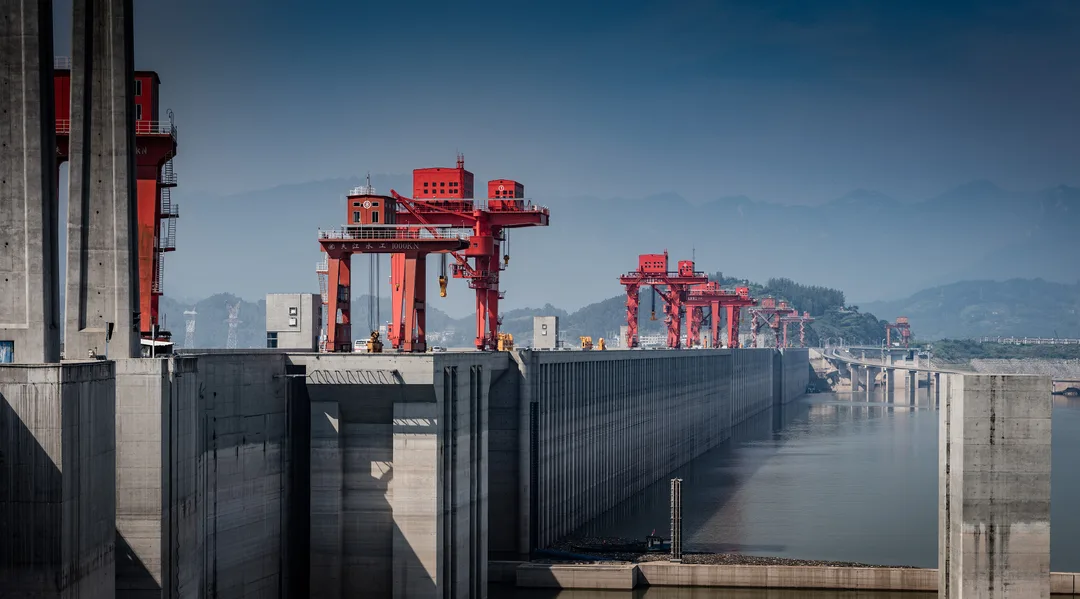
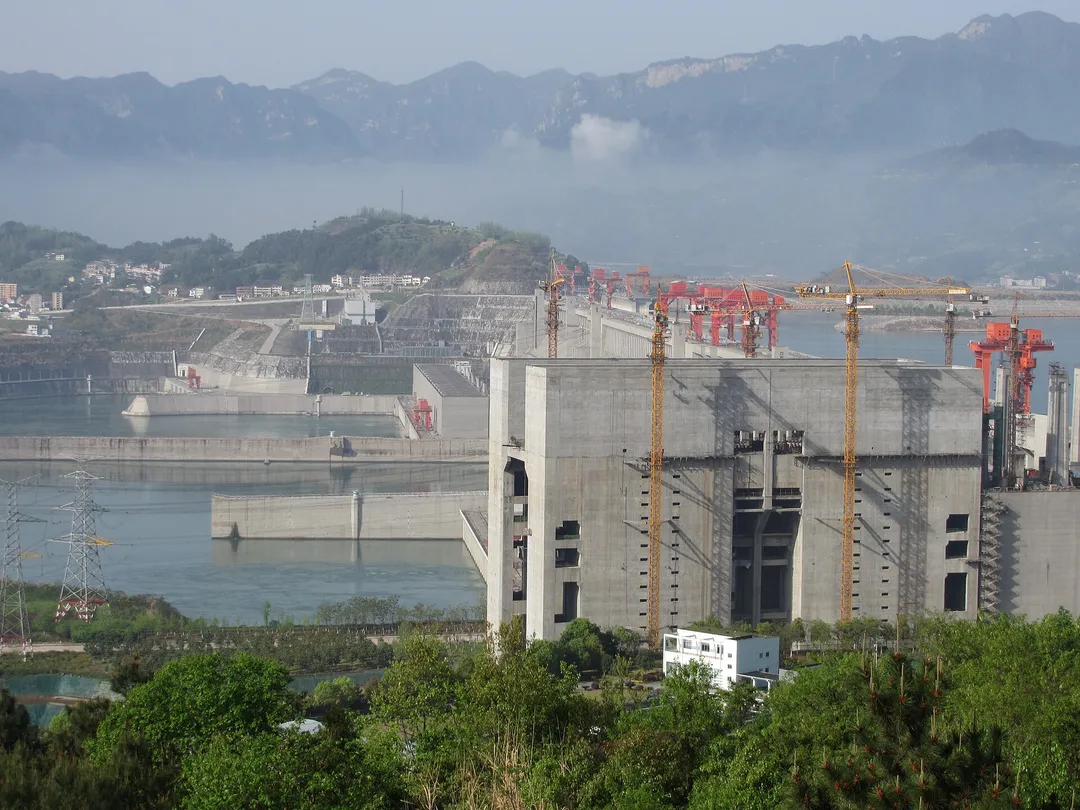
The Three Gorges Dam (三峡大坝) spans the Yangtze River at Sandouping, 40 km upstream of Yichang, and is the largest hydroelectric project in human history. Completed in 2012 after 18 years of construction, the dam is 2,335 meters long, 181 meters high, and its 32 turbine generators produce 22,500 megawatts — roughly 10 times the output of the Hoover Dam. The reservoir behind it stretches 660 km upstream to Chongqing. The project displaced 1.3 million people and submerged 13 cities, 140 towns, and 1,350 villages. Visiting it is part engineering pilgrimage, part cautionary tale — the scale is incomprehensible until you stand on the Tanziling observation deck and realize the concrete wall in front of you contains enough material to build 63 Eiffel Towers.
Yichang · Visitor Guide2026-10-27
Quick Answer
Is Three Gorges Dam worth visiting?
The world's largest hydroelectric dam — 2,335 m across, 181 m tall, generating 22,500 MW. A feat of engineering and controversy. ¥105. 3–4 hours from Yichang.
Quick facts
| Ticket | ¥105 (as of June 2026). Includes the dam exhibition hall, Tanziling observation deck, and the 185 Platform. The ship lift (boat elevator) costs extra: ¥280. All visitors must register with ID/passport and board the official tourist bus from the visitor center. |
|---|---|
| Hours | 8:00–17:00. Last entry 15:00. The visitor center closes at 16:30. |
| Recommended duration | 3–4 hours for the standard tour loop (exhibition hall, Tanziling, 185 Platform). Add 2 hours if doing the ship lift. |
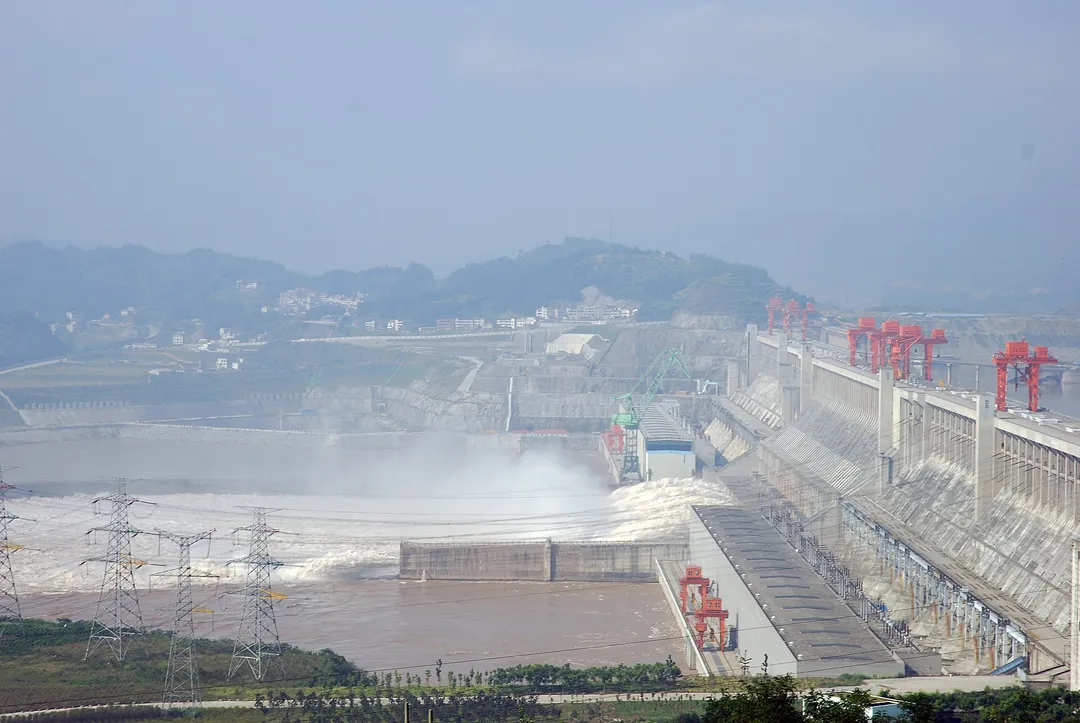
| Best time to visit | April–May and September–October for comfortable weather. Summer (Jun–Aug) is peak flood season — the dam discharges water through its spillways, which is dramatic to see. Mornings for clearer skies. Avoid winter (Dec–Feb, fog and cold, some facilities close). |
| How to get there | From Yichang East Railway Station (宜昌东站): take the special Three Gorges Dam tourist bus (2 hours, ¥60). From Yichang city center: bus or DiDi to the Three Gorges Tourist Center (三峡游客中心), then dedicated tourist bus to the dam (1.5 hours). There is a HSR from Wuhan to Yichang East: 2 hours, ¥120–180. |
| English signage | Yes |
| Wheelchair accessible | Partial |
| Length | 2,335 m (7,661 ft) |
| Height | 181 m (594 ft) |
| Capacity | 22,500 MW (Hoover Dam: ~2,000 MW) |
| Construction | 1994–2012 (18 years) |
| Reservoir length | 660 km (410 miles) to Chongqing |
What to expect
Visiting the dam is a controlled experience — independent access is not allowed. All visitors must register at the official Three Gorges Tourist Center in Yichang, board a dedicated bus, and follow a fixed three-stop loop: the exhibition hall (models, history, engineering diagrams), Tanziling observation deck (the panoramic view of the dam wall from above), and the 185 Platform (at 185 meters elevation — the same height as the dam crest — for a frontal view). You cannot walk on the dam itself or enter the power station (post-COVID security restrictions remain in place as of 2026).
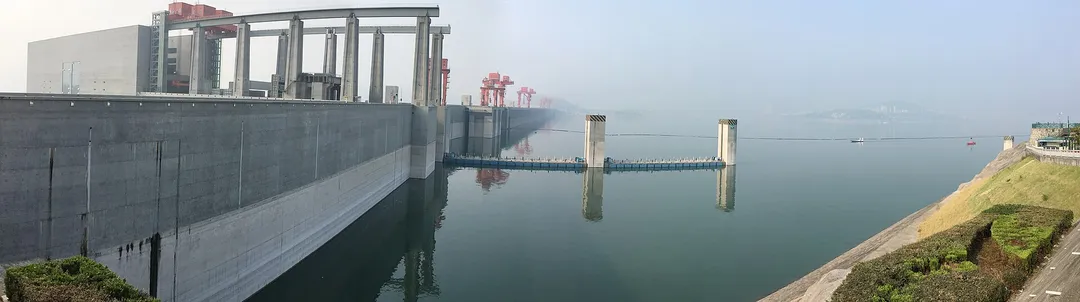
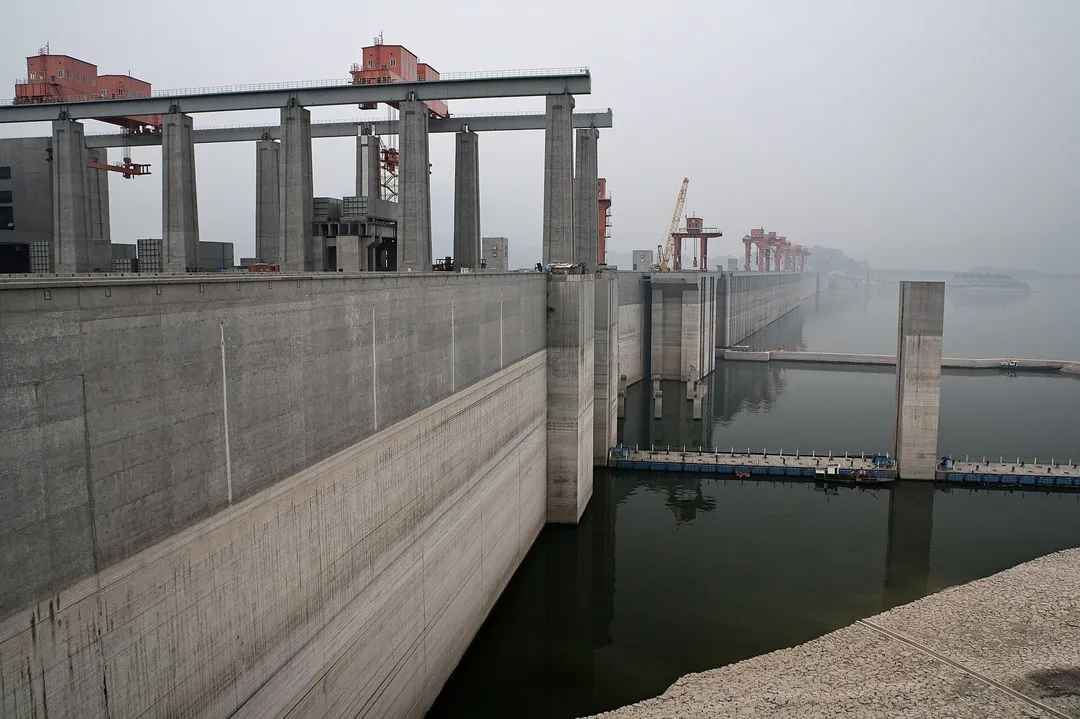
The Tanziling observation deck provides the money view: the full 2,335-meter span stretching across the Yangtze, the ship locks on the left (five stages, like a staircase for boats), and the reservoir stretching to the horizon. The scale is genuinely difficult to process — the ship locks alone take a vessel 3–4 hours to transit. The exhibition hall is surprisingly frank about the displacement of 1.3 million people, with before-and-after photos of submerged towns. It is less a propaganda exercise than I expected; the engineering achievements and the human costs are presented side by side, and you are left to make sense of the contradiction.
How to get there
From Yichang: go to the Three Gorges Tourist Center (三峡游客中心) near Yiling Square in downtown Yichang. Register with your passport, buy the ¥105 ticket, and board the dedicated tourist bus. The bus departs every 30 minutes from 8:00 AM. Total trip: 1.5 hours each way + 3–4 hours on site = plan for 6–7 hours round-trip from Yichang. From Wuhan: HSR to Yichang East (2 hours, ¥120–180), then follow the above. A day trip from Wuhan is theoretically possible but exhausting — start at 6:00 AM, return by 22:00.
Best photo spots
- Tanziling observation deck — the full dam wall, ship locks, and reservoir in one panoramic frame
- 185 Platform — at dam-crest height, the most dramatic angle showing the dam's vertical mass
- Ship locks from the visitor center — zoom lens to capture vessels in the five-stage staircase
- Exhibition hall model — the 1:1000 scale model of the entire Three Gorges project for scale comprehension
Tips
- Bring your passport — foreign visitors must register with passport number; no passport, no entry, no exceptions
- The site is a military-security area — do not fly drones; they will be confiscated
- Summer discharge season (June–August) is the most dramatic time to visit — water blasting from the spillways at the 185 Platform is worth the heat
- The ship lift (¥280) is a boat elevator that lifts vessels 113 meters in 40 minutes — a unique experience but expensive and time-consuming
- The on-site food is terrible and expensive — pack lunch from Yichang or eat before departing
Scams to avoid
- Yichang taxi drivers offering "VIP dam tour, skip the queue" — there is no VIP access; the tourist bus system is mandatory for all visitors
- "Three Gorges Dam closed today" scams — touts near Yichang East Station claiming the dam is closed and selling alternative Yangtze cruises at inflated prices
Frequently asked questions
Can I visit the Three Gorges Dam independently?
No — independent access has been restricted since the mid-2010s for national security reasons. All visitors must register at the official Three Gorges Tourist Center in Yichang, show ID, and board the designated tourist buses. You cannot drive yourself, walk onto the dam, or arrange a private tour that bypasses this system. The tourist bus loop is well-organized and the restrictions are absolute.
Is the Three Gorges Dam worth the trip from Wuhan?
For engineering enthusiasts and people who want to see the largest construction project in human history: yes, as an overnight trip. Day trip from Wuhan: only if you are determined and leave at 6:00 AM. For casual tourists: the Yellow Crane Tower + East Lake + Hubei Museum in Wuhan is a better use of limited time. The dam is impressive but visiting it consumes an entire day and involves a lot of bus time.
Can I take a Yangtze River cruise through the dam?
Yes — Yangtze cruise ships (Chongqing to Yichang, 3–4 nights downstream, 4–5 nights upstream) pass through either the five-stage ship locks (3–4 hours transit) or the ship lift for smaller vessels (40 minutes, 113 m lift). The cruise experience of the dam is significantly better than the land-based tour — you experience the scale of the locks from the water, which is the dam's intended perspective. Cruises cost ¥2,000–8,000+ depending on ship class and season.
How much water does the dam hold back?
The reservoir holds 39.3 cubic kilometers of water — enough to cover the entire country of Switzerland in 1 meter of water. The weight of the reservoir (39.3 trillion kg) is so massive that NASA scientists calculated it slightly altered the Earth's rotation and shifted the North Pole by about 2 centimeters. The dam's 32 turbines generate electricity for an estimated 60–100 million people, primarily in eastern and central China.
Is the area around the dam scenic?
The Three Gorges (Qutang Gorge, Wu Gorge, Xiling Gorge) are among the most famous natural landscapes in China — steep limestone cliffs rising from the Yangtze through misty valleys. The dam raised the water level by up to 113 meters, which tamed the rapids and widened the river, reducing the dramatic verticality of the gorges. They remain beautiful but are less vertiginous than before 2003. The scenery is best appreciated from a multi-day cruise, not from the dam tourist loop.
What is the best way to get to Yichang?
HSR from Wuhan (2 hours, ¥120–180), from Chongqing (2.5 hours, ¥160–220), or from Changsha (3 hours, ¥200–260). Yichang also has an airport (YIH) with flights from Beijing (2.5 hours), Shanghai (2 hours), Guangzhou (2 hours), and Chengdu (1.5 hours). Yichang is well-connected and the HSR station (Yichang East, 宜昌东站) is the gateway for dam visitors.
Why is the dam controversial?
Environmental: altered the Yangtze's ecosystem, contributed to the functional extinction of the Yangtze river dolphin (baiji), and changed sediment flow affecting the Yangtze Delta. Social: displaced 1.3 million people. Geological: the added water weight may increase seismic activity in the region. Archaeological: submerged 1,300+ known archaeological sites. These are documented in the dam's own exhibition hall and have been extensively studied. The dam's defenders point to flood control (the 1998 Yangtze floods killed 3,600+ people) and renewable energy generation (replacing an estimated 50 million tons of coal annually).
Read next
Other things to do in Yichang
Hubu Alley
Wuhan's legendary breakfast lane by the Yangtze: re gan mian (hot dry noodles), crispy doupi, soup dumplings and rice wine in a 150-meter alley — the definitive taste of the city's walk-and-eat guo...
East Lake (Donghu)
Wuhan's massive urban lake — 33 km of shoreline, lotus fields, cycling paths, and the futuristic Hubei Museum nearby. ¥60 for scenic areas. Half-day to full day.
Yellow Crane Tower
Wuhan's famous pagoda — rebuilt in 1985 on the site of a 1,800-year-old tower immortalized by China's most famous farewell poem. Yangtze River views from the top. ¥80. 1.5–2 hours.
Yellow Crane Tower Park
Wuhan's symbol on Snake Hill: the fifth-generation Yellow Crane Tower overlooking the Yangtze and the 1957 bridge, with the poem of Cui Hao carved inside.
Museums in Yichang
Hubei Provincial Museum
Home of the 2,400-year-old bronze bells of Marquis Yi of Zeng — still playable after two millennia. The finest tomb assemblage from China's Warring States period. Free. Daily bell performances.
Wuhan Museum
Central China's major museum at the Yangtze-Han river confluence in Wuhan, covering ancient Chu culture, the 1911 Xinhai Revolution and the Three Towns history.
Hubei Provincial Museum
Home to the 2,400-year-old Bianzhong of Marquis Yi of Zeng (65 bronze bells weighing 2,500 kg), this free national museum needs 3 hours to do it justice.