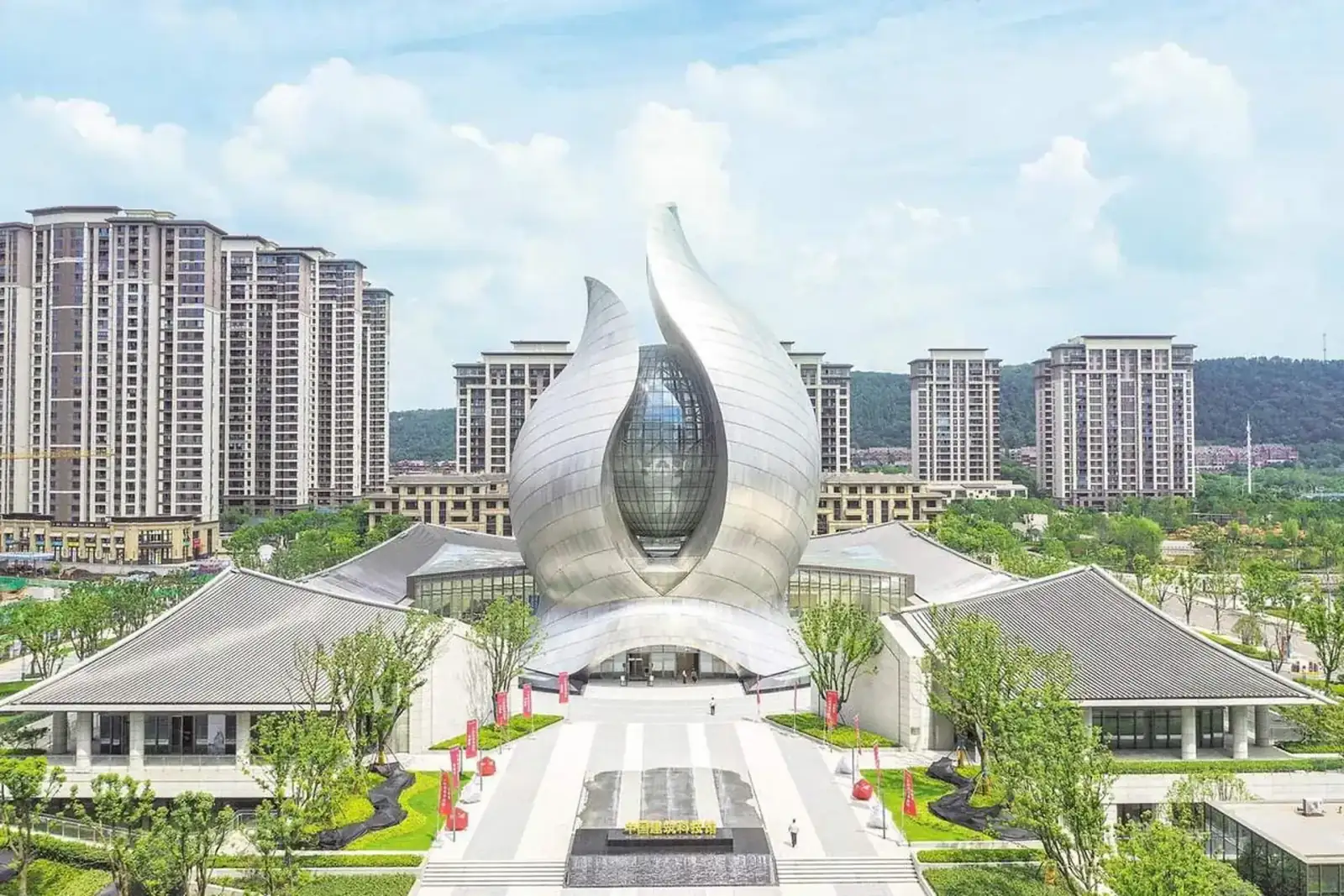
Wuhan Museum
The Wuhan Museum (武汉博物馆) opened in 2001 in the Jianghan District of Wuhan, at the confluence of the Yangtze and Han Rivers. Wuhan is the capital of Hubei province and China's largest inland city — formed by the merger of three towns (Wuchang, Hankou, and Hanyang) at the river confluence. The museum documents: (1) the ancient Chu (楚) culture of the Yangtze River basin — the distinctive Bronze Age civilization that predated the Central China traditions; (2) the Xinhai Revolution history — Wuhan was the center of the 1911 Wuchang Uprising that began the Xinhai Revolution ending imperial China; (3) Wuhan's modern urban development from treaty port to industrial metropolis.
Wuhan · history museum2026-10-18
Quick Answer
Is Wuhan Museum worth visiting?
Central China's major museum at the Yangtze-Han river confluence in Wuhan, covering ancient Chu culture, the 1911 Xinhai Revolution and the Three Towns history.
Quick facts
| Category | history |
|---|---|
| Ticket | Free. Passport required. Walk-in from the south gate. |
| Hours | 9:00-17:00 (last entry 16:00). Closed Mondays. |
| Recommended duration | 1.5-2.5 hours. |
| Best time to visit | March through May and September through November. Wuhan is extremely hot and humid in summer (June-August, 35-38°C) and cold in winter (December-February, 0-10°C). Spring and autumn are ideal. |
| How to get there | Metro Line 2 to Jianghan Road Station (江汉路站), Exit A, then walk 5 minutes. Metro Line 1 or 2 to Renmin Road Station (人民路站). Bus routes 9, 68, 502, 503, 523, 527, 563 to Wuhan Museum stop. |
| English signage | Partial |
Why visit
The ancient Chu culture section is the most internationally significant — the Chu civilization of the Yangtze River basin was as sophisticated as the Yellow River civilizations and produced distinctive bronze, lacquer, and silk traditions. The Xinhai Revolution section documents the beginning of modern Chinese history.
Collection highlights
- Chu Dynasty bronze ritual vessels — the distinctive Chu bronze tradition showing the sophisticated bronze-casting technology of the Yangtze River civilization
- Chu lacquerware collection — the earliest Chinese lacquerware objects, showing the distinctive Chu tradition of painted lacquer on wood
- Xinhai Revolution (1911) documentation — objects and photographs from the Wuchang Uprising that began the revolution ending 2,000 years of imperial rule
- "Three Towns" Wuhan urban history — models and photographs documenting Wuhan's development from three separate towns to China's largest inland city
- Ancient silk fragments — silk textiles from the Chu period showing Yangtze River textile production
- Hankou treaty port period objects — documents and photographs from Wuhan's period as a 19th-century treaty port
Tips
- Combine with the nearby "Yellow Crane Tower" (黄鹤楼) — one of China's most famous historical landmarks, 10 minutes from the museum
- Wuhan is at the confluence of the Yangtze and Han Rivers — the riverside walkway (汉正街) is particularly scenic at night
- Wuhan's famous "Reheated Noodles" (热干面) breakfast food is best experienced at the local breakfast stalls (过早 / guòzǎo)
- The museum is near the Jianghan Road pedestrian shopping street
- Wuhan is connected by high-speed train to Shanghai (4 hours), Beijing (4 hours), and Guangzhou (4 hours)
Frequently asked questions
What was the Xinhai Revolution?
The Xinhai Revolution (辛亥革命, 1911) was the revolution that ended 2,000 years of imperial rule in China and established the Republic of China. It began with the Wuchang Uprising (武昌起义) in Wuhan on October 10, 1911. The revolution was led by Sun Yat-sen and resulted in the abdication of the Qing Dynasty emperor Puyi in February 1912. Wuhan's museum documents the beginning of this revolution.
What is Chu culture?
Chu (楚) was an ancient kingdom in the Yangtze River basin from the 11th century BCE to 223 BCE. It developed a distinctive culture that was simultaneously related to and distinct from the Central China (中原) Yellow River civilization. Chu is known for: distinctive bronze styles, early lacquerware, silk production, and philosophical traditions (Zhuangzi was from Chu). The Wuhan Museum has the finest Chu culture collection in central China.
Does Wuhan Museum have English signage?
Partial — the Xinhai Revolution section has English labels. The Chu culture section has some English. The urban history section is mostly Chinese-only.
How does Wuhan compare to other central China cities?
Wuhan is central China's largest city and transport hub. It is less visited by international tourists than Nanjing or Changsha but has significant history and culture. The Yellow Crane Tower and the Wuhan Museum together provide a good introduction to the city.
Read next
Other things to do in Wuhan
Hubu Alley
Wuhan's legendary breakfast lane by the Yangtze: re gan mian (hot dry noodles), crispy doupi, soup dumplings and rice wine in a 150-meter alley — the definitive taste of the city's walk-and-eat guo...
Three Gorges Dam
The world's largest hydroelectric dam — 2,335 m across, 181 m tall, generating 22,500 MW. A feat of engineering and controversy. ¥105. 3–4 hours from Yichang.
East Lake (Donghu)
Wuhan's massive urban lake — 33 km of shoreline, lotus fields, cycling paths, and the futuristic Hubei Museum nearby. ¥60 for scenic areas. Half-day to full day.
Yellow Crane Tower
Wuhan's famous pagoda — rebuilt in 1985 on the site of a 1,800-year-old tower immortalized by China's most famous farewell poem. Yangtze River views from the top. ¥80. 1.5–2 hours.
Yellow Crane Tower Park
Wuhan's symbol on Snake Hill: the fifth-generation Yellow Crane Tower overlooking the Yangtze and the 1957 bridge, with the poem of Cui Hao carved inside.
Museums in Wuhan
Hubei Provincial Museum
Home of the 2,400-year-old bronze bells of Marquis Yi of Zeng — still playable after two millennia. The finest tomb assemblage from China's Warring States period. Free. Daily bell performances.
Hubei Provincial Museum
Home to the 2,400-year-old Bianzhong of Marquis Yi of Zeng (65 bronze bells weighing 2,500 kg), this free national museum needs 3 hours to do it justice.