Wuhan · history museum
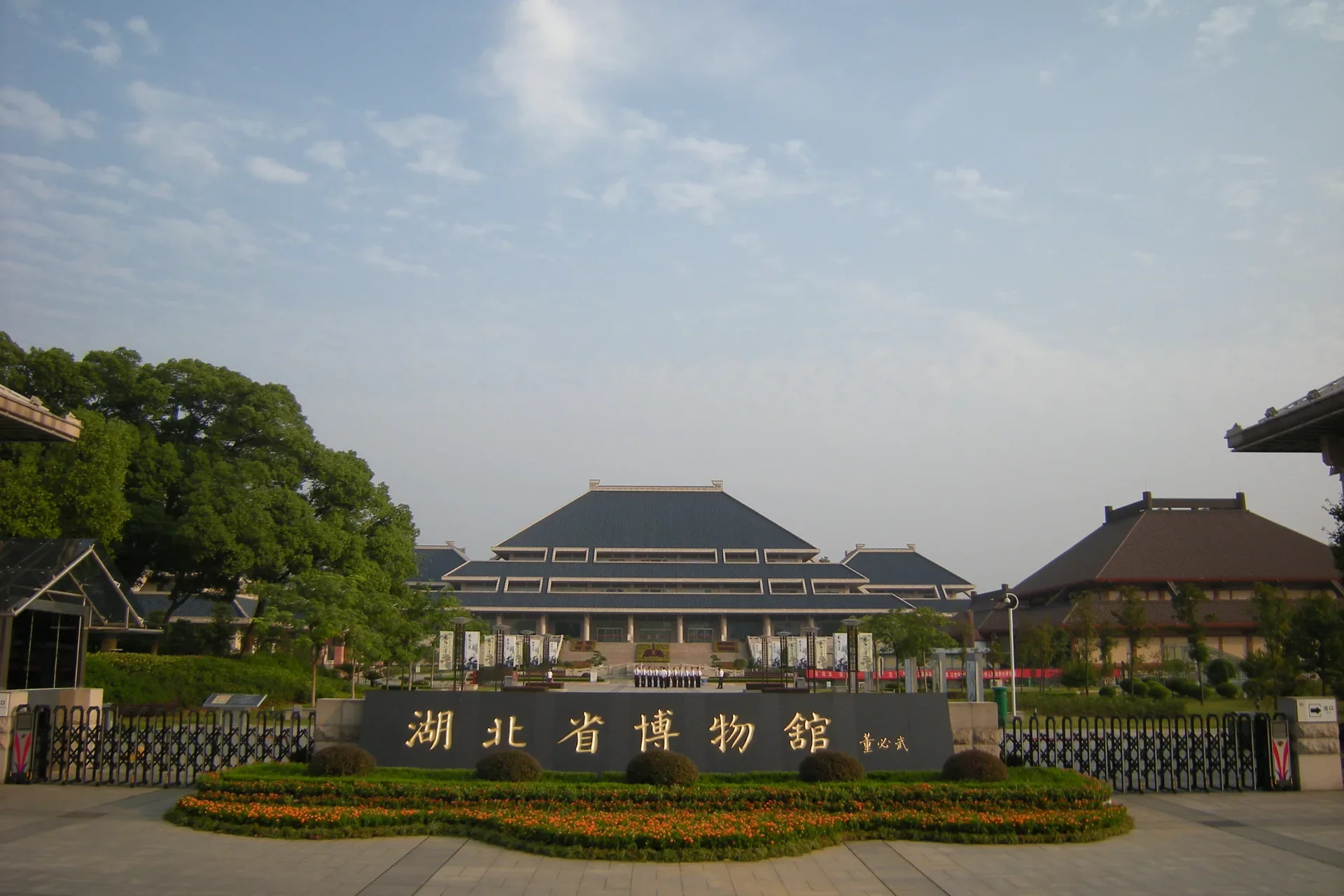
Hubei Provincial Museum (湖北省博物馆, Húběi Shěng Bówùguǎn)
"\"The Hubei Provincial Museum in Wuhan is one of China's most important archaeological museums, built around a single extraordinary discovery: the 433 BC tomb of Marquis Yi of Zeng (曾侯乙), unearthed in 1977 in Suizhou, Hubei. The tomb contained 15,404 artifacts, including the museum's signature piece — a set of 65 bronze bianzhong bells weighing 2,500 kg, suspended on a three-tier lacquered wooden rack, still perfectly playable and capable of producing a full chromatic scale across five octaves. The bells are accompanied by an orchestra of bronze chime stones, drums, flutes, and panpipes (all original), plus 6,231 inscribed bronze weapons, 5,012 lacquerware items, and gold vessels. The museum also holds the Sword of Goujian (越王勾践剑), a 2,500-year-old bronze sword so well-preserved it can still cut a stack of paper.\".".
Last updated:
Quick Answer
Is Hubei Provincial Museum worth visiting?
"Home of the 2,400-year-old bronze bells of Marquis Yi of Zeng — still playable after two millennia. The finest tomb assemblage from China's Warring States period. Free. Daily bell performances.".
Quick facts
| Category | history |
|---|---|
| Ticket | Free. Passport required. Reserve via the Hubei Provincial Museum WeChat mini-program 1-7 days ahead. Bell performance ¥30 (buy tickets at the performance hall entrance). |
| Hours | 9:00-17:00 (last entry 16:00). Closed Mondays. |
| Recommended duration | 2.5-3 hours. Add 30 minutes for the bell performance. |
| Best time to visit | Tuesday-Thursday mornings. Arrive 9:00, see the Sword of Goujian first (it draws queues later), then the tomb gallery, then the 10:30 bell performance. Avoid July and August — Wuhan summers are brutally hot and humid, though the museum is well air-conditioned. |
| How to get there | Metro Line 8 to Hubei Provincial Museum (省博湖北日报), Exit A. Walk south 3 minutes. Or bus routes 14, 402, 411, 552, 578, 701, 709, 810 to Hubei Provincial Museum stop. DiDi from central Wuhan costs ¥20-35. |
| English signage | yes |
Why visit
Hearing a live performance on the 2,400-year-old bronze bells (daily at 10:30 and 14:30, ¥30) is one of the most memorable museum experiences in China — the sound is rich, resonant, and utterly unlike anything produced by modern instruments. The Sword of Goujian in its freestanding case under dramatic lighting is genuinely dramatic.
Collection highlights
- Bianzhong Bronze Bells of Marquis Yi of Zeng (曾侯乙编钟) — 65 bells, 2,500 kg, 3-tier rack, range of five octaves. Each bell can produce two distinct tones depending on where it is struck — an acoustic feat of ancient engineering
- Sword of Goujian (越王勾践剑) — 55.7 cm, inscribed with eight bird-worm script characters reading "King Goujian of Yue, made this sword for his personal use." 2,500 years old, still sharp, never rusted
- Bronze Zun-Pan set — a wine vessel (zun) sitting inside a warming basin (pan), both covered in writhing openwork dragons. The most complex bronze casting of the Warring States period
- Lacquerware coffin of Marquis Yi — the inner coffin painted with red and black geometric patterns and guardian figures, 2.5 m long, exceptionally preserved
- Tomb chariot pit — actual wooden chariots and horse skeletons from the 433 BC burial, in situ
- Jade burial suit fragments — jade plaques drilled and threaded with gold wire, from a Han Dynasty tomb in Hubei
Tips
- Buy your bell performance ticket (¥30) as soon as you enter — the 10:30 show seats 300 and fills up
- The Sword of Goujian is displayed in a standalone glass case in a dedicated exhibition hall on 2F — go there first, as the queue can be 30+ minutes by late morning
- I watched the bell performance in June 2026 — they play both ancient reconstructed melodies and a surprisingly moving arrangement of "Jasmine Flower" (茉莉花). The 20-minute performance is worth every jiao
- The tomb gallery (Zeng Hou Yi exhibition) is on the 2nd floor east wing — it is enormous, budget 60-90 minutes for this hall alone
- The museum shop sells excellent replica bianzhong bell sets in miniature (¥150-500) — they actually ring
- Wuhan in summer (July-August) averages 35°C with 80% humidity — the museum is a perfect air-conditioned refuge between 10:00-15:00
Frequently asked questions
Can I hear the bronze bells played?
Yes — the museum stages live performances on replica bells played by professional musicians at 10:30 and 14:30 daily. Tickets cost ¥30 and are sold at the performance hall entrance (not the main ticket office). The performance lasts about 20 minutes and includes ancient melodies and modern adaptations. The original 2,400-year-old bells were last played in 1997 for the Hong Kong handover ceremony and are now preserved in the gallery — the performance uses exact replicas.
What is the Sword of Goujian and why is it famous?
The Sword of Goujian is a 55.7 cm bronze sword from the Spring and Autumn Period (771-476 BC), inscribed with the name of King Goujian of Yue (r. 496-465 BC), one of the most famous figures of ancient Chinese history. It is remarkable for two reasons: the blade is completely rust-free after 2,500 years (due to a copper-tin alloy with sulfur compounds that formed a protective patina), and it is still sharp enough to cut paper. It was discovered in a Hubei tomb in 1965.
How was the tomb of Marquis Yi of Zeng discovered?
In September 1977, PLA soldiers were blasting rock to build a factory in Suizhou, Hubei, when they exposed a large underground chamber. Archaeologists discovered a remarkably intact tomb from 433 BC — the final resting place of Marquis Yi, ruler of the small state of Zeng. The tomb had filled with water over the centuries, which paradoxically preserved the artifacts — lacquerware, wood, and textiles that would have decayed in dry conditions survived underwater.
How do the bianzhong bells produce two tones from one bell?
Each bell has an almond-shaped cross-section (not circular), which creates two distinct vibration nodes — one at the lip and one at the side. Striking the bell at the lip produces one pitch; striking the side produces a second pitch exactly a major or minor third apart. This was achieved through precise bronze alloy ratios (approximately 14% tin, 2.5% lead, balance copper) and sophisticated casting technology. The two-tone property was rediscovered by modern acousticians in 1978 after the excavation.
Is the Hubei Provincial Museum free?
Yes, the permanent galleries are free. The bell performance costs ¥30. Special exhibitions occasionally charge ¥30-60. Reserve the free ticket via the museum's WeChat mini-program 1-7 days ahead. Bring your passport.
Can I visit the Hubei Provincial Museum and Yellow Crane Tower on the same day?
Yes — museum in the morning (9:00-12:30, including the bell performance) and Yellow Crane Tower in the afternoon (13:30-16:00). The museum is in Wuchang district; Yellow Crane Tower is a 20-minute DiDi ride (¥20) or 30 minutes by Metro Line 8 to Line 4. Both are in the same side of the Yangtze.
Read next
Other things to do in Wuhan
Three Gorges Dam
"The world's largest hydroelectric dam — 2,335 m across, 181 m tall, generating 22,500 MW. A feat of engineering and controversy. ¥105. 3–4 hours from Yichang.".
East Lake (Donghu)
"\"Wuhan's massive urban lake — 33 km of shoreline, lotus fields, cycling paths, and the futuristic Hubei Museum nearby. ¥60 for scenic areas. Half-day to full day.\".".
Yellow Crane Tower
"Wuhan's famous pagoda — rebuilt in 1985 on the site of a 1,800-year-old tower immortalized by China's most famous farewell poem. Yangtze River views from the top. ¥80. 1.5–2 hours.".