Wuhan · history museum
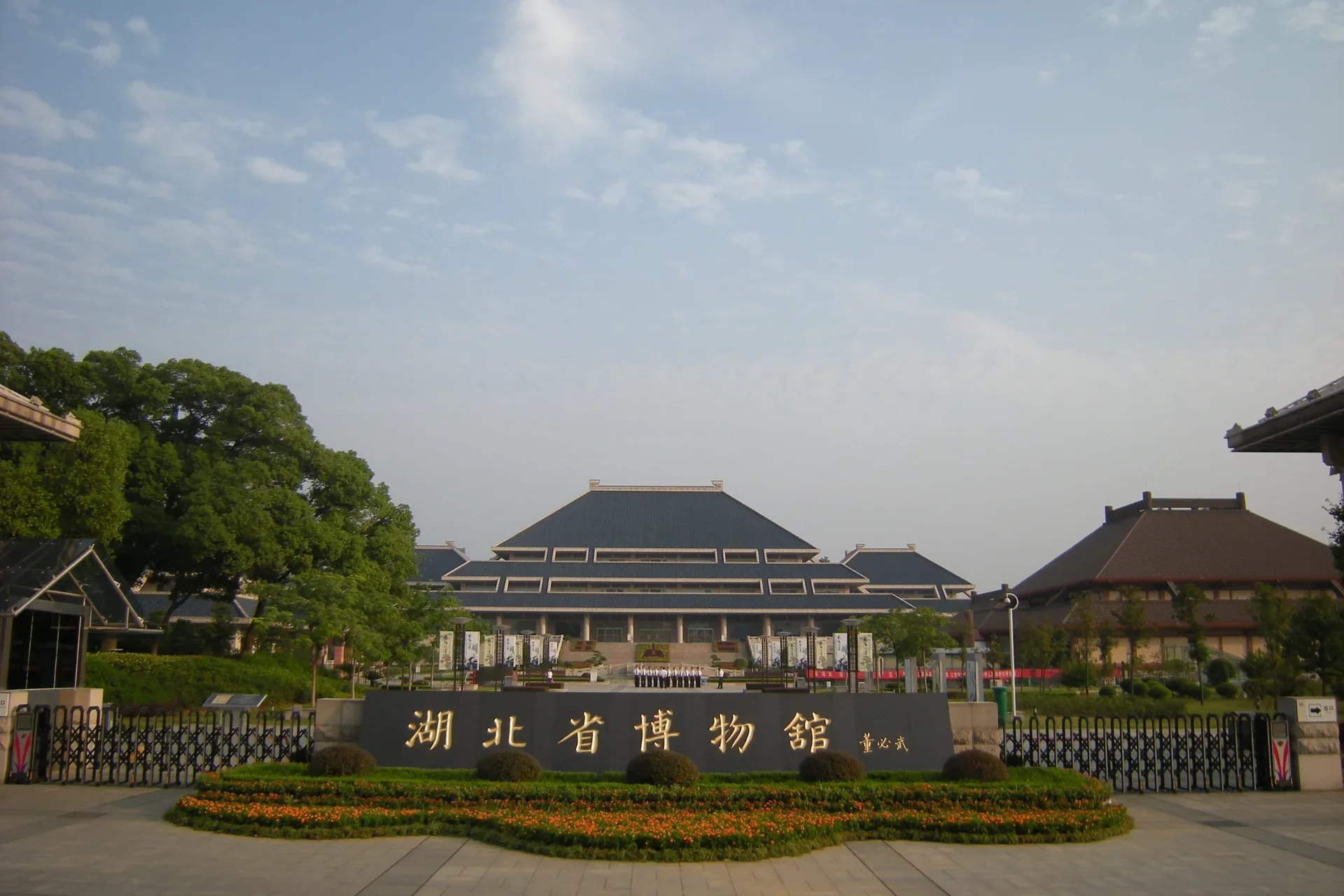
Hubei Provincial Museum (湖北省博物馆, Húběi Shěng Bówùguàn)
"The Hubei Provincial Museum opened in 1953 and relocated to its current East Lake-adjacent complex in 2007. It holds more than 240,000 cultural relics including the world's largest and best-preserved ancient bronze chime set, and was promoted to a national first-tier museum in 2008. A full visit typically takes 2.5 to 3.5 hours spread across four permanent halls.".
Last updated:
Quick Answer
Is Hubei Provincial Museum worth visiting?
"Home to the 2,400-year-old Bianzhong of Marquis Yi of Zeng (65 bronze bells weighing 2,500 kg), this free national museum needs 3 hours to do it justice.".
Quick facts
| Category | history |
|---|---|
| Ticket | Free (ID/passport required for entry; as of 2026) — advance online reservation via the museum's WeChat mini-program is mandatory on weekends and holidays |
| Hours | Tuesday to Sunday 09:00–17:00, last entry 16:00; closed on Mondays (verify for national-holiday adjustments) |
| Recommended duration | 2.5 to 3.5 hours for the four permanent halls; add 45 minutes if you wait for the Bianzhong live performance |
| Best time to visit | Weekday mornings between 09:30 and 11:00 — tour buses arrive after lunch and the Bianzhong performance hall gets crowded from 14:00 |
| How to get there | Metro Line 2 to Jinyintan Station (金银潭), then about 8 minutes by taxi; OR Metro Line 3 to Zhuankou Xinqu Station and a 15-minute DiDi (around ¥15–20, verify); bus 14, 578, 402 to the Donghu Lu entrance. The museum sits inside the East Lake scenic area, so plan extra travel time if traffic is bad around the lake |
| English signage | yes |
Why visit
If you only have time for one museum in Wuhan, make it this one. The Bianzhong of Marquis Yi of Zeng is the single most important musical instrument in Chinese archaeology — a set of 65 tuned bronze bells cast in 433 BC that can still play two-octave melodies today, and it anchors a hall that has no real parallel anywhere else in the world. The Sword of Goujian nearby is the other crowd magnet: a 2,400-year-old bronze blade unearthed in 1965 that still draws blood, or so the museum claims. The Chu culture galleries upstairs give the context that makes both objects land, and the lacquerware and bamboo-slip displays are surprisingly strong for a museum most travelers skip in favor of Shanghai or Beijing.
Collection highlights
- Bianzhong of Marquis Yi of Zeng — 65 bronze bells from 433 BC, the largest ancient chime set ever found, with daily live performance at 10:30 and 14:30
- Sword of Goujian — 55.6 cm bronze sword unearthed in 1965 from a Hubei tomb, still sharp after 2,400 years in waterlogged soil
- Chu Culture Exhibition Hall — Shang and Western Zhou bronzes, lacquerware, and tomb models from the Warring States Chu kingdom centered on Hubei
- Jingzhou Han Tomb Bamboo Slips — early Han Dynasty administrative and medical texts written on bamboo
- Panlong City Archaeological Site — preserved Western Zhou city wall section displayed inside the new hall
- Yellow Crane Tower-related ceramics and Ming/Qing folk artifacts in the upstairs folk gallery
Tips
- Book the free ticket 1–3 days ahead via the official WeChat account; walk-ins are sometimes accepted on weekday mornings but weekends are reliably locked out
- The Bianzhong performance has a separate timed ticket (often free, but capacity-limited to about 80) — grab it the moment you enter, not after the first hall
- Audio guides in English rent for ¥20 (verify) at the lobby; the museum's own English signage is solid for the main halls but thin in the Chu folk gallery, so the device is worth it
- Skip the gift-shop coffee and head to the small cafe near the Panlong City hall — fewer crowds, decent drip coffee for ¥25
- Photography is allowed without flash but tripods and selfie sticks are not — guards enforce this strictly in the Bianzhong hall
Frequently asked questions
Is the Hubei Provincial Museum actually free?
Yes, admission has been free since the 2007 relocation. You need a passport or Chinese ID for the entry scan, and a WeChat reservation is mandatory on weekends and Chinese national holidays (verify the cutoff window with the museum).
How long does a visit take?
Plan 2.5 to 3.5 hours for the four permanent halls. Add another 30–45 minutes if you stay for the Bianzhong live performance and another 20 minutes if you walk through the temporary exhibition wing.
What metro line should I take?
Metro Line 2 to Jinyintan Station (金银潭) is the closest stop, about 8 minutes by taxi from there. Line 3 to Zhuankou Xinqu Station also works but adds a 15-minute DiDi ride (¥15–20).
When is the Bianzhong of Marquis Yi of Zeng performance?
Live demonstrations run twice daily at roughly 10:30 and 14:30 in a dedicated room inside the Chu Culture Hall. Tickets are free but limited to about 80 visitors per show — pick yours up at the hall entrance as soon as the museum opens.
Is the Sword of Goujian really on display here?
Yes. The sword unearthed in 1965 from a Hubei tomb is the centerpiece of the Chu Culture bronze gallery and is usually displayed alongside a glass case showing the original bamboo sheath and pommel decoration.
How big is the collection?
Around 240,000 items in total, of which about 16 are classified as national first-grade relics (国宝). The four permanent halls rotate about 10,000 pieces on display at any time.
Does the museum have English audio guides?
Yes. English audio guides rent for about ¥20 (verify current price) at the lobby and cover the major halls with reasonable depth; the Chu folk gallery upstairs is mostly Chinese-only on the wall labels.
Is the museum closed on Mondays?
Yes, the main building is closed every Monday, and on Mondays that fall on a Chinese national holiday it stays open but with reduced hours — verify on the official site before planning your week around it.
Can I take photos inside?
Yes, personal photography without flash is allowed in all permanent halls. Tripods, monopods, and selfie sticks are not, and guards will ask you to put them away in the Bianzhong hall especially.
Is this a kid-friendly museum?
Reasonably so. Children under 1.2 m enter free, the bronze bells hall has interactive touchscreens that kids queue for, and the Panlong City archaeology exhibit has a hands-on replica pit. The Chu folk gallery upstairs is too dense on text for under-10s.
Read next
Other things to do in Wuhan
Three Gorges Dam
"The world's largest hydroelectric dam — 2,335 m across, 181 m tall, generating 22,500 MW. A feat of engineering and controversy. ¥105. 3–4 hours from Yichang.".
East Lake (Donghu)
"\"Wuhan's massive urban lake — 33 km of shoreline, lotus fields, cycling paths, and the futuristic Hubei Museum nearby. ¥60 for scenic areas. Half-day to full day.\".".
Yellow Crane Tower
"Wuhan's famous pagoda — rebuilt in 1985 on the site of a 1,800-year-old tower immortalized by China's most famous farewell poem. Yangtze River views from the top. ¥80. 1.5–2 hours.".