Kunming · history museum
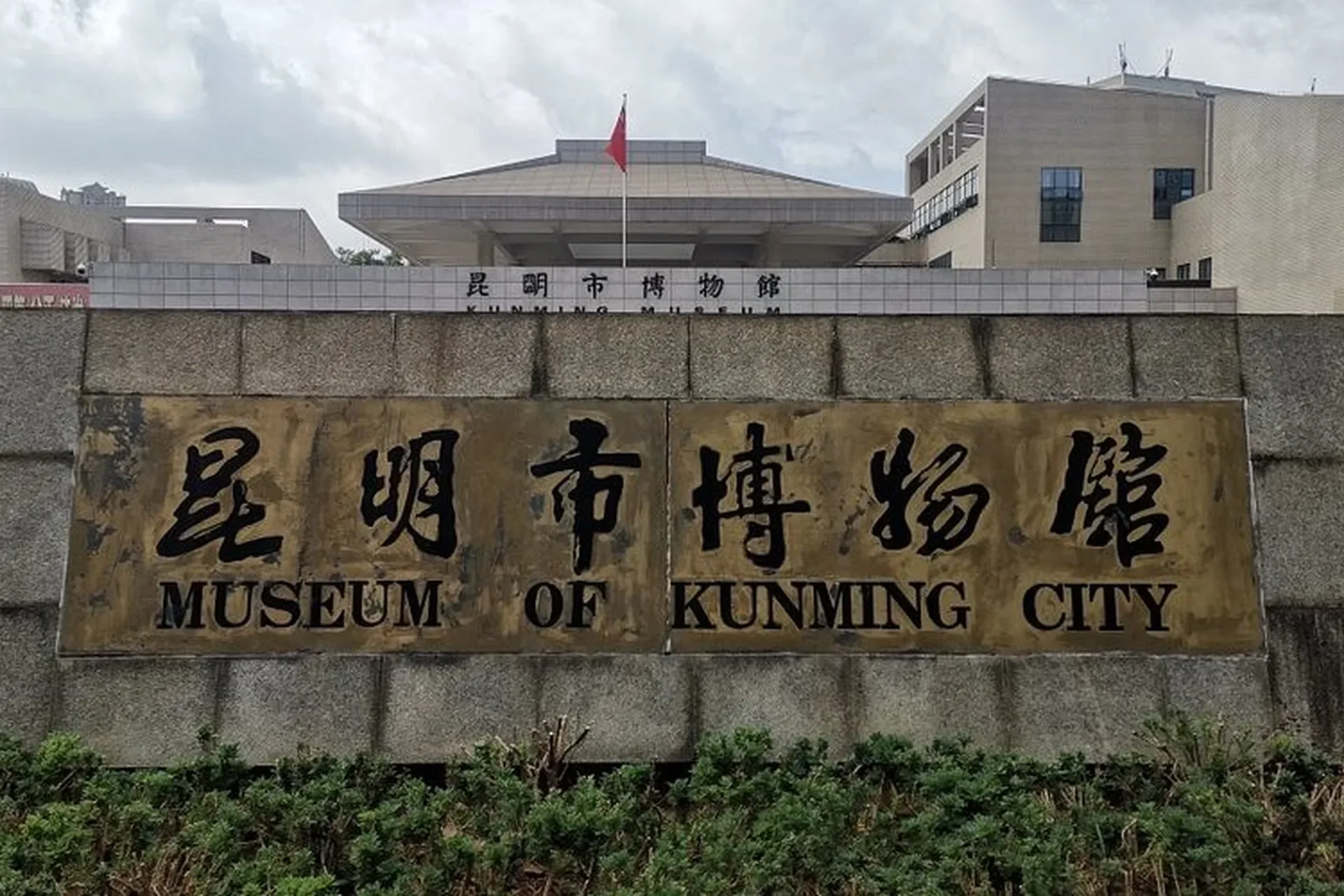
Kunming City Museum (昆明市博物馆, Kūnmíng Shì Bówùguǎn)
"The Kunming City Museum is the home of Dian Kingdom (滇国) artifacts, a Bronze Age culture that flourished around Dian Lake from roughly 400 BC to 109 BC, when it was conquered by the Han Dynasty. The Dian people left no written records — everything known about them comes from archaeology, particularly the extraordinary bronze cowrie shell containers (贮贝器) discovered at Shizhaishan (石寨山) in the 1950s. These drum-shaped bronzes are topped with three-dimensional scenes — battle tableaux, ritual sacrifices, weaving workshops, and hunting parties — populated by dozens of tiny human and animal figures. They are among the most detailed and narrative-rich bronzes from the ancient world.".
Last updated:
Quick Answer
Is Kunming City Museum worth visiting?
"Dian Kingdom bronzes from 2,000 years ago — a lost civilization discovered in the 1950s. Cowrie shell containers with intricate battle and ritual scenes. Free.".
Quick facts
| Category | history |
|---|---|
| Ticket | Free. Passport required. Reserve via WeChat mini-program or register at the entrance. |
| Hours | 9:30-17:00 (last entry 16:30). Closed Mondays. |
| Recommended duration | 1.5-2 hours. |
| Best time to visit | Weekday mornings. The museum is small and rarely crowded. Kunming's spring-like climate (average 15-25°C year-round) makes any season pleasant for visiting. |
| How to get there | Metro Line 2 to Tuodong Stadium (拓东体育馆), Exit D. Walk east 5 minutes on Tuodong Road. Or bus routes 1, 5, 26, 52, 62, 78, 89, 105, 213 to Municipal Museum (市博物馆) stop. DiDi from central Kunming is ¥15-25. |
| English signage | partial |
Why visit
The Dian bronzes are one of China's least-known archaeological treasures — detailed three-dimensional narrative scenes on bronze drums that make Shang Dynasty bronzes look abstract by comparison. The cowrie container lid showing a battle with 22 human figures, horses, and weapons is like a 2,000-year-old freeze-frame of Dian warfare.
Collection highlights
- Bronze Cowrie Shell Container with Battle Scene — a drum-shaped bronze topped with 22 human figures, horses, and weapons in a detailed battle tableau. Dian Kingdom, 2nd-1st century BC
- Bronze Cowrie Container with Ritual Sacrifice Scene — figures around a central pillar with a bound sacrificial victim, musicians, and attendants. Extraordinary detail in the clothing and hairstyles
- Dian Kingdom bronze weapons — distinctive ge (戈) halberds, swords with spiral-pattern handles, and armor unlike anything from central China
- Gold "Seal of the King of Dian" (滇王之印) — a gold seal given by Han Dynasty Emperor Wu to the Dian king in 109 BC, confirming the historical record of Dian's absorption into the Han Empire. Found at Shizhaishan in 1956
- Bronze animal figures — bulls, tigers, leopards, and snakes, reflecting the Dian people's animistic beliefs and the wildlife of ancient Yunnan
Tips
- The Dian Kingdom gallery is on the 2nd floor — go there first. The cowrie containers are displayed in central cases so you can walk around them 360 degrees
- The gold seal is small (2.4 cm square) — look carefully, it is in a wall case near the cowrie containers. It is the single most important artifact for confirming the Dian Kingdom's historical existence
- Combine with the Yunnan Provincial Museum (云南省博物馆, 12 km south in the new Guandu district) for a complete Yunnan historical picture — the provincial museum covers a broader range but the Kunming City Museum has the best Dian bronzes
- I spent 30 minutes alone examining the battle-scene cowrie container in June 2026 — the level of detail rewards close, unhurried observation
- The museum is compact and under-visited — expect a quiet experience even in peak tourist season
Frequently asked questions
Who were the Dian people?
The Dian Kingdom (滇国) was a Bronze Age civilization that flourished around Dian Lake in present-day Yunnan from roughly 400 BC to 109 BC. They were mentioned in Sima Qian's Records of the Grand Historian (史记) but left no written records of their own. Archaeological excavations at Shizhaishan (石寨山) beginning in 1955 revealed their material culture — sophisticated bronzes, gold artifacts, and evidence of a stratified society with ritual human sacrifice. They were absorbed into the Han Empire in 109 BC.
What is a cowrie shell container (贮贝器)?
Cowrie shell containers are drum-shaped bronze vessels used by the Dian people to store cowrie shells, which served as currency. They are unique to the Dian Kingdom — no other Bronze Age culture in China produced them. Their lids feature elaborate three-dimensional scenes with dozens of human and animal figures depicting battles, rituals, weaving, and hunting. They are the most important source of visual information about Dian society.
Where is the gold seal of the Dian King?
In the Kunming City Museum, 2nd floor, in the Dian Kingdom gallery. It is a small (2.4 cm square) gold seal inscribed with four characters: 滇王之印 (Seal of the King of Dian). It was discovered in 1956 at Shizhaishan and confirms the historical account that Emperor Wu of Han granted this seal to the Dian king in 109 BC.
How is the Kunming City Museum different from the Yunnan Provincial Museum?
The Kunming City Museum focuses on Kunming's local history and has the best Dian Kingdom collection. The Yunnan Provincial Museum (云南省博物馆) is larger, covers all of Yunnan Province from prehistory to the modern era, and is housed in a landmark new building in the Guandu district. The provincial museum has a broader scope; the city museum has the definitive Dian bronzes.
Is the Kunming City Museum free?
Yes, free for all visitors. Bring your passport for registration at the entrance. Reservations are recommended but walk-ins are usually accommodated on weekdays.
How long should I spend at the museum?
1.5-2 hours. The museum has three floors but is small by Chinese standards. The Dian Kingdom gallery (2nd floor) deserves the most time. The ground floor has rotating temporary exhibitions; the 3rd floor covers modern Kunming history.
Read next
Other things to do in Kunming
Dianchi Lake
Kunming's 300-sq-km lake on its southern edge — the largest in Yunnan and the 8th biggest freshwater lake in China. Haigeng Park on the northeast shore is free and the best viewpoint.…
Green Lake Park
Kunming's free city-centre lake park, famous for the ~3,000 km migration of black-headed gulls from Siberia each November–March (a phenomenon dating to 1985).…
Shilin Stone Forest
"270-million-year-old limestone karst formations — UNESCO South China Karst. 90 km from Kunming. ¥175 entry. 3–4 hours walking. Maze-like paths through towering grey pinnacles.".
Stone Forest
"\"A 270-million-year-old karst limestone formation stretching 400 km² near Kunming, with towering stone pillars that resemble a petrified forest. UNESCO World Heritage Site. ¥130–175.…\".".
Western Hills and Dragon Gate
Taoist grottoes, tunnels, and clifftop pavilions hand-carved into a 2,500-metre ridge above Dianchi Lake — 72 years of chiselling that began in 1781.…
Museums in Kunming
Kunming Natural History Museum
"Home of the Chengjiang Cambrian fossils — 518-million-year-old creatures preserved in exquisite detail. The Cambrian explosion in shale. Free. A pilgrimage site for paleontology enthusiasts.".
Yunnan National Museum
"'Note: This is an alternative slug for the Yunnan Provincial Museum (云南省博物馆). See the yunnan-provincial-museum entry for full details.'.".. 2026 verified.
Yunnan Nationalities Museum
yunnan-nationalities-museum in Kunming: "China's largest ethnic minority museum — 25 cultures under one roof with handwoven textiles, silver headdresses, and live craft demonstrations, free and un...