Kunming · ethnic museum
Yunnan Nationalities Museum (云南民族博物馆, Yúnnán Mínzú Bówùguǎn)
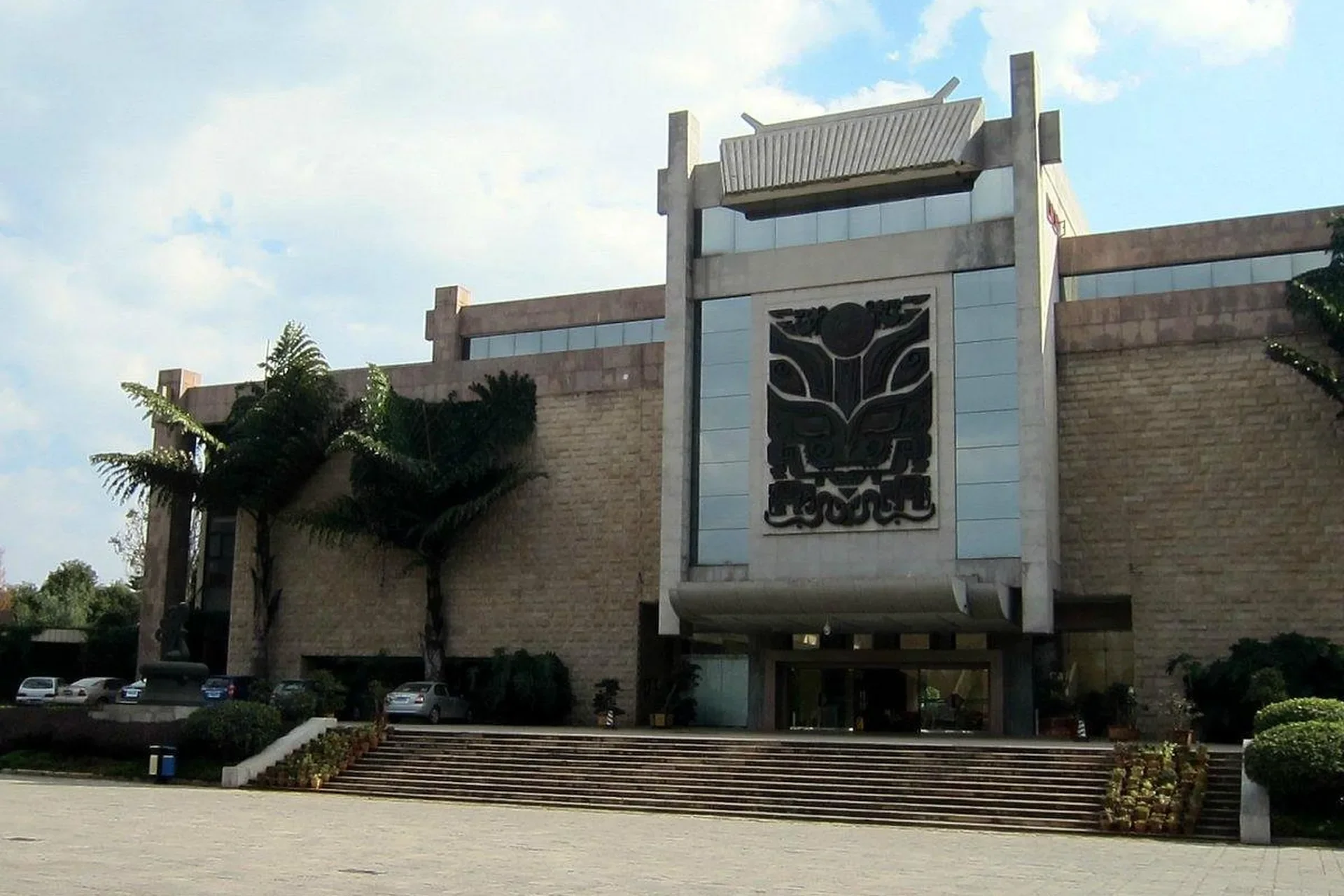
"\"The Yunnan Nationalities Museum (云南民族博物馆) occupies a sprawling modern complex across the lake from Kunming's Yunnan Nationalities Village theme park — but unlike its glossy neighbor, this museum is serious, scholarly, and wonderfully quiet. Yunnan is China's most ethnically diverse province (25 of China's 56 officially recognized ethnic groups), and the museum presents each group through its material culture: Dai bamboo tools and peacock-themed textiles, Bai tie-dye and marble inlay, Yi fire festival costumes and silverwork, Tibetan Buddhist thangka paintings, Hani terraced rice-field models, and Lisu crossbow hunting equipment. The collection holds over 120,000 artifacts. Galleries are organized by theme — clothing and ornament, architecture and tools, spiritual and festival life — rather than by ethnicity, encouraging comparative understanding. A living heritage workshop wing hosts rotating artisans demonstrating textile weaving, batik, papermaking, and silverwork.\".".
Last updated:
Quick Answer
Is Yunnan Nationalities Museum worth visiting?
yunnan-nationalities-museum in Kunming: "China's largest ethnic minority museum — 25 cultures under one roof with handwoven textiles, silver headdresses, and live craft demonstrations, free and un...
Quick facts
| Category | ethnic |
|---|---|
| Ticket | Free. Passport required for entry registration. |
| Hours | 9:00–17:00, Tuesday–Sunday. Last entry 16:00. Closed Mondays. |
| Recommended duration | 2–3 hours. |
| Best time to visit | Weekday mornings — the museum is rarely crowded even on weekends, but weekday mornings guarantee solitude. |
| How to get there | Bus A1 or 44 from central Kunming to Yunnan Nationalities Village (云南民族村), then walk 10 minutes north across the lake bridge. By metro: Line 5 to Yujicun (渔户村), then Didi (¥15, 10 minutes). About 40 minutes from Kunming city center. |
| English signage | partial |
Why visit
I spent a quiet Tuesday morning here in June 2026 and was alone in most galleries. The textile hall — hundreds of handwoven costumes on open display, not behind glass — lets you get close enough to see individual stitches and dye patterns. A Naxi woman was demonstrating traditional bark papermaking in the workshop wing, and she gestured for me to try pulling a sheet, which promptly tore because I applied uneven pressure. The museum succeeds because it treats ethnic cultures as living traditions, not anthropological specimens.
Collection highlights
- Costume gallery — 300+ handwoven ethnic costumes displayed openly (not behind glass), from Dai silk brocade to Yi fire-festival capes.
- Silverwork collection — elaborate Miao and Yi silver headdresses, neck rings, and ceremonial ornaments, some weighing over 5 kg.
- Living heritage workshop — rotating artisan demonstrations of tie-dye, papermaking, embroidery, and batik (schedule varies weekly).
- Yi fire festival and torch models — full-scale dioramas explaining the lunar calendar festivals that govern ethnic community life.
- Dongba script manuscripts — the Naxi people's pictographic writing system, the world's only living pictographic script, with translations.
Tips
- Do not confuse this with the Yunnan Nationalities Village (云南民族村) across the lake — that is a theme park with staged performances. The museum is the scholarly institution. Visit both if you have time, but the museum is the one with real artifacts.
- The museum has no café and limited nearby food options. Bring water and a snack, or eat at the Nationalities Village food court before/after.
- The workshop wing schedule changes weekly. Call ahead or check the museum entrance board for which artisans are demonstrating on your visit day.
- The museum shop sells genuine ethnic handicrafts — embroidery, batik, bark paper — at fair prices that go directly to the artisan cooperatives.
Frequently asked questions
How many ethnic groups are represented?
All 25 of Yunnan's officially recognized ethnic minority groups, plus the Han majority. The museum presents 26 cultures in total. Yunnan has more ethnic diversity than any other Chinese province — the 25 minority groups constitute roughly one-third of Yunnan's population.
Is this different from the Yunnan Nationalities Village?
Yes — they are across the lake from each other. The Village is an outdoor theme park with reconstructed village buildings and costumed performances. The Museum is an indoor academic institution with artifacts, archives, and rotating exhibitions. The Village is ¥90; the Museum is free. Visit the Museum for substance, the Village for spectacle (or both).
Can I buy authentic ethnic crafts here?
Yes — the museum shop partners directly with artisan cooperatives. Items include Bai tie-dye, Dai brocade, Naxi bark paper, and Miao embroidery. Prices are fixed and fair, with a higher percentage reaching artisans than at tourist markets.
Is there a best order to follow through the museum?
Start on the ground floor with clothing and textiles (the strongest collection), then follow the thematic galleries upward. The building is organized in a clockwise spiral — follow the room numbers. The workshop wing is a separate building to the right of the main entrance.
How much time do I need for the living heritage workshops?
Allow 30–45 minutes. Each artisan demonstrates their technique — you can watch, ask questions (mostly with gestures, but some speak basic English), and try the craft yourself. The workshops are included in the free admission.
What is Dongba script and why is it significant?
Dongba (东巴) is the pictographic writing system of the Naxi people of Lijiang. It is the world's only pictographic script still in active use — about 2,000 characters survive. Naxi dongba priests use it for religious manuscripts. The museum displays original Dongba scrolls with Chinese and English translations, showing how pictures of animals, people, and objects compose narrative texts.
Read next
Other things to do in Kunming
Dianchi Lake
Kunming's 300-sq-km lake on its southern edge — the largest in Yunnan and the 8th biggest freshwater lake in China. Haigeng Park on the northeast shore is free and the best viewpoint.…
Green Lake Park
Kunming's free city-centre lake park, famous for the ~3,000 km migration of black-headed gulls from Siberia each November–March (a phenomenon dating to 1985).…
Shilin Stone Forest
"270-million-year-old limestone karst formations — UNESCO South China Karst. 90 km from Kunming. ¥175 entry. 3–4 hours walking. Maze-like paths through towering grey pinnacles.".
Stone Forest
"\"A 270-million-year-old karst limestone formation stretching 400 km² near Kunming, with towering stone pillars that resemble a petrified forest. UNESCO World Heritage Site. ¥130–175.…\".".
Western Hills and Dragon Gate
Taoist grottoes, tunnels, and clifftop pavilions hand-carved into a 2,500-metre ridge above Dianchi Lake — 72 years of chiselling that began in 1781.…
Museums in Kunming
Kunming City Museum
"Dian Kingdom bronzes from 2,000 years ago — a lost civilization discovered in the 1950s. Cowrie shell containers with intricate battle and ritual scenes. Free.".
Kunming Natural History Museum
"Home of the Chengjiang Cambrian fossils — 518-million-year-old creatures preserved in exquisite detail. The Cambrian explosion in shale. Free. A pilgrimage site for paleontology enthusiasts.".
Yunnan National Museum
"'Note: This is an alternative slug for the Yunnan Provincial Museum (云南省博物馆). See the yunnan-provincial-museum entry for full details.'.".. 2026 verified.