Three Gorges Museum三峡博物馆
A comprehensive museum on People's Square covering Three Gorges history and culture, with 100,000+ relics — the best window onto Chongqing's past.
Chongqing · Visitor Guide2026-10-18
Quick Answer
Is Three Gorges Museum worth visiting?
Chongqing's flagship museum, 42,000 sqm of galleries with 100,000+ relics; free with reservation, open 09:00-17:00, closed Mondays, 5 minutes on foot from Zengjiayan metro station.
Quick facts
| Ticket | Free admission (reserve with ID) |
|---|---|
| Hours | 09:00-17:00 (last entry 16:00), closed Mondays |
| Recommended duration | 2-3 hours |
| Best time to visit | Any season; indoor galleries are unaffected by weather |
| How to get there | Metro Line 2 to Zengjiayan (Exit A); buses 145, 152, 608 to Chongqing Museum stop |
| English signage | Yes |
| Wheelchair accessible | Yes |
| Address | 236 Renmin Road, Yuzhong District, Chongqing |
| Type | History museum |
| Floor area | 42,000 sqm |
| Collection | 100,000+ items |
What to expect
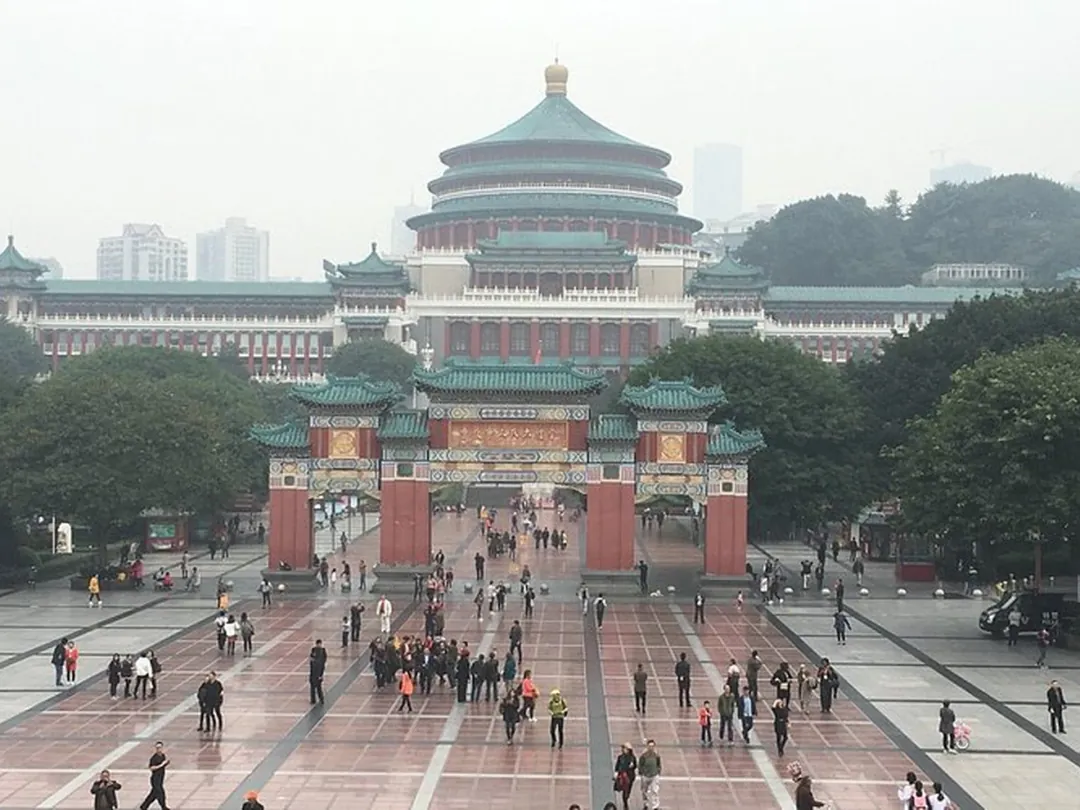
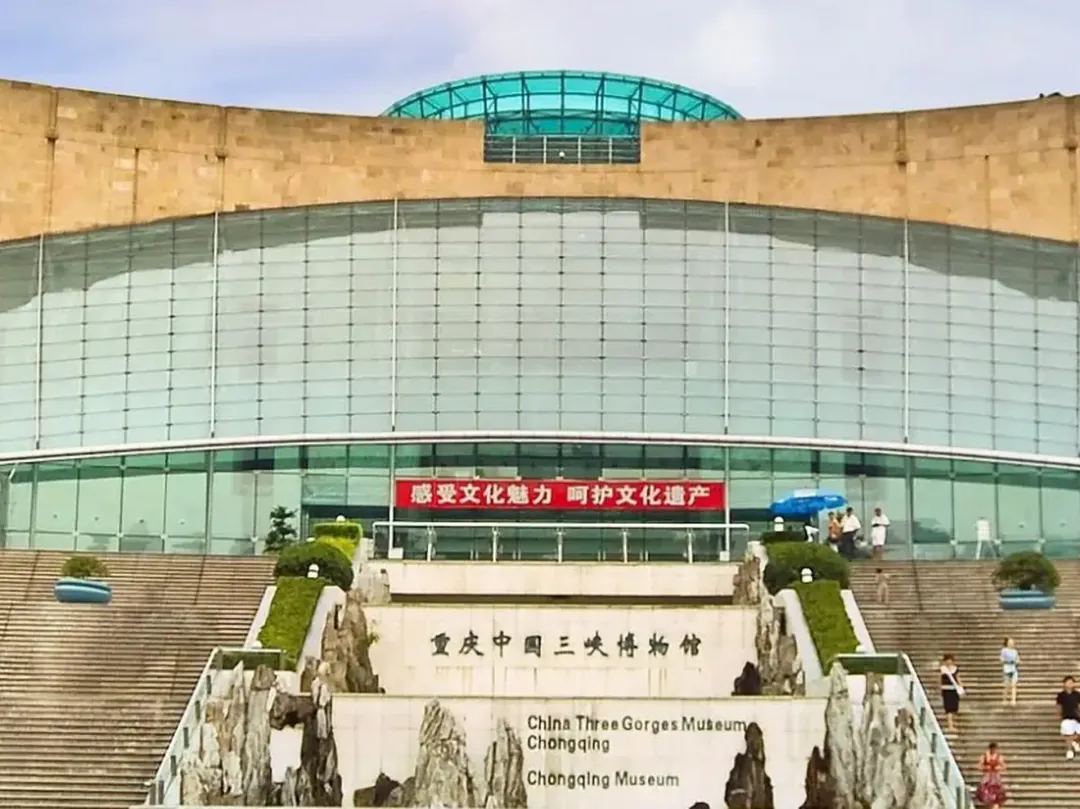
The Three Gorges Museum stands on Renmin Road in Yuzhong District. Opened in 2005, it is counted among Chongqing's ten cultural symbols: a facade that blends the stilted diaojiaolou houses of the gorge country with contemporary design, honoured with a gold award from the Architectural Society of China. Permanent exhibitions such as 'Splendour of the Three Gorges', 'The Ancient Ba Land' and 'Chongqing: The Road of the City' trace the region's history from remote antiquity to the present day.
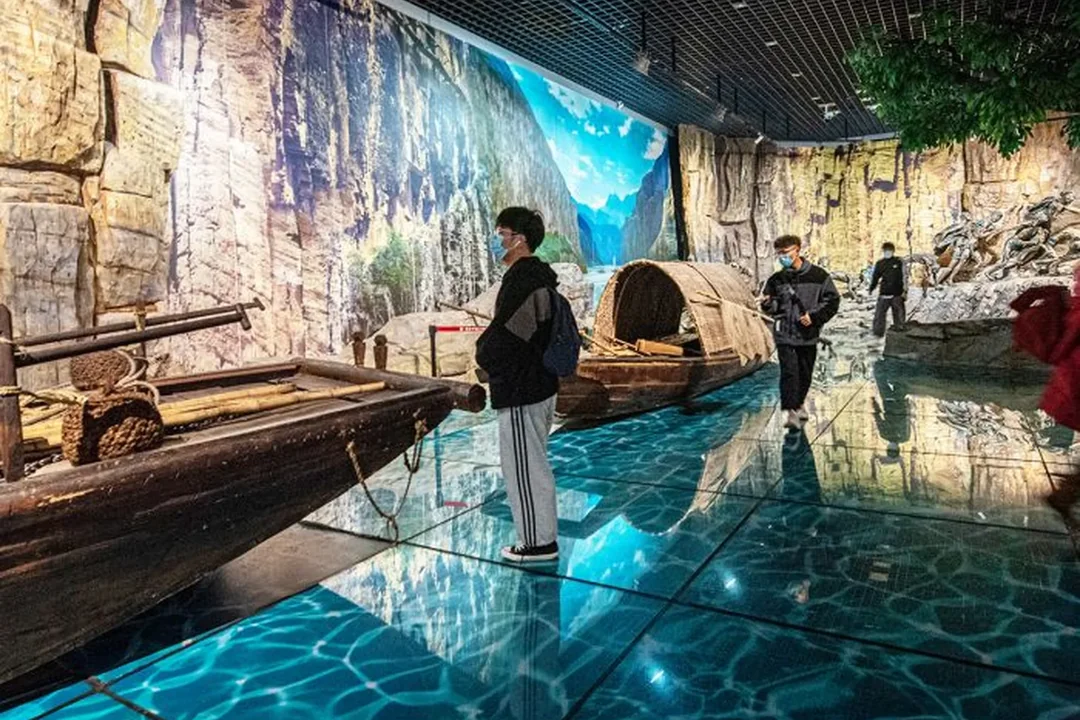
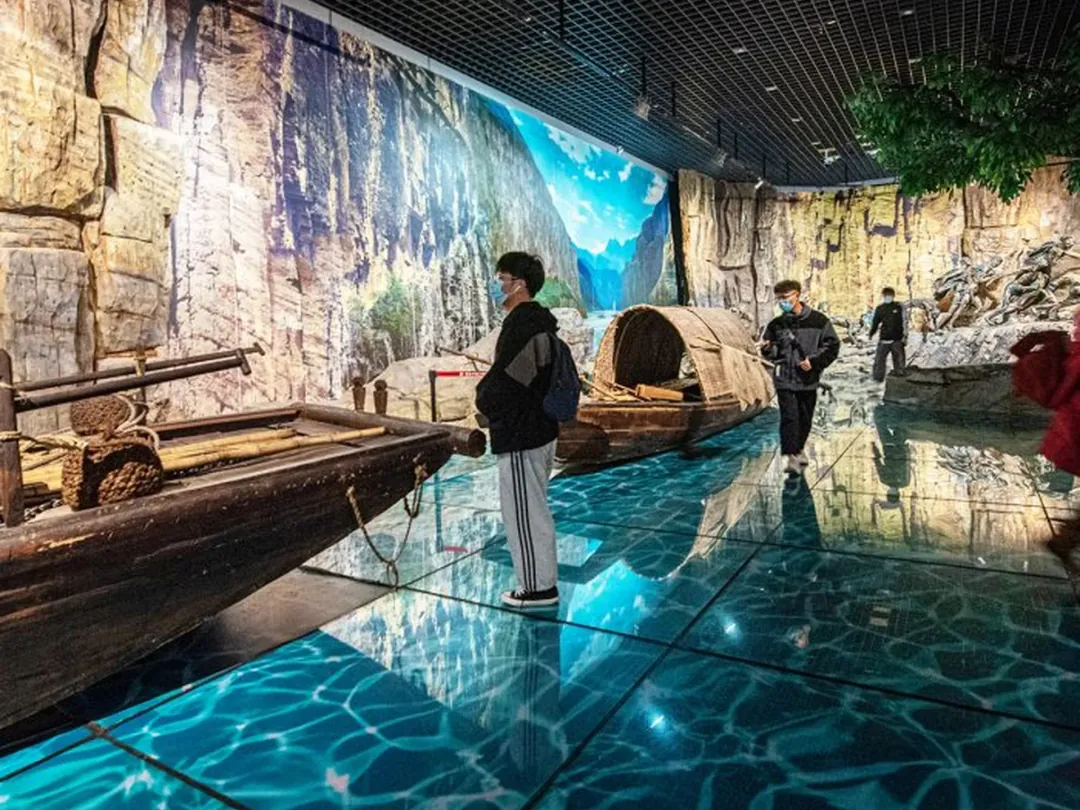
The collection spans fossils, stone tools, ceramics, bronzes, painting, calligraphy and lacquerware, with Han-dynasty finds from the Three Gorges as its distinguishing strength. The grand panorama hall on the second floor recreates the gorges' scenery and history through giant oil paintings, models and light-and-sound effects, while the third floor's 'Chongqing: The Road of the City' exhibition sets out the city's path from the ancient Ba kingdom to the megacity of today.
As a national first-grade museum, the Three Gorges Museum carries an important mandate in heritage protection and public education. Facilities include a lecture hall, interactive zones for young visitors, a shop and a tea room, and the volunteer docent service is excellent — joining a guided tour is the surest way to a deeper visit.
How to get there
Take Metro Line 2 to Zengjiayan Exit A and walk about 5 minutes. Buses 145, 152, 608, 809 and 881 stop at Chongqing Museum right at the door. There is no public car park, so arrive by public transport.
Best photo spots
- The facade with the entrance plaza (diaojiaolou-style architecture)
- The immersive panorama hall of the Three Gorges on the second floor
- The old-Chongqing model in 'The Road of the City' exhibition on the third floor
- Bronze masterpieces in the rare-collection gallery
Tips
- Entry is free but requires real-name booking via the museum's official WeChat account; weekend and holiday slots go fast
- Ask at the service desk for that day's free volunteer tour times — a guided visit is far more rewarding
- Follow the no-photography rules in restricted galleries; elsewhere photos are fine without flash
- Pair the museum with nearby People's Park and Sanxia Square; Zhou Gongguan (former residence) sits by Zengjiayan station
Scams to avoid
- Unlicensed 'guides' near the entrance pose as museum docents and charge steep fees — book tours only through official channels
- Souvenir stalls around the museum are overpriced; buy in the museum shop instead
- There is no official car park and informal lots charge chaotically — use proper car parks
Frequently asked questions
Is there an entrance fee, and how do I book?
Admission is free. Book with your real name on the museum's official WeChat account, then enter with the booking code and your ID.
Is the museum open on Mondays?
It closes on Mondays (national holidays excepted), so plan your visit around that.
Are guided tours available?
Yes — free volunteer tours at fixed times and paid professional guides. Ask at the service desk for the day's schedule.
Read next
Other things to do in Chongqing
Chongqing Zoo
A large southwest China zoo covering 43 hectares in Chongqing, home to 400-plus species and a leading giant panda base; 25 yuan peak, 20 yuan off-season, allow 3-4 hours.
Ciqikou Ancient Town
The best-preserved old town in central Chongqing, where traditional Bayu architecture meets the city's wharf heritage — and one of its most popular photo spots. Free to enter; allow 3-4 hours.
Ciqikou Ancient Town
A 1,000-year-old Jialing River porcelain port turned pedestrian snack street in Chongqing's Shapingba District — free to enter, 2-3 hours to walk, and best at 08:30 on a weekday before the crowd.
Dazu Rock Carvings
50,000+ Buddhist, Taoist, and Confucian statues carved into Chongqing cliffsides between the 9th and 13th centuries.
Fengdu Ghost City
Fengdu Ghost City above the Yangtze in Chongqing, themed on the Chinese underworld; entry 80 yuan, open 08:00-17:30, allow 2-3 hours, blending Taoist, Buddhist and Confucian culture.
Hongyadong (Hongya Cave)
A 11-floor hillside complex of traditional Chinese stilted buildings rebuilt in 2006 on the site of a Ming-dynasty wall city gate.
Jiefangbei Pedestrian Street
Chongqing's central landmark, the 27.5 m Liberation Monument completed in 1940 as China's only surviving victory memorial of the War of Resistance; malls open 10:00-22:00.
Liziba Monorail Station
Chongqing Rail Transit Line 2 runs straight through floors 6-8 of a 19-storey apartment block at Liziba — a six-second spectacle you photograph from a free platform across the road.
Nanshan One Tree Viewing Platform
Chongqing's best night-view platform at about 400 m elevation, built in 1997; entry 30 yuan, open 09:00-22:30, reached by bus 384 from Shangxinjie metro station.
Wulong Karst - Three Natural Bridges
A UNESCO World Natural Heritage site where three colossal natural bridges span a gorge — a filming location for Transformers: Age of Extinction. Entry CNY 125; allow 3-4 hours.
Yangtze River Cableway
A 1987 commuter cable car that still glides 1,166 m over the Yangtze between Yuzhong and Nan'an for about 20 yuan - the ride lasts under 5 minutes, but expect to queue an hour at peak.