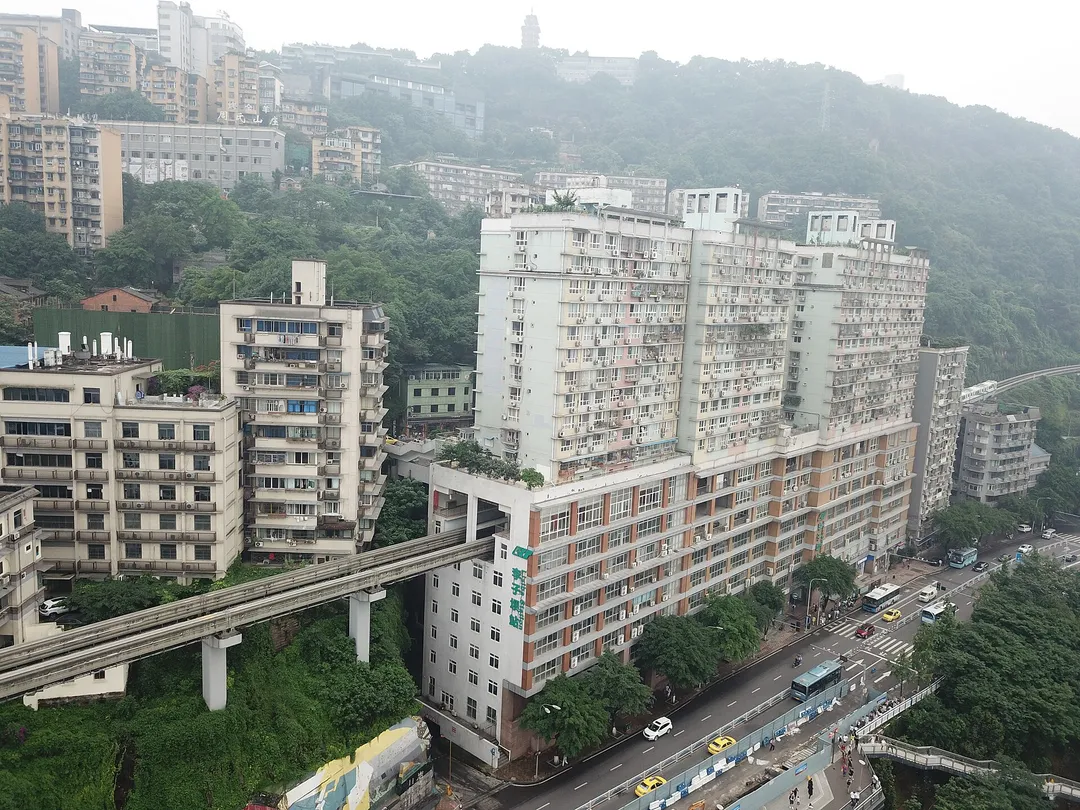
Liziba Monorail Station李子坝站
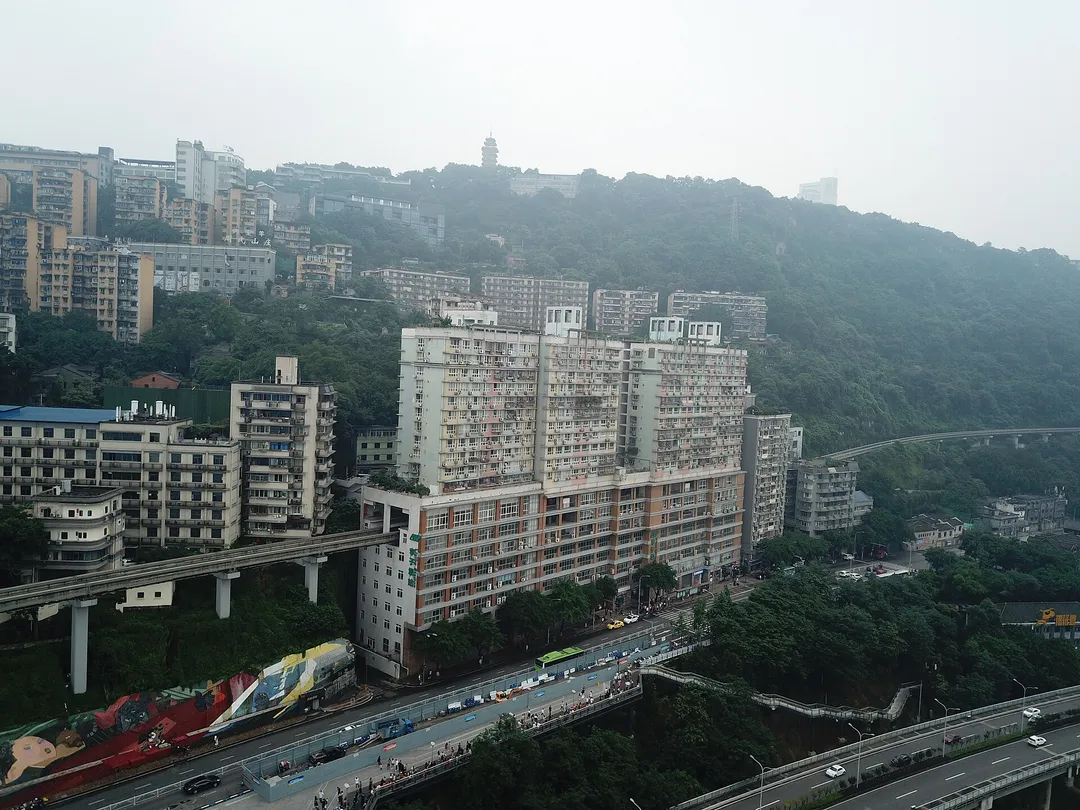
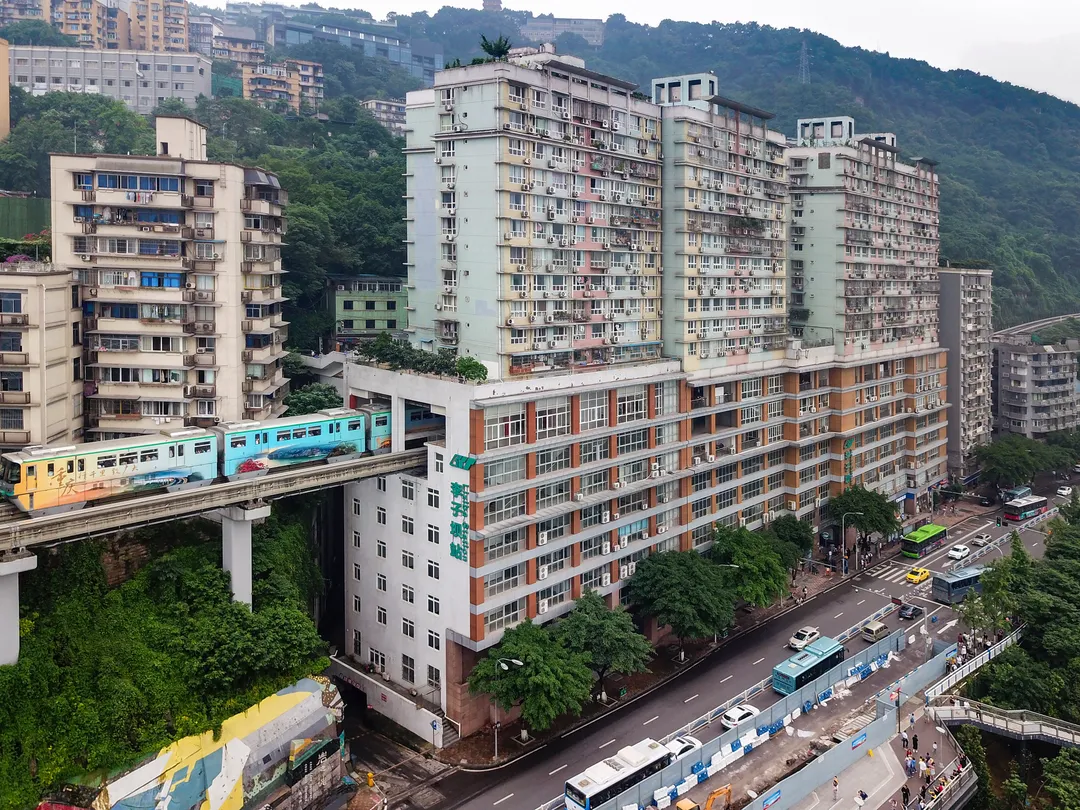
Liziba is a working metro station on Chongqing Rail Transit Line 2 where a straddle monorail slices through floors 6 to 8 of a 19-storey residential tower, entering one side and exiting the other. The station opened with Line 2 in June 2005 — western China's first rail-transit line — and the building was engineered around the tracks from the planning stage. It became a global social-media sensation around 2017, prompting the district government to build a free viewing platform across the road in 2018.
Chongqing · Visitor Guide2026-10-27
Quick Answer
Is Liziba Monorail Station worth visiting?
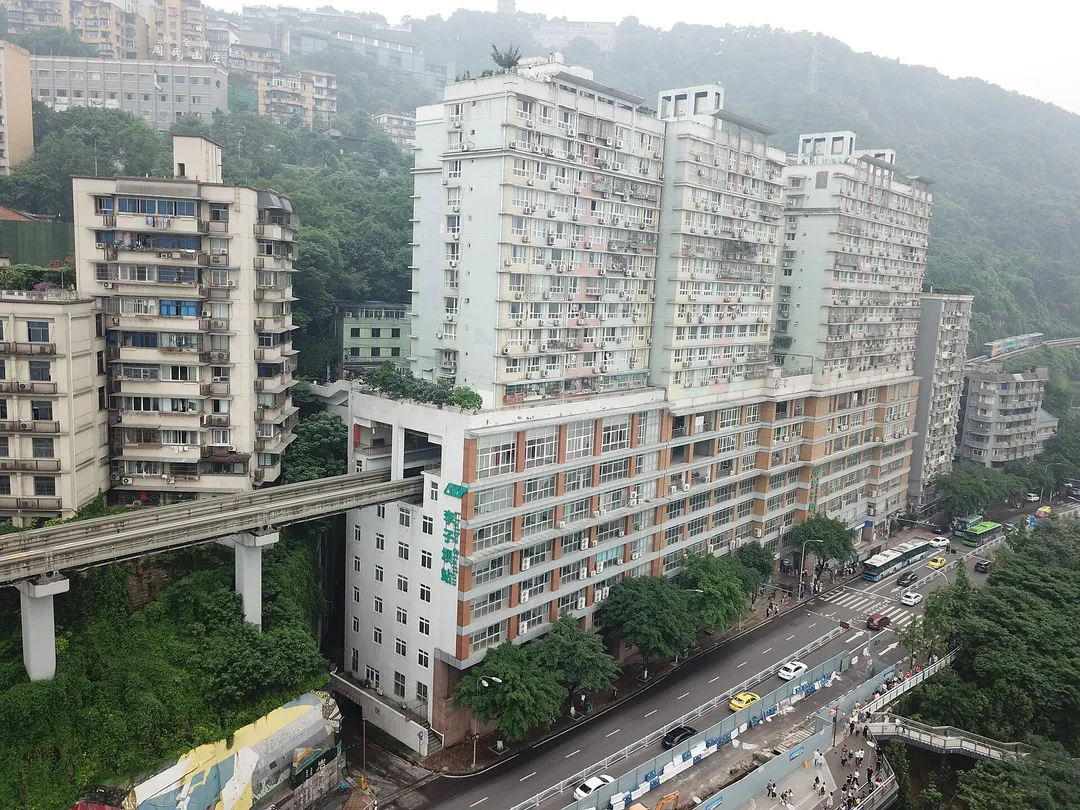
Chongqing Rail Transit Line 2 runs straight through floors 6-8 of a 19-storey apartment block at Liziba — a six-second spectacle you photograph from a free platform across the road.
Quick facts
| Ticket | Free to access the viewing platform. Riding Line 2 through the station costs the standard metro fare of ¥2-7 depending on distance (as of 2026). |
|---|---|
| Hours | Viewing platform is open 24 hours (outdoor), but Line 2 trains only run roughly 06:30-23:00 daily. There is nothing to photograph when the metro is closed. |
| Recommended duration | 30-45 minutes (most of it waiting for the next train) |
| Best time to visit | Weekday mornings 08:00-10:00 for thin crowds and east-facing light on the building. Avoid weekends and Chinese national holidays (early May, early October), when the platform packs three-deep. |
| How to get there | Metro Line 2 to Liziba Station (李子坝站); cross the riverside road to the viewing platform. DiDi from Jiefangbei ~15 min (¥15-20); from Hongyadong ~10-15 min (¥12-18). |
| English signage | Partial |
| Wheelchair accessible | Partial |
| Metro line | CRT Line 2 (straddle monorail), opened June 2005 |
| The building | 19-storey residential tower; train passes through floors 6-8 |
| Viewing platform | Free open-air terrace across the road, built 2018 (verify) |
| Ticket | Free to view; metro ride ¥2-7 (as of 2026) |
| Train frequency | Every 3-5 min peak, 5-8 min off-peak |
| Time needed | 30-45 minutes |
What to expect
Liziba is less an attraction than a transit accident turned tourist stop. You arrive at a small open-air terrace built into a hillside across the road from a slab-like apartment block, wait a few minutes, and watch a green-and-white Line 2 train glide into the sixth floor of the building and out the other side. The whole passage takes roughly six seconds. Then you wait for the next train. That is the entire experience from the platform, and for most visitors it is enough — the sight of a commuter train threading a residential tower genuinely lands harder in person than in any video, and the engineering audacity is real. The platform itself is modest: a paved terrace with railings, a Liziba Station sign for selfies, and room for perhaps 200 standing people before it feels cramped.
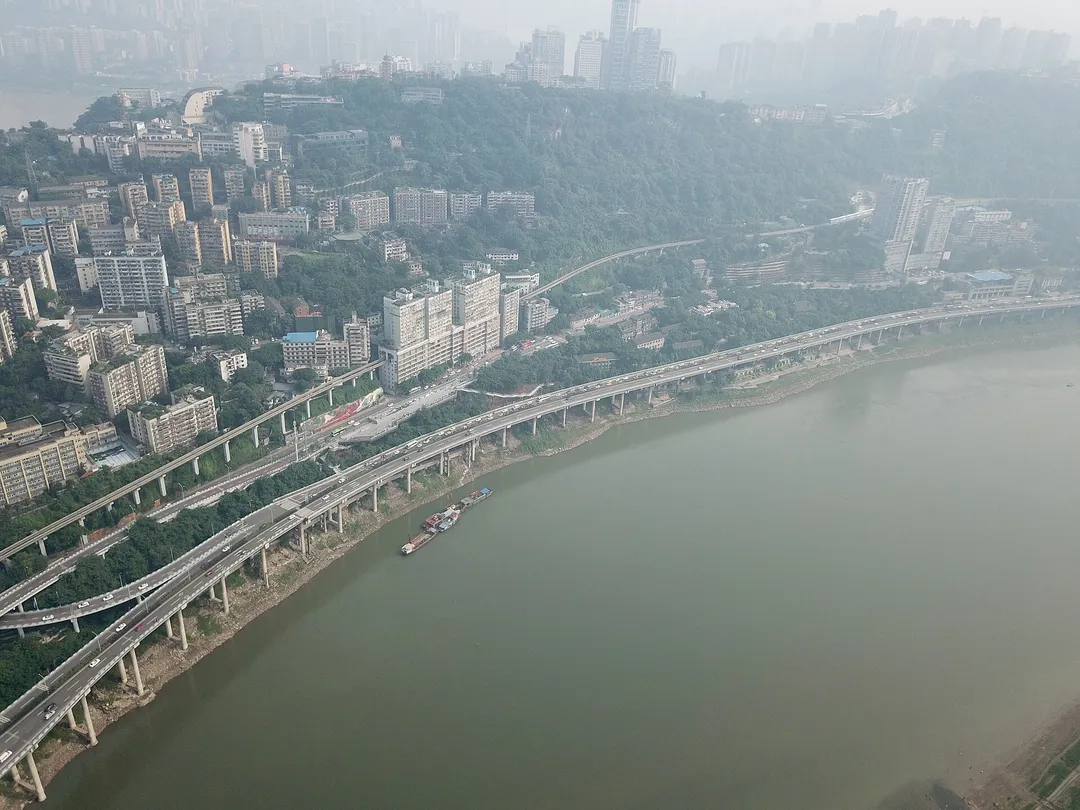
Line 2 opened on 18 June 2005 as the first rail-transit line in western China, a straddle-type monorail chosen because Chongqing's hills and narrow ridges made conventional heavy rail impractical. The alignment through Liziba was fixed by geography and existing development — there was no other corridor for the tracks on that stretch of the Yuzhong peninsula. Rather than demolish the apartment block, planners and the developer coordinated so the tower was built around the future station, with floors 6 to 8 left as the transit passage and the station platform sitting inside. Those three floors are station space, not apartments — no one's living room is being invaded. The monorail's rubber tires and a vibration-isolated track bed keep the noise for residents above and below to a low hum. The site was a local curiosity for a decade, then exploded internationally around 2017 when short videos circulated online; the Yuzhong district government built the viewing platform in 2018 to manage the crowds that had started spilling into the road.
In practice, Liziba is a 30-to-45-minute add-on, not a destination in itself, and the single biggest mistake is treating it as a half-day plan. Arrive on a weekday morning, take your photo, ride the train through once for the inside view, and move on. Weekends are a different animal: domestic tour groups and livestreamers stack three-deep at the railings, and a clean shot means waiting out several train cycles. The platform faces roughly east, so morning light hits the building square-on and afternoons put it in shadow — another reason to come early. There is no shade, no seating, and the nearest real toilets and cafés are a five-minute walk toward the station exits. Pair Liziba with Eling Park, a 20-minute uphill walk, for the best half-day combo on the Yuzhong peninsula.
How to get there
The simplest route is Metro Line 2 direct to Liziba Station (李子坝站). Coming from the city centre at Jiefangbei or Linjiangmen (Line 1), transfer to Line 2 — or just take a DiDi for ¥15-20. From the station, exit toward the riverside road and cross to the hillside opposite; the viewing platform (李子坝观景平台) is signposted and visible. By DiDi or taxi: Jiefangbei about 15 min / ¥15-20; Hongyadong about 10-15 min / ¥12-18; Chongqing North railway station about 25-30 min / ¥35-45. Set your DiDi destination to "李子坝观景平台" (Liziba Viewing Platform) rather than the station, or the driver may drop you inside the building at the wrong level — Chongqing's stacked roads mean a station entrance can sit several floors above or below the road you are on. Several local buses serve the Liziba area (¥2) but the metro is far easier if you do not read Mandarin. There is no parking at the platform, so self-driving is not recommended.
Best photo spots
- The dedicated viewing platform (李子坝观景平台) across the road — the canonical head-on frame of the train entering the tower's sixth floor. Shoot in morning light with a train mid-passage.
- From inside the Line 2 train itself — sit on the river-facing side for the moment the carriage slides through the building. Windows are often scratched, but the interior angle is the one most people miss.
- From the pedestrian overpass near the station, looking down at the tracks threading the tower — a less-crowded alternative to the main platform.
- From street level directly below the building, shooting upward as the train exits — dramatizes the 19-storey scale, though the angle is tight and you will be dodging traffic.
Tips
- Ride the train through, don't only photograph it. Most visitors stand on the platform, snap, and leave — but sitting in the carriage as it slides through the tower is the stranger half of the experience. Board at Liziba heading toward Jiefangbei, ride one stop, done.
- Come on a weekday before 10:00. Weekends and holidays stack the platform three-deep with tour groups and livestreamers; a clean shot then means waiting out four or five trains.
- Shoot in the morning. The platform faces east, so the building is lit square-on before noon and falls into shadow by mid-afternoon — another reason to arrive early.
- Time your shutter to the train. A Line 2 carriage takes roughly six seconds to traverse the building; start a burst a second before it enters and hold through the exit.
- Combine it, don't build a trip around it. Liziba is a 30-45-minute stop. Walk 20 minutes uphill to Eling Park for the peninsula's best skyline view, then descend to the Three Gorges Museum — that's a proper half-day.
Scams to avoid
- Selfie-photo touts on the platform offer to take your picture 'for free', then ask for ¥10-20. The railings and Liziba Station sign are easy to use yourself — decline firmly.
- Unlicensed 'guides' near the metro exit offer to walk you to a 'secret angle' for a fee. There is no secret angle; the public platform is the shot.
- Street-hailed taxis near Hongyadong sometimes quote flat ¥50+ fares for the 10-minute ride to Liziba. Use the DiDi app for metered pricing (¥12-18) instead of hailing on the street.
Frequently asked questions
Is Liziba Monorail Station free to visit?
Yes. The viewing platform across the road is a free public space with no entry fee or ticket. The only cost is if you choose to ride Line 2 through the station, which is the standard metro fare of ¥2-7 depending on distance (as of 2026).
What time do the trains run through the building at Liziba?
Line 2 operates roughly 06:30-23:00 daily. Trains pass through the building every 3-5 minutes during peak hours and every 5-8 minutes off-peak. Outside metro hours the viewing platform is still accessible but there is nothing to photograph — no train, no shot.
How long should I spend at Liziba?
30-45 minutes is plenty for most people. That gives you time to wait for two or three trains, take photos from the platform, and ride the train through once. Anyone planning a half-day here has over-budgeted — pair it with Eling Park (20 minutes uphill) instead.
Which metro line passes through the building?
Chongqing Rail Transit Line 2, a straddle-type monorail. It opened in June 2005 as the first rail-transit line in western China. The train passes through floors 6-8 of a 19-storey residential tower at Liziba.
Do the residents hear the train going through their building?
Barely. The three floors the train occupies (6-8) are station space, not apartments — no one lives where the tracks run. The monorail uses rubber tires, quieter than steel wheels, and the track bed is vibration-isolated from the building's structure. Residents on floors above and below report only a low hum. The building and station were engineered together from the planning stage, not retrofitted after the fact.
When is the best time to visit for photos?
Weekday mornings between 08:00 and 10:00. The platform faces east so morning light hits the building square-on, and crowds are thin before the tour buses arrive. Avoid weekends and Chinese national holidays (early May, early October), when the platform packs three-deep and a clean shot means waiting through several trains.
How do I get to the Liziba viewing platform?
Take Metro Line 2 to Liziba Station (李子坝站), exit toward the riverside road, and cross to the hillside opposite — the platform (李子坝观景平台) is signposted. By DiDi from Jiefangbei it is about 15 minutes and ¥15-20. Set your destination to '李子坝观景平台', not the station, so the driver drops you at road level rather than inside the building at the wrong floor.
Can I ride the train through the building, or only watch from outside?
Both, and riding through is the better half of the experience that most visitors miss. Board a Line 2 train at Liziba heading toward Jiefangbei, sit on the river-facing side, and the carriage slides through the tower in about six seconds. The standard ¥2-7 metro fare covers it.
Is the viewing platform wheelchair accessible?
Partially. The metro station has elevators, but the viewing platform sits on a hillside reached by steps and a sloped path, and Chongqing's terrain makes full wheelchair access difficult across the city. Mobility-limited visitors can still see the train-through-building from street level on the riverside road without needing the raised platform.
Are there toilets and food at the viewing platform?
Not on the platform itself — it is a bare paved terrace with railings and a sign. The nearest public toilets and a Lawson convenience store are about five minutes' walk toward the metro station exits. Bring water in summer; there is no shade and Chongqing's July-August heat regularly tops 35°C.
Read next
Other things to do in Chongqing
Chongqing Zoo
A large southwest China zoo covering 43 hectares in Chongqing, home to 400-plus species and a leading giant panda base; 25 yuan peak, 20 yuan off-season, allow 3-4 hours.
Ciqikou Ancient Town
A 1,000-year-old Jialing River porcelain port turned pedestrian snack street in Chongqing's Shapingba District — free to enter, 2-3 hours to walk, and best at 08:30 on a weekday before the crowd.
Dazu Rock Carvings
50,000+ Buddhist, Taoist, and Confucian statues carved into Chongqing cliffsides between the 9th and 13th centuries.
Fengdu Ghost City
Fengdu Ghost City above the Yangtze in Chongqing, themed on the Chinese underworld; entry 80 yuan, open 08:00-17:30, allow 2-3 hours, blending Taoist, Buddhist and Confucian culture.
Hongyadong (Hongya Cave)
A 11-floor hillside complex of traditional Chinese stilted buildings rebuilt in 2006 on the site of a Ming-dynasty wall city gate.
Jiefangbei Pedestrian Street
Chongqing's central landmark, the 27.5 m Liberation Monument completed in 1940 as China's only surviving victory memorial of the War of Resistance; malls open 10:00-22:00.
Nanshan One Tree Viewing Platform
Chongqing's best night-view platform at about 400 m elevation, built in 1997; entry 30 yuan, open 09:00-22:30, reached by bus 384 from Shangxinjie metro station.
Three Gorges Museum
Chongqing's flagship museum, 42,000 sqm of galleries with 100,000+ relics; free with reservation, open 09:00-17:00, closed Mondays, 5 minutes on foot from Zengjiayan metro station.
Wulong Karst - Three Natural Bridges
A UNESCO World Natural Heritage site where three colossal natural bridges span a gorge — a filming location for Transformers: Age of Extinction. Entry CNY 125; allow 3-4 hours.
Yangtze River Cableway
A 1987 commuter cable car that still glides 1,166 m over the Yangtze between Yuzhong and Nan'an for about 20 yuan - the ride lasts under 5 minutes, but expect to queue an hour at peak.
Museums in Chongqing
Chongqing China Three Gorges Museum
Chongqing's flagship Three Gorges Museum, covering the Yangtze gorges civilization, the ancient Ba Kingdom and the wartime Nationalist-capital years; verified in 2026.
Three Gorges Museum
The history of the Yangtze River, the Three Gorges Dam, and Chongqing — from ancient Ba culture to the world's largest hydroelectric project. Free. Allow 2–2.5 hours. Chongqing's premier museum.