Yangtze River Cableway长江索道
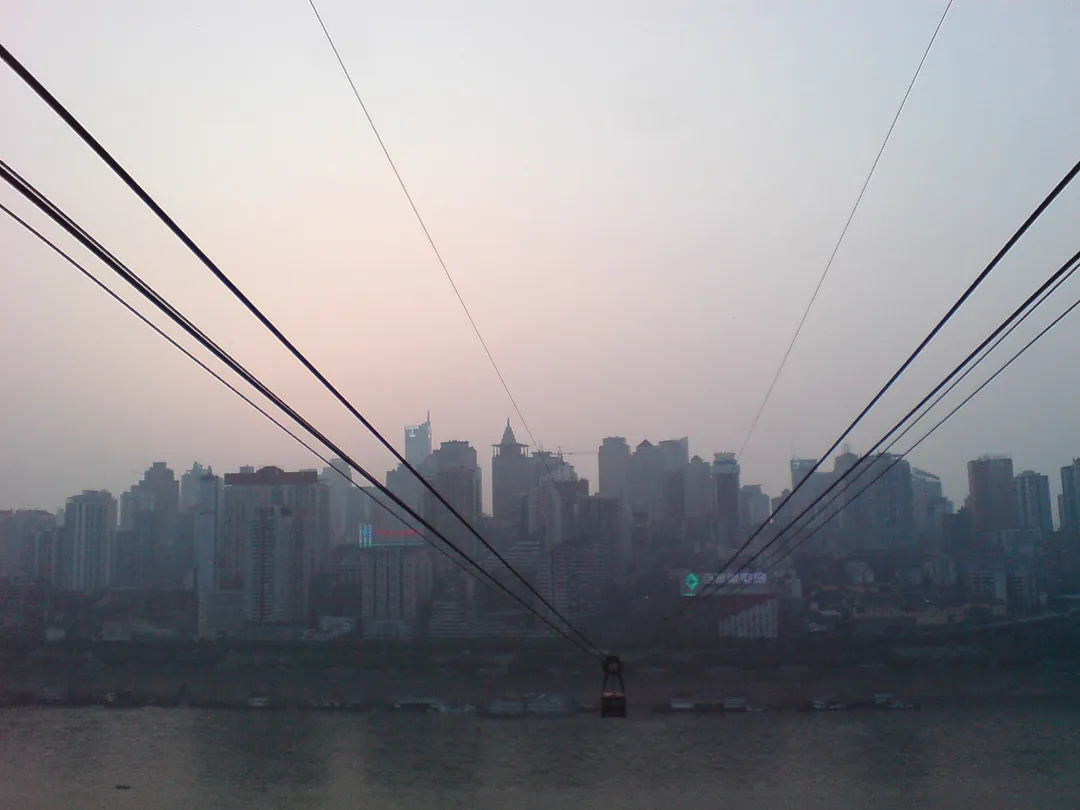
Opened in 1987 as real transit, the Yangtze River Cableway is China's last urban passenger cableway — four minutes over Chongqing's tiered skyscraper skyline.
Chongqing · Visitor Guide2026-10-27
Quick Answer
Is Yangtze River Cableway worth visiting?
A 1987 commuter cable car that still glides 1,166 m over the Yangtze between Yuzhong and Nan'an for about 20 yuan - the ride lasts under 5 minutes, but expect to queue an hour at peak.
Quick facts
| Ticket | ¥20 one-way, ¥30 round-trip (as of 2026) (verify) |
|---|---|
| Hours | Daily ~07:30-22:30 (summer), closing ~21:30 in winter; last boarding roughly 30 min before close. Hours shift by season - check the day you go. |
| Recommended duration | Ride ~4-5 min one-way; allow 30-60 min with queues, 1-2 hr at peak. |
| Best time to visit | Weekday morning before 9 am for short queues; clear late afternoon (16:00-17:00) for daylight skyline plus sunset. Night is prettiest but busiest. |
| How to get there | Metro Line 1 to Xiaoshizi Station (小什字), Exit 5A, then ~5 min walk to the Xinhua Road north terminal. DiDi from Jiefangbei ~10-15 yuan. |
| English signage | Partial |
| Wheelchair accessible | Partial |
| Built | 1987 (opened Oct; construction from 1986) |
| Length | ~1,166 m across the Yangtze |
| Terminals | Xinhua Road (north, Yuzhong) <-> Longmenhao (south, Nan'an) |
| Ride time | ~4-5 min one-way |
| Original fare | ~2 yuan as transit (until ~2013) |
| Rating | National 4A scenic area (not UNESCO) |
What to expect
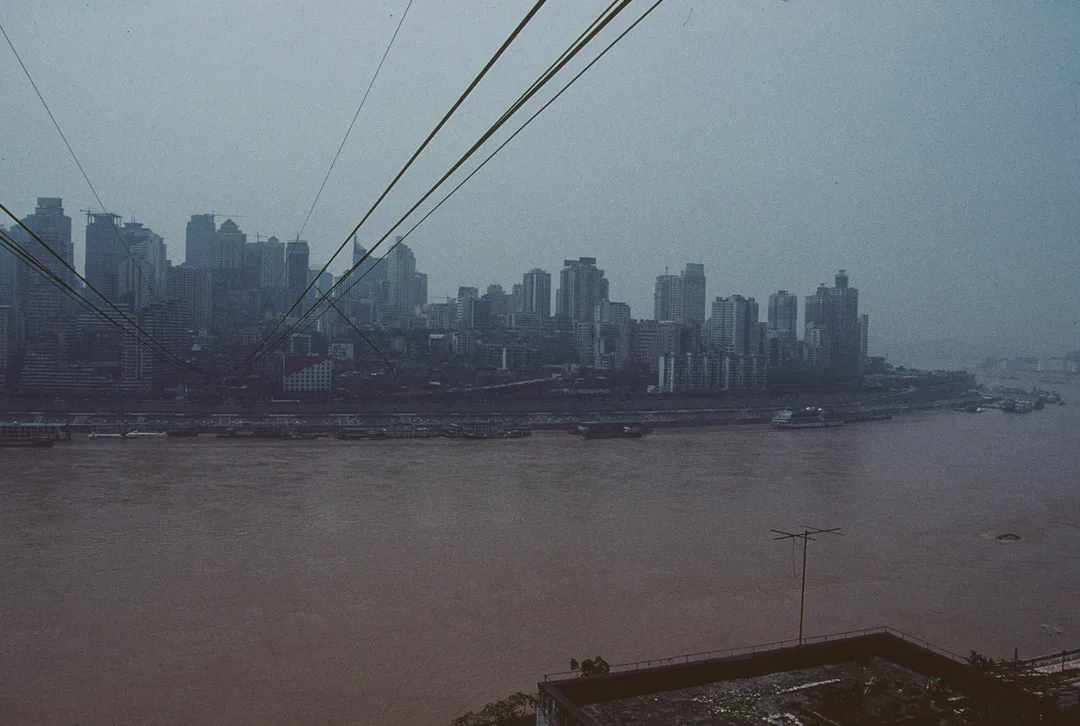
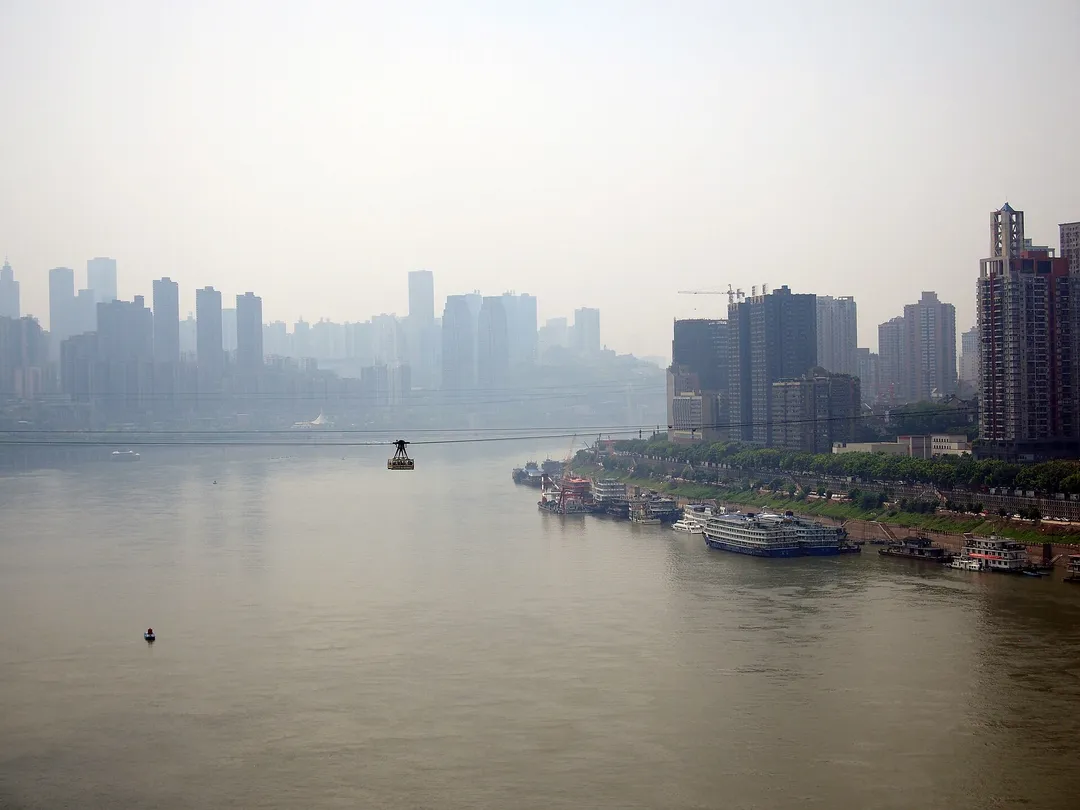
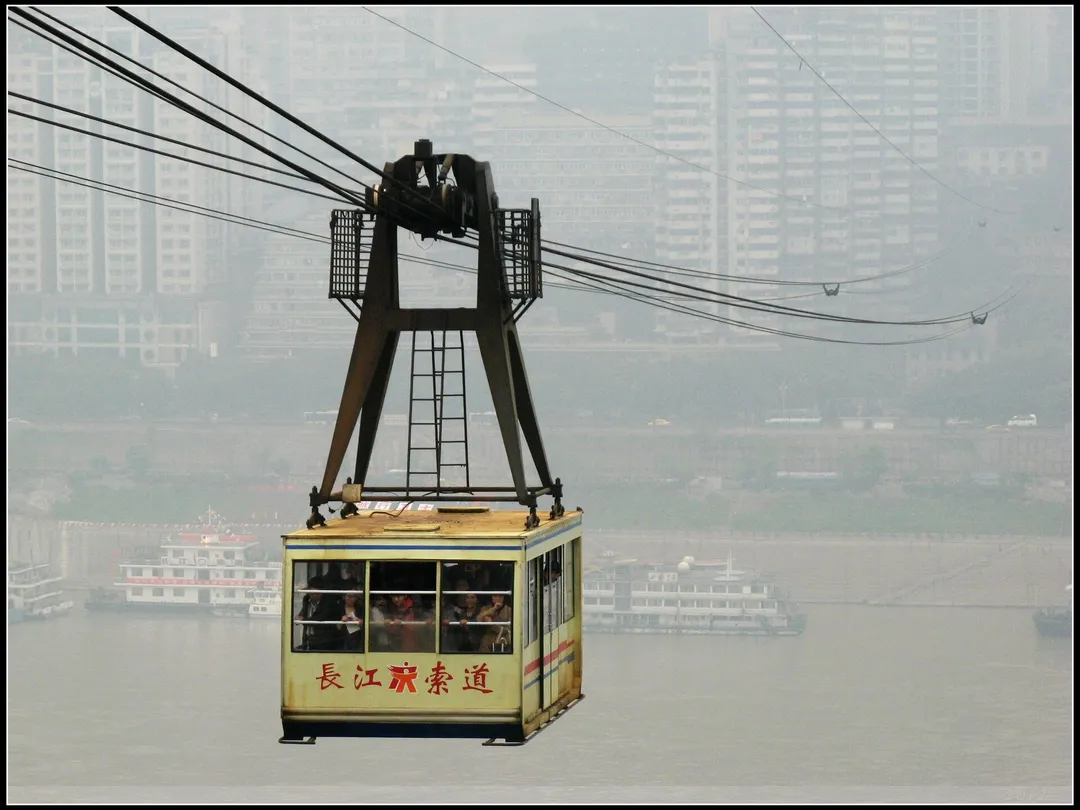
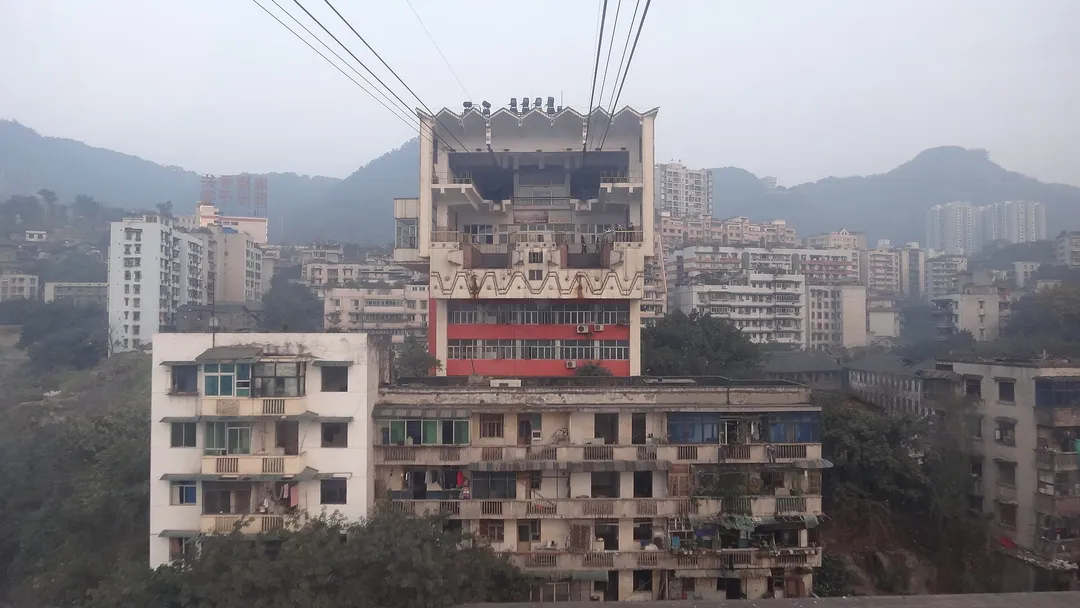
Board a large glass-walled cabin at the Xinhua Road terminal on the north bank and you're winched roughly 1,166 m across the Yangtze to Nan'an in about four minutes. The cabin holds around 50 standing passengers, so elbow your way to a window or you'll stare at someone's back. By day you see the river traffic, the layered hillsides, and the forest of towers in Yuzhong; at night the whole skyline lights up, which is the shot everyone wants - and why everyone shows up after 7 pm.
The cableway opened in 1987 (construction began 1986), built as real public transit: south-bank residents paid about 2 yuan to commute into the city center because the road bridges weren't there yet. As Chongqing stacked up bridges in the 2000s, ridership collapsed and the line was nearly scrapped; instead, around 2013, it was recast as a sightseeing ride. It's one of only two urban passenger cableways ever built in China - and its twin over the Jialing River was torn down in 2013, so this is the last one standing. That 1980s transit pedigree is the part most visitors miss while queuing for the selfie.
Most guidebooks sell the night ride as unmissable, but the queue then is the worst and the cabin windows glare with interior reflections after dark - a clear late-afternoon crossing around 16:00-17:00 gives you the daylight skyline and a sunset arrival with a fraction of the wait. The ride itself is the easy part; the queue is the trip. On a Saturday evening you can stand 60-90 minutes for four minutes in the air. Buy one-way north to south, then ride Metro Line 6 back - a round-trip just puts you in the same line twice. Skip it if the famous Chongqing fog or haze is thick; the 'river of clouds' photographs well but erases the skyline you came to see.
How to get there
Take Metro Line 1 to Xiaoshizi Station (小什字), use Exit 5A, and walk about 5 minutes east along Xinhua Road (新华路) to the north terminal - this is the entrance most tourists use, in Yuzhong District. From the south terminal at Longmenhao in Nan'an District, the nearest rail link is Metro Line 6 Shangxinjie Station (上新街), roughly 1.5 km away, so most riders do a one-way crossing north-to-south and take the metro back. DiDi from Jiefangbei to the north terminal costs about 10-15 yuan (5-10 min); from Chongqing North Railway Station roughly 25-35 yuan depending on traffic. Local buses stop at Xiaoshizi (小什字) - check a real-time transit app for current routes, as Chongqing renumbers services often. Avoid driving; parking near the Xinhua Road terminal is scarce and the queue to get in can back up onto the street.
Best photo spots
- Back corner of the cabin facing north as you depart the south bank - the Yuzhong skyline recedes behind you (best at dusk).
- South terminal platform, looking back north at the cabins gliding over the river with the Yuzhong towers behind.
- Dongshuimen Bridge pedestrian walkway - a wide context shot of both cables strung across the river.
- North approach at night - lit cabins suspended over the dark Yangtze with the city glow behind.
Tips
- Go on a weekday before 9 am - often walk-on; weekends and holidays mean 1-2 hr queues.
- Buy one-way (north to south) and take Metro Line 6 back; round-trip doubles your queue for almost no extra view.
- If the line is over an hour, bail - the free view from Dongshuimen Bridge or the Nanshan One Tree terrace rivals the ride.
- Pick a clear late afternoon (16:00-17:00) for daylight skyline plus sunset; avoid pure night rides (window glare plus the worst crowds).
- Bring student or senior ID for a discount, and pay via the official WeChat mini-program to skip the ticket-counter line.
Scams to avoid
- 'Skip-the-line' touts outside Xiaoshizi metro - there's no legitimate fast track, so ignore anyone selling it.
- Drivers who claim the cableway is 'closed today' and offer to take you to a jade or tea shop instead - a classic China diversion scam; insist on your destination or get a new car.
- Unofficial 'combo ticket' sellers near the entrance charging inflated prices - buy only at the terminal window or the official WeChat mini-program.
Frequently asked questions
How long is the ride?
About 4-5 minutes one way across the ~1,166 m span.
How much is a ticket?
Around 20 yuan one-way, 30 yuan round-trip (as of 2026) - verify current pricing; it rose when the cableway became a tourist attraction.
What are the opening hours?
Roughly 07:30-22:30 in summer, closing ~21:30 in winter; check the day you go, since hours shift by season.
Which metro stop do I use?
Metro Line 1, Xiaoshizi Station (小什字), Exit 5A, then about a 5-minute walk to the Xinhua Road north terminal - the main tourist entrance.
Should I buy one-way or round-trip?
One-way is plenty - ride north to south, then take Metro Line 6 back. Round-trip just means queueing twice for almost no new scenery.
How bad are the queues?
Weekends and holidays: 1-2 hours is normal. Weekday mornings before 9 am: often walk-on.
Is the night ride worth it?
The lit skyline is the highlight, but it's the busiest time and cabin windows reflect interior lights after dark - try a clear late afternoon instead.
How many people fit in a cabin?
Around 50 standing passengers per cabin; board early to grab a window spot.
Is it wheelchair accessible?
Partially - terminals have elevators to the platform, but boarding involves a step and crowded standing room, so check ahead if that matters to you.
Was it really a commuter service?
Yes - from 1987 it carried south-bank workers into the city center for about 2 yuan, until the bridges made it redundant around 2013.
Read next
Other things to do in Chongqing
Chongqing Zoo
A large southwest China zoo covering 43 hectares in Chongqing, home to 400-plus species and a leading giant panda base; 25 yuan peak, 20 yuan off-season, allow 3-4 hours.
Ciqikou Ancient Town
A 1,000-year-old Jialing River porcelain port turned pedestrian snack street in Chongqing's Shapingba District — free to enter, 2-3 hours to walk, and best at 08:30 on a weekday before the crowd.
Dazu Rock Carvings
50,000+ Buddhist, Taoist, and Confucian statues carved into Chongqing cliffsides between the 9th and 13th centuries.
Fengdu Ghost City
Fengdu Ghost City above the Yangtze in Chongqing, themed on the Chinese underworld; entry 80 yuan, open 08:00-17:30, allow 2-3 hours, blending Taoist, Buddhist and Confucian culture.
Hongyadong (Hongya Cave)
A 11-floor hillside complex of traditional Chinese stilted buildings rebuilt in 2006 on the site of a Ming-dynasty wall city gate.
Jiefangbei Pedestrian Street
Chongqing's central landmark, the 27.5 m Liberation Monument completed in 1940 as China's only surviving victory memorial of the War of Resistance; malls open 10:00-22:00.
Liziba Monorail Station
Chongqing Rail Transit Line 2 runs straight through floors 6-8 of a 19-storey apartment block at Liziba — a six-second spectacle you photograph from a free platform across the road.
Nanshan One Tree Viewing Platform
Chongqing's best night-view platform at about 400 m elevation, built in 1997; entry 30 yuan, open 09:00-22:30, reached by bus 384 from Shangxinjie metro station.
Three Gorges Museum
Chongqing's flagship museum, 42,000 sqm of galleries with 100,000+ relics; free with reservation, open 09:00-17:00, closed Mondays, 5 minutes on foot from Zengjiayan metro station.
Wulong Karst - Three Natural Bridges
A UNESCO World Natural Heritage site where three colossal natural bridges span a gorge — a filming location for Transformers: Age of Extinction. Entry CNY 125; allow 3-4 hours.
Museums in Chongqing
Chongqing China Three Gorges Museum
Chongqing's flagship Three Gorges Museum, covering the Yangtze gorges civilization, the ancient Ba Kingdom and the wartime Nationalist-capital years; verified in 2026.
Three Gorges Museum
The history of the Yangtze River, the Three Gorges Dam, and Chongqing — from ancient Ba culture to the world's largest hydroelectric project. Free. Allow 2–2.5 hours. Chongqing's premier museum.