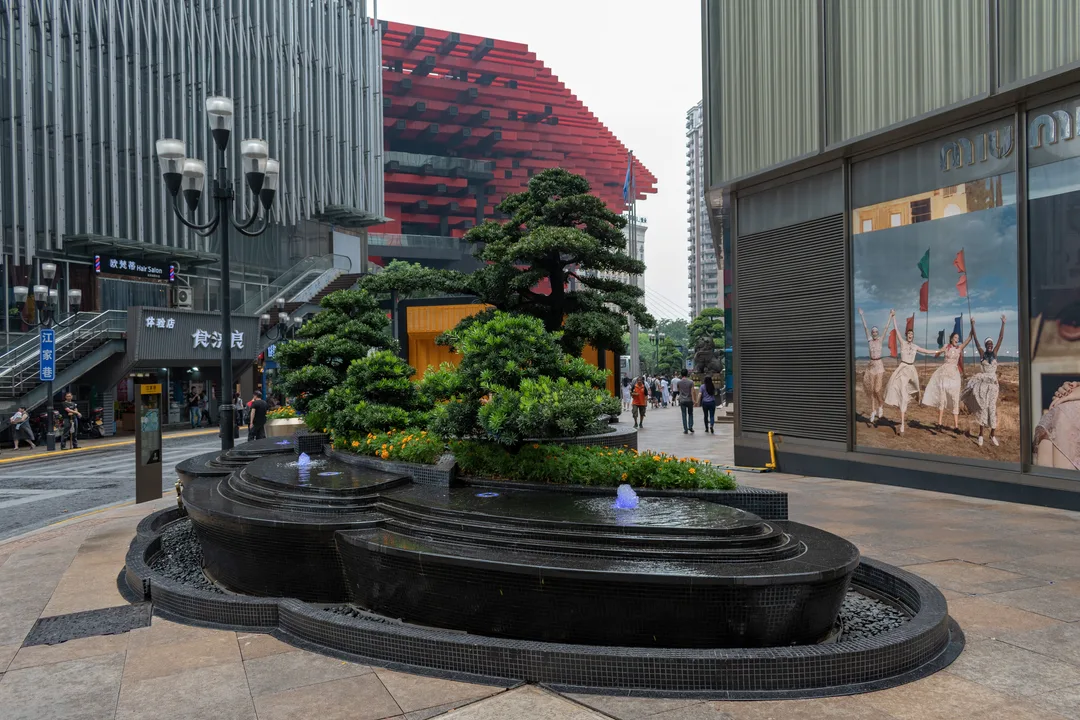
Jiefangbei Pedestrian Street解放碑
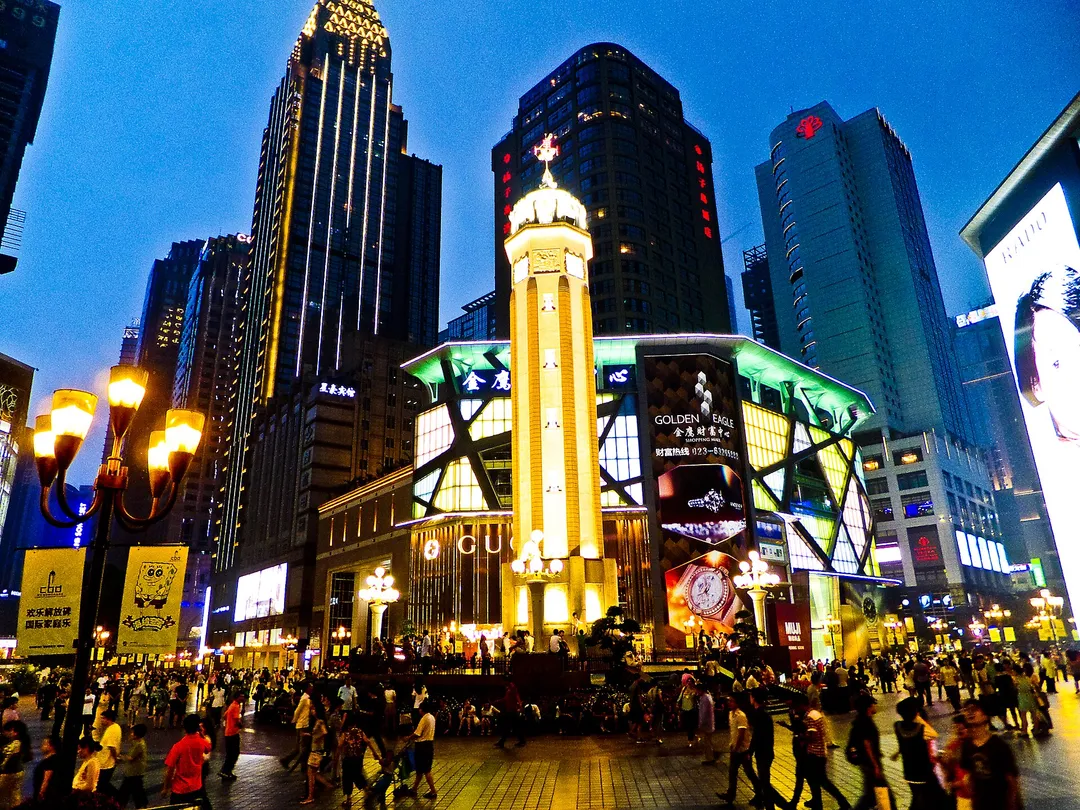
Jiefangbei is the commercial heart of Yuzhong District, Chongqing. Originally the War of Resistance Victory Memorial Monument, it is now the city's symbol and a shopping paradise; major malls cluster around it — the best place to feel Chongqing's urban buzz.
Chongqing · Visitor Guide2026-10-18
Quick Answer
Is Jiefangbei Pedestrian Street worth visiting?
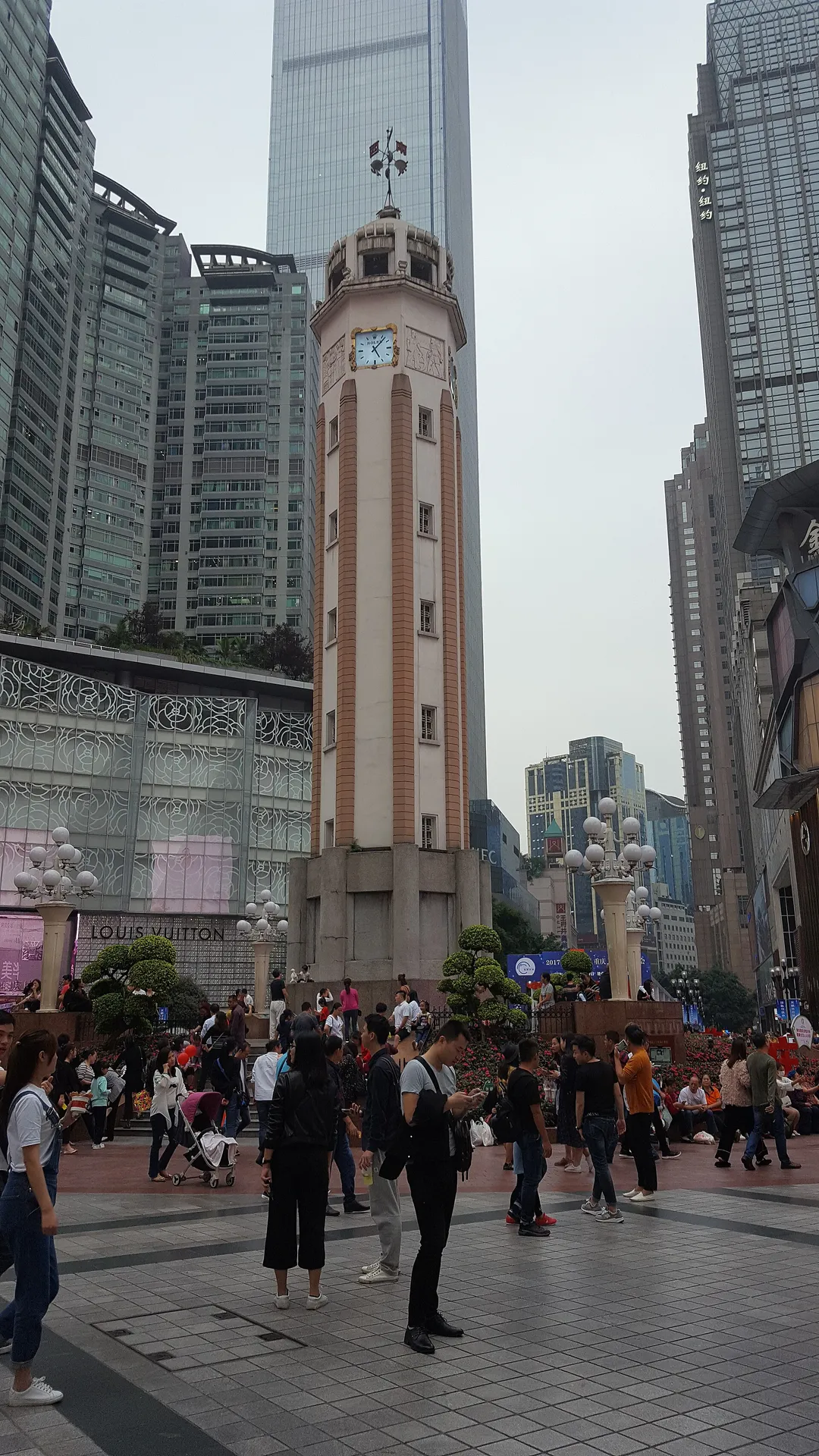
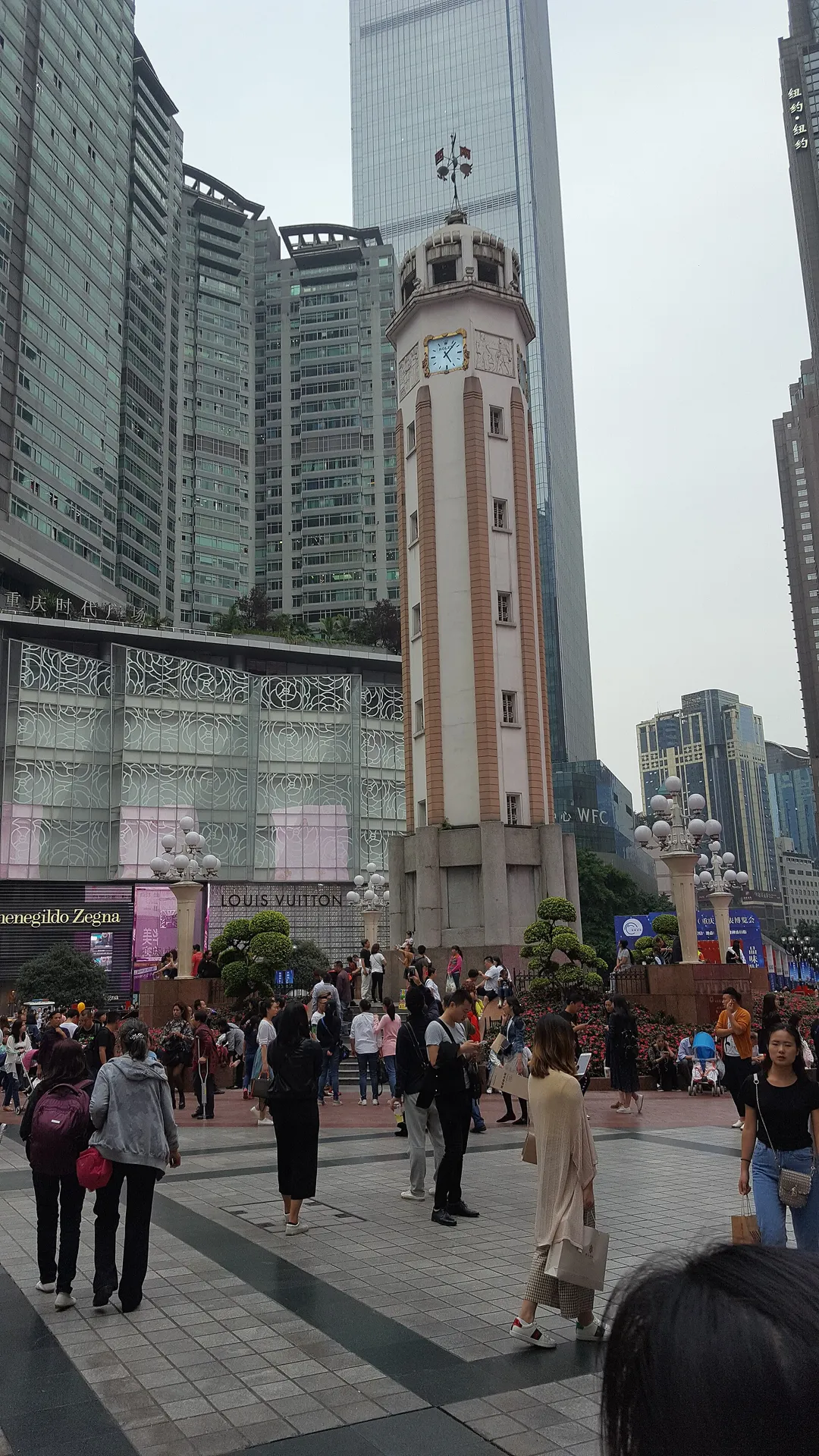
Chongqing's central landmark, the 27.5 m Liberation Monument completed in 1940 as China's only surviving victory memorial of the War of Resistance; malls open 10:00-22:00.
Quick facts
| Ticket | Free admission (spending in the surrounding malls at your own cost) |
|---|---|
| Hours | Open all day (malls 10:00-22:00) |
| Recommended duration | 2-3 hours |
| Best time to visit | Year-round; evenings have the best lights |
| How to get there | Metro Line 1 to Jiaochangkou or Line 2 to Linjiangmen; buses to the Jiefangbei stop |
| English signage | Yes |
| Wheelchair accessible | Partial |
| Address | Jiefangbei Pedestrian Street, Yuzhong District, Chongqing |
| Type | City landmark / shopping district |
| Built | 1940 (original Resistance Victory Monument) |
| Height | 27.5 m |
| Ticket | Free |
| Recommended duration | 2-3 hours |
What to expect
Jiefangbei, full name the War of Resistance Victory Memorial Monument, is a historical witness to China's victory in the War of Resistance. The octagonal tower is topped with an alarm bell, symbolizing the nation's unyielding wartime spirit. Today it is both a memorial and Chongqing's busiest commercial center, ringed by Jiefangbei Pedestrian Street, Guotai Plaza and Metropolitan Plaza.
The Jiefangbei shopping district is the trendiest retail heaven in Chongqing and southwest China, where international brands mix with local character. Street food abounds — Chongqing xiaomian noodles, suanlafen glass noodles, chuanchuan skewers. At night neon floods the whole area, showing off the unique charm of a mountain city built between two rivers.
As Chongqing's calling card, Jiefangbei has watched the river city change for a century. Luohan Temple and Hongyadong stand nearby — must-sees for first-time visitors. The monument itself is free, and malls and dining suit every budget.
How to get there
Metro Line 1 to Jiaochangkou (Exit 11) or Line 2 to Linjiangmen (Exit B) — both step out into the district. Many bus lines stop at Jiefangbei, about 200 m away on foot.
Best photo spots
- The Monument front-on, full frame
- The Jiefangbei crossroads from the Guotai Plaza rooftop
- The neon-lit pedestrian street at night
- Old Luohan Temple against the modern malls
Tips
- Come in the late afternoon: shop first, dinner after, then the night lights — the best sequence
- For xiaomian, locals queue for Huashi Wanza Noodles
- Holiday crowds are enormous — stagger your visit or plan routes ahead
- Guotai Plaza has a free observation deck — take the elevator to the top floor
Scams to avoid
- Some taxi drivers steer guests to specific restaurants for kickbacks — poor food at inflated prices
- Street QR-code gift giveaways may harvest personal data — be careful
- Fortune-tellers around Jiefangbei offer free readings then press for payment
Frequently asked questions
Does Jiefangbei charge admission?
The monument itself is free to visit. Mall and restaurant spending is up to you — nothing is compulsory.
What is good to eat nearby?
Plenty: Chongqing xiaomian, suanlafen, chuanchuan skewers, hotpot. Bayi Road Good-Eats Street, a famous snack street, is a 5-minute walk away.
When is the best time to visit?
Arrive mid-afternoon — shop first, catch the sunset at dusk, then enjoy the night lights. Every season has its own charm.
Read next
Other things to do in Chongqing
Chongqing Zoo
A large southwest China zoo covering 43 hectares in Chongqing, home to 400-plus species and a leading giant panda base; 25 yuan peak, 20 yuan off-season, allow 3-4 hours.
Ciqikou Ancient Town
The best-preserved old town in central Chongqing, where traditional Bayu architecture meets the city's wharf heritage — and one of its most popular photo spots. Free to enter; allow 3-4 hours.
Ciqikou Ancient Town
A 1,000-year-old Jialing River porcelain port turned pedestrian snack street in Chongqing's Shapingba District — free to enter, 2-3 hours to walk, and best at 08:30 on a weekday before the crowd.
Dazu Rock Carvings
50,000+ Buddhist, Taoist, and Confucian statues carved into Chongqing cliffsides between the 9th and 13th centuries.
Fengdu Ghost City
Fengdu Ghost City above the Yangtze in Chongqing, themed on the Chinese underworld; entry 80 yuan, open 08:00-17:30, allow 2-3 hours, blending Taoist, Buddhist and Confucian culture.
Hongyadong (Hongya Cave)
A 11-floor hillside complex of traditional Chinese stilted buildings rebuilt in 2006 on the site of a Ming-dynasty wall city gate.
Liziba Monorail Station
Chongqing Rail Transit Line 2 runs straight through floors 6-8 of a 19-storey apartment block at Liziba — a six-second spectacle you photograph from a free platform across the road.
Nanshan One Tree Viewing Platform
Chongqing's best night-view platform at about 400 m elevation, built in 1997; entry 30 yuan, open 09:00-22:30, reached by bus 384 from Shangxinjie metro station.
Three Gorges Museum
Chongqing's flagship museum, 42,000 sqm of galleries with 100,000+ relics; free with reservation, open 09:00-17:00, closed Mondays, 5 minutes on foot from Zengjiayan metro station.
Wulong Karst - Three Natural Bridges
A UNESCO World Natural Heritage site where three colossal natural bridges span a gorge — a filming location for Transformers: Age of Extinction. Entry CNY 125; allow 3-4 hours.
Yangtze River Cableway
A 1987 commuter cable car that still glides 1,166 m over the Yangtze between Yuzhong and Nan'an for about 20 yuan - the ride lasts under 5 minutes, but expect to queue an hour at peak.
Museums in Chongqing
Chongqing China Three Gorges Museum
Chongqing's flagship Three Gorges Museum, covering the Yangtze gorges civilization, the ancient Ba Kingdom and the wartime Nationalist-capital years; verified in 2026.
Three Gorges Museum
The history of the Yangtze River, the Three Gorges Dam, and Chongqing — from ancient Ba culture to the world's largest hydroelectric project. Free. Allow 2–2.5 hours. Chongqing's premier museum.