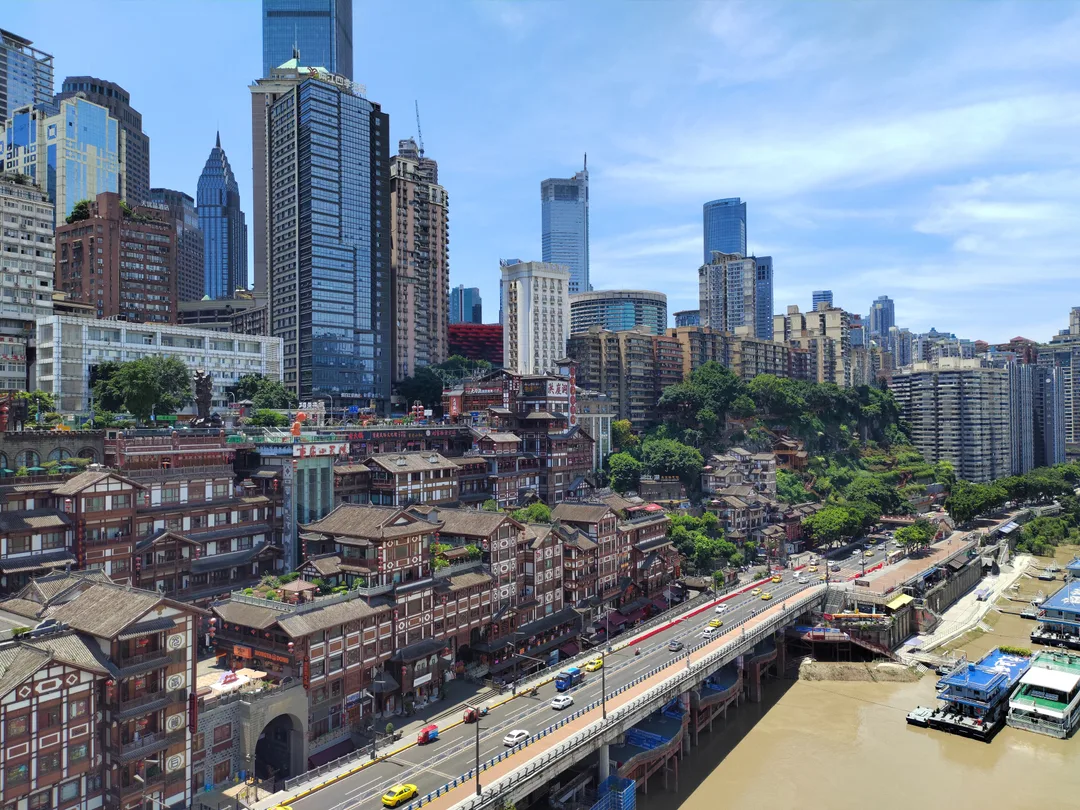
Hongyadong (Hongya Cave)洪崖洞
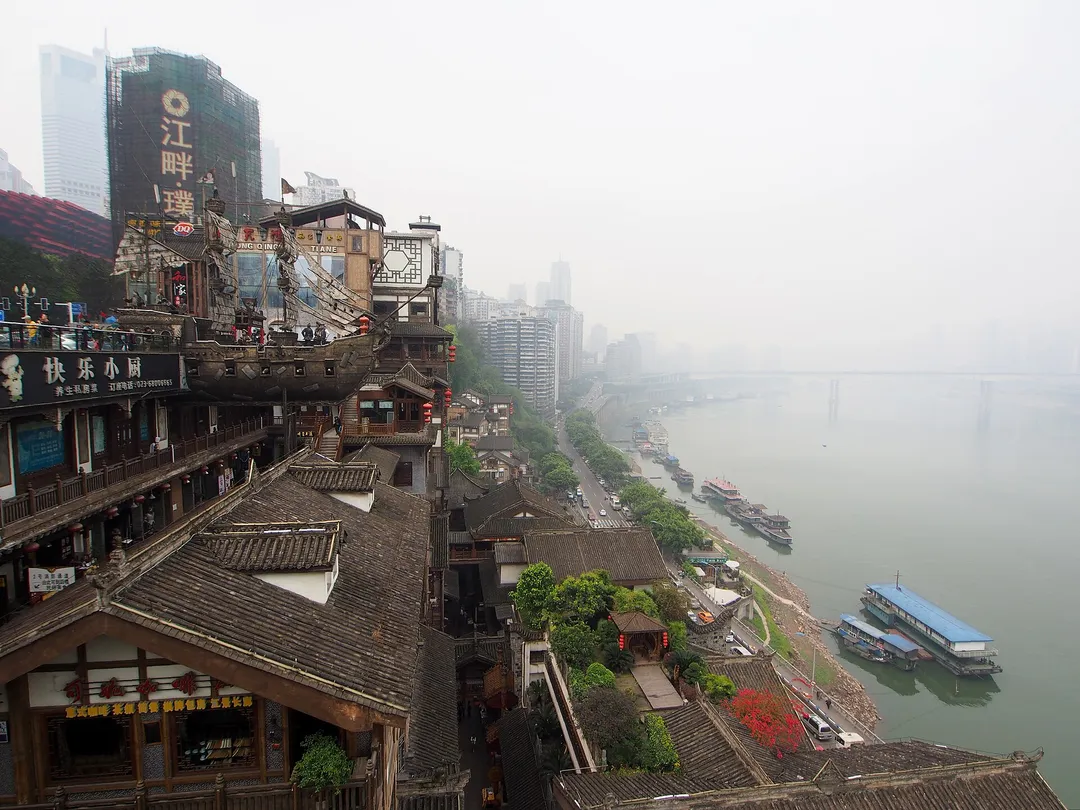
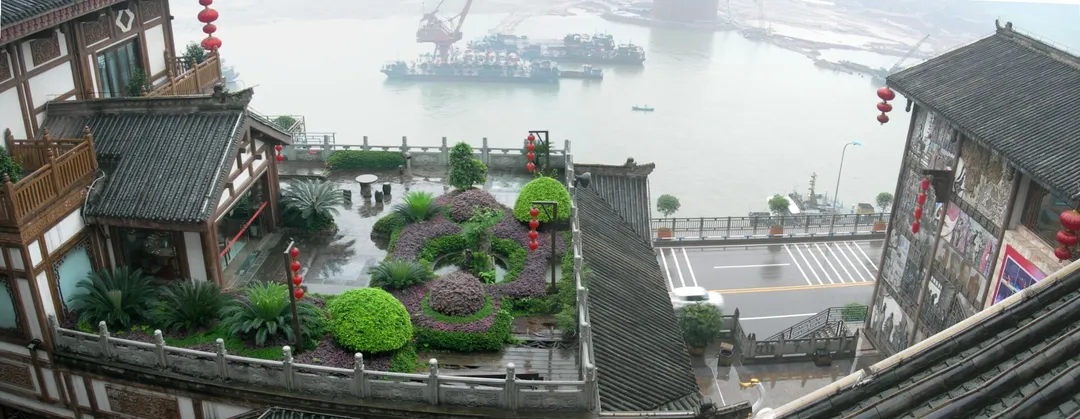
Hongyadong (literally "Hongya Cave") is a commercial residential complex on the cliffs above the Jialing River in Chongqing's Yuzhong District, built between 2003 and 2006 on the site of the old city's Ming-dynasty wall and the historic Hongya Gate (洪崖门). The 11-floor structure is built into the hillside so that its ground level is the same as the riverbank road (Jialing Road) while its top floor aligns with the urban grid above — a piece of architectural acrobatics that has made it one of China's most-visited tourist destinations. The buildings are designed in a "Ba-Yu folk" style drawing on Chongqing's pre-1949 architectural vocabulary: timber frames, hanging corners, tiled roofs, and dark timber walls with white plaster infill.
Chongqing · Visitor Guide2026-10-18
Quick Answer
Is Hongyadong (Hongya Cave) worth visiting?
A 11-floor hillside complex of traditional Chinese stilted buildings rebuilt in 2006 on the site of a Ming-dynasty wall city gate.
Quick facts
| Ticket | Free to walk through the public areas. ¥20 to access the rooftop observation deck (11th floor) for the full panorama over the Jialing River. All shops and restaurants inside are individually priced. |
|---|---|
| Hours | Open 24 hours. Most shops 10:00–22:00; bars and teahouses until 02:00. Best time to visit: evening (18:00–22:00) for the illuminated facades. |
| Recommended duration | 1–2 hours. |
| Best time to visit | Evening (after 18:00) for the illuminated facade — the building is at its most dramatic when lit in gold and red against the dark river. Weekday evenings are less crowded than weekends. The facade lit at night is the primary experience; daytime visits are less impressive. |
| How to get there | Metro Line 1 or 6 to Xiaoshilu (小什字) Station, Exit 8, then 10-minute walk along Jialing River Road. Metro Line 2 to Dongshanzi (东水门) Station, Exit 4, then 5-minute walk. A DiDi to the riverside drop-off costs ¥15–20 from anywhere in central Chongqing. |
| English signage | Partial |
| Wheelchair accessible | Partial |
| Floors | 11 floors (4 above ground, 7 below, built into the hillside) |
| Built | 2003–2006 on site of Ming-dynasty city wall gate |
| Area | ~46,000 m² |
| Location | Cliffside above Jialing River, Yuzhong District |
| Annual visitors | ~20 million |
| Best view | From the Jialing River promenade below, looking up at the illuminated facade |
What to expect
Hongyadong is not a historical site — it is a very good imitation of one, built between 2003 and 2006 by a private developer in collaboration with the Chongqing municipal government. The buildings are modelled on a romanticised version of the Ba-Yu (Chongqing) folk architecture that existed before WWII, combining Ming-dynasty wall aesthetics with Qing-dynasty timber residential design. The result is convincing from a distance (the illuminated facade is genuinely impressive) and somewhat theatrical up close (the "ancient" timber turns out to be kiln-dried concrete painted to resemble aged wood). Still, the site works: it sits precisely where the old Hongya Gate (洪崖门) and market once clustered, and the steep hillside location is authentic to the original geography.
The 11 floors are divided into themed zones: Level 1 (river level) has souvenir stalls and fast food; Levels 2–3 have local snacks and Chongqing hotpot restaurants; Levels 4–6 have boutique shops and bars; Level 11 (top, city level) is an observation deck and plaza with views over the confluence of the Jialing and Yangtze rivers. A free shuttle elevator runs from the river road to the top, though queues can be long in peak hours. The nighttime illumination (from 18:00 to 22:30) is the primary experience — the building glows in layered gold and red against the dark cliffside.
The Jialing River promenade below (亲水道) is where the best photographs are taken from: looking up from the river bank, the 11-floor building appears to float above the water, with the cliff face visible between the stilted structural elements. The promenade has become a Chongqing social space — locals gather here in the evening to dance, take photographs, and eat street food from the carts that set up after dark.
How to get there
Metro Line 1 or 6 to Xiaoshilu (小什字) Station, Exit 8. Walk 10 minutes along Jialing River Road (嘉滨路) toward the illuminated buildings — you will see Hongyadong from below before you reach it. Metro Line 2 to Dongshanzi (东水门) Station, Exit 4 — the most direct route to the riverside promenade. A DiDi to Jialing River Road drop-off costs ¥15–25 from anywhere in central Chongqing.
Best photo spots
- The Jialing River promenade directly below — the classic Hongyadong photograph showing the full illuminated facade reflected in the river
- From the Jiangbeizui area across the Jialing River — gives a wider angle view of Hongyadong on the cliffside with the city skyline
- The rooftop observation deck (11th floor) at blue hour (just after sunset) — the Jialing and Yangtze confluence in the golden city glow
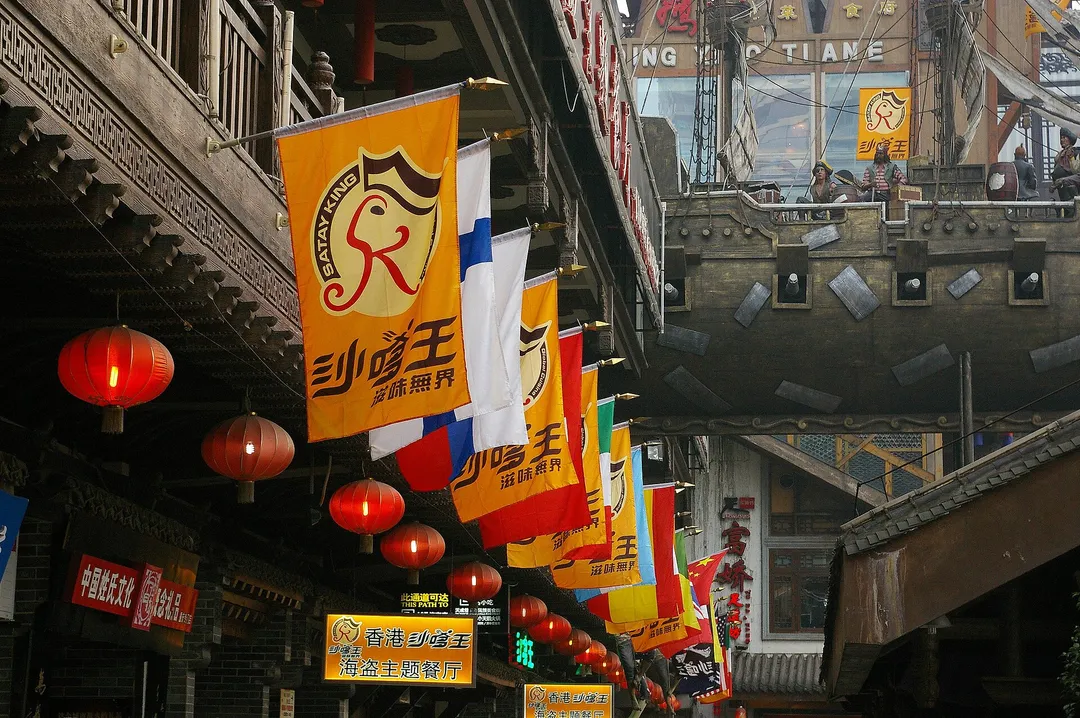
- Inside the Level 4 "Folk Street" indoor replica old-town street — the hanging lanterns and timber facades at night create an atmospheric travel-brochure shot
Tips
- Go after 18:00 and stay until 22:00 — the building is daytime-grey and unremarkable; the illuminated facade is what you are here for
- The Jialing River promenade below is free and more photogenic than the observation deck above
- Combine with a evening Jialing River cruise (¥80–150) — the boat passes directly below Hongyadong and gives the most dramatic facade angle
- Avoid Chinese national holidays (especially Golden Week) — Hongyadong receives up to 100,000 visitors per day during these periods and the queues for the elevator are extreme
- Chongqing hotpot in the riverside restaurants (Levels 2–3) is a local tradition — book ahead on weekends
Scams to avoid
- "Professional photographers" on the river promenade offering to take your photo with Hongyadong illuminated for ¥20–30 — the result is usually disappointing; take your own photo with a phone
- Vendors selling "aged" Chongqing crafts (leather, calligraphy, tea) at 3–5× market prices — the shops inside are individually priced and more honest than the street vendors
- Taxi drivers from Jiefangbei area who quote ¥50–80 for the short ride to Hongyadong — the meter should be ¥15–20; insist on the meter or use DiDi
Frequently asked questions
Is Hongyadong a real historical site?
No — it was built between 2003 and 2006 on the site of the old city's Ming-dynasty wall gate. The buildings are modelled on pre-WWII Ba-Yu folk architecture but are modern reconstructions (mostly concrete with timber cladding). The site is authentic in location but not in fabric.
Is Hongyadong free to visit?
Yes — walking through the public areas is free. The rooftop observation deck costs ¥20. All shops and restaurants inside charge individually. You do not need to pay anything to experience the illuminated facade from the river promenade below.
What is the best time to visit Hongyadong?
Evening, after 18:00, when the building is illuminated. The best photographs are taken from the Jialing River promenade directly below the building. Weekday evenings are less crowded than weekends.
How do I get to Hongyadong by metro?
Metro Line 1 or 6 to Xiaoshilu (小什字) Station, Exit 8, then 10-minute walk along Jialing River Road. Or Metro Line 2 to Dongshanzi (东水门) Station, Exit 4 — the most direct.
Is Hongyadong wheelchair accessible?
Partially. The main elevator from the river promenade to the top floors is accessible, but the narrow internal staircases and busy pedestrian streets are difficult for wheelchair users.
Read next
Other things to do in Chongqing
Chongqing Zoo
A large southwest China zoo covering 43 hectares in Chongqing, home to 400-plus species and a leading giant panda base; 25 yuan peak, 20 yuan off-season, allow 3-4 hours.
Ciqikou Ancient Town
The best-preserved old town in central Chongqing, where traditional Bayu architecture meets the city's wharf heritage — and one of its most popular photo spots. Free to enter; allow 3-4 hours.
Ciqikou Ancient Town
A 1,000-year-old Jialing River porcelain port turned pedestrian snack street in Chongqing's Shapingba District — free to enter, 2-3 hours to walk, and best at 08:30 on a weekday before the crowd.
Dazu Rock Carvings
50,000+ Buddhist, Taoist, and Confucian statues carved into Chongqing cliffsides between the 9th and 13th centuries.
Fengdu Ghost City
Fengdu Ghost City above the Yangtze in Chongqing, themed on the Chinese underworld; entry 80 yuan, open 08:00-17:30, allow 2-3 hours, blending Taoist, Buddhist and Confucian culture.
Jiefangbei Pedestrian Street
Chongqing's central landmark, the 27.5 m Liberation Monument completed in 1940 as China's only surviving victory memorial of the War of Resistance; malls open 10:00-22:00.
Liziba Monorail Station
Chongqing Rail Transit Line 2 runs straight through floors 6-8 of a 19-storey apartment block at Liziba — a six-second spectacle you photograph from a free platform across the road.
Nanshan One Tree Viewing Platform
Chongqing's best night-view platform at about 400 m elevation, built in 1997; entry 30 yuan, open 09:00-22:30, reached by bus 384 from Shangxinjie metro station.
Three Gorges Museum
Chongqing's flagship museum, 42,000 sqm of galleries with 100,000+ relics; free with reservation, open 09:00-17:00, closed Mondays, 5 minutes on foot from Zengjiayan metro station.
Wulong Karst - Three Natural Bridges
A UNESCO World Natural Heritage site where three colossal natural bridges span a gorge — a filming location for Transformers: Age of Extinction. Entry CNY 125; allow 3-4 hours.
Yangtze River Cableway
A 1987 commuter cable car that still glides 1,166 m over the Yangtze between Yuzhong and Nan'an for about 20 yuan - the ride lasts under 5 minutes, but expect to queue an hour at peak.
Museums in Chongqing
Chongqing China Three Gorges Museum
Chongqing's flagship Three Gorges Museum, covering the Yangtze gorges civilization, the ancient Ba Kingdom and the wartime Nationalist-capital years; verified in 2026.
Three Gorges Museum
The history of the Yangtze River, the Three Gorges Dam, and Chongqing — from ancient Ba culture to the world's largest hydroelectric project. Free. Allow 2–2.5 hours. Chongqing's premier museum.