This page is archived and no longer updated — see the current guide: See the current guide
Fuzhou West Lake福州西湖
Fuzhou West Lake is a 1,700-year-old lake garden begun in the Jin dynasty and expanded under Tang, Song and Qing — today the city's beloved free park.
Fuzhou · Visitor Guide2026-10-19
Quick Answer
Is Fuzhou West Lake worth visiting?
1,700-year-old imperial garden in the city center. Free. Lotus ponds, pavilions, and Fuzhou's best urban green space.
Quick facts
| Ticket | Free entry (as of 2026). Boat rental: ¥30–60 per person. Zoo: ¥25. |
|---|---|
| Hours | Park: 6:00–22:00 (summer), 6:00–21:00 (winter). Boat rentals: 8:00–17:30. Zoo: 8:00–17:00. |
| Recommended duration | 1–3 hours depending on activities. |
| Best time to visit | Early morning (6:00–8:00) for tai chi and calligraphy practitioners. Spring for lotus blooms. Summer evenings for lakeside tea. Autumn for comfortable walking. Avoid midday summer heat. |
| How to get there | Take Metro Line 1 to Shangchuan (上藤) or Dongjie (东街口) station, then walk 10 minutes west. Alternatively, take bus routes 1, 54, 65, 66, 70, 77, 80, 86, 109, 111, 121, 128 to West Lake (西湖) stop. |
| English signage | Partial |
| Wheelchair accessible | Yes |
| Age | 1,700 years (established Jin Dynasty, 282 AD) |
| Lake area | 0.43 km² |
| Imperial status | Imperial garden during Tang, Song, and Qing dynasties |
| Key feature | Lotus pond, island with pavilion, tree-shaded walking paths |
| Free zoo | Fuzhou Zoo inside the park (¥25) |
What to expect
Fuzhou West Lake was first excavated in 282 AD during the Jin Dynasty as an irrigation reservoir for the surrounding farmland. Over the following centuries, successive dynasties recognized the beauty of its still waters and built pavilions, causeways, and garden structures around its shores. During the Song Dynasty (960–1279), it reached its peak as an imperial garden — emperors from the Northern Song through the Qing dynasty visited Fuzhou and expanded the lake's structures. The name "West Lake" (西湖) echoes Hangzhou's famous West Lake, though Fuzhou's version is smaller, more intimate, and less crowded.
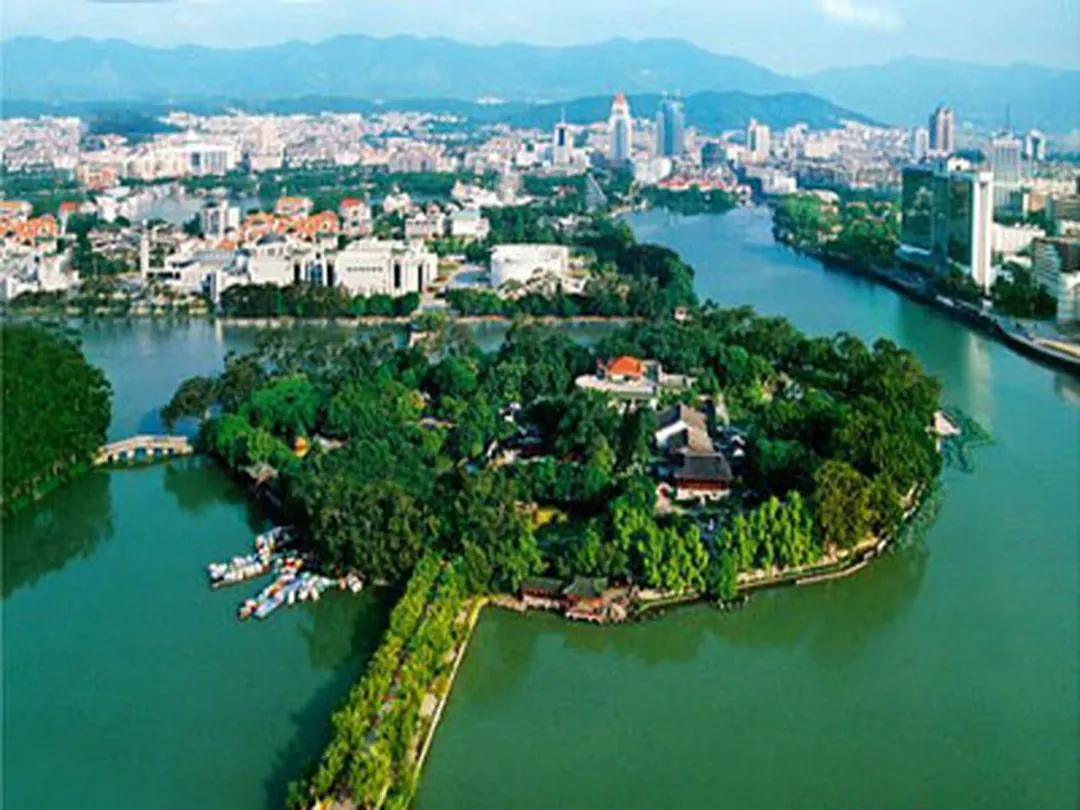
Today the park occupies 43 hectares of lakeside green space in central Fuzhou, with the lake itself covering most of that area. A causeway (玉带桥) crosses the narrowest part of the lake, connecting the main shore to a small island topped by the 开化寺 (Kaohua Temple) and a classic Chinese pavilion. The lake is planted with lotus, and in summer the surface is nearly covered with pink and white blooms. The surrounding parks and pathways are shaded by banyan, cypress, and magnolia trees, some of which are centuries old.
The park is free and open all day, making it Fuzhou's most democratic public space. At dawn, hundreds of locals practice tai chi, dance, and practice calligraphy on the pavement with water brushes. By mid-morning, the boat rental docks are busy with families. The Fuzhou Zoo occupies the park's western section and has pandas, tigers, and elephants — a popular draw for children.
How to get there
Metro Line 1 to Shangchuan (上藤) station, Exit 1, then walk west along Tong Alley (铜盘路) for 10 minutes. Or Metro Line 1 to Dongjie (东街口) station, then walk west and south for 15 minutes. Bus routes 1, 54, 65, 66, 70, 77, 80, 86, 109, 111, 121, and 128 stop at the West Lake (西湖) stop on Hualin Road (华林路).
Best photo spots
- The玉带桥 (Jade Belt Bridge) with lotus blooms in summer — the park's most famous image
- The sunrise scene with tai chi practitioners on the lakeside promenade
- The island pavilion reflected in the still morning lake — best with mist
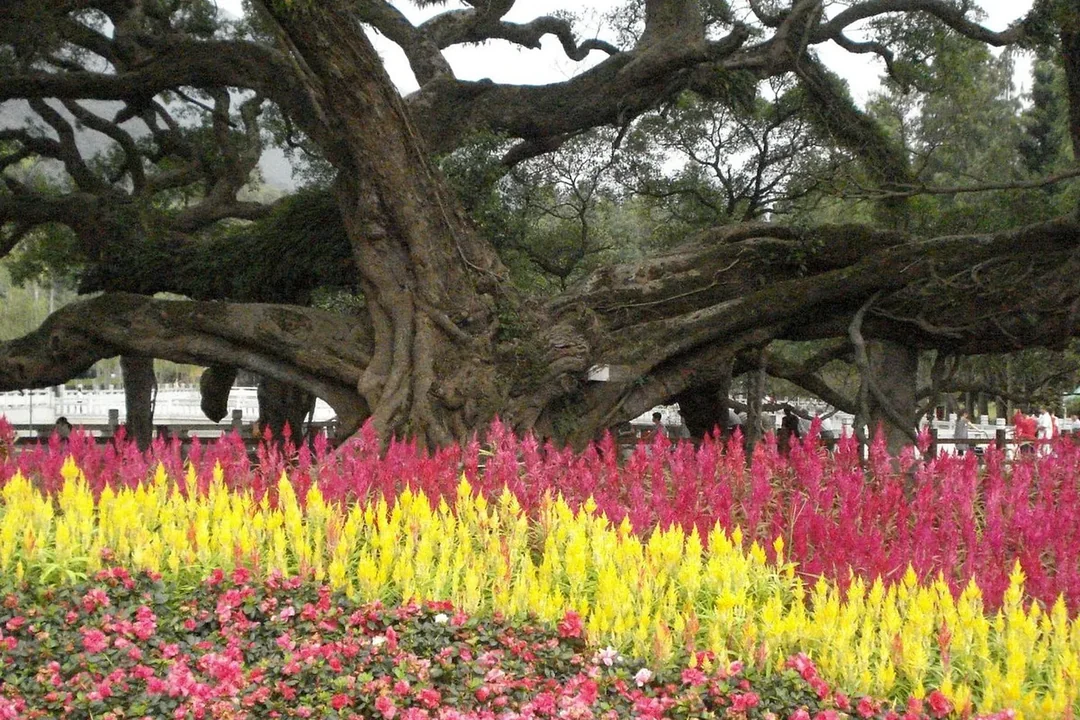
- The banyan tree avenue on the north side of the lake — massive gnarled trunks and spreading canopy
Tips
- Come at 6:30 AM to see the tai chi and calligraphy practitioners in full force — it's one of Fuzhou's most authentic experiences
- Rent a paddleboat (¥30 per person for 30 minutes) to get on the water — the lotus patches are best seen from the lake
- Combine with a visit to the Fuzhou Zoo if traveling with children
- The park is next to Fuzhou's museum district — the Fujian Museum of History and Fuzhou City Museum are nearby
- The best season is June–August when the lotus is in bloom; come early morning to avoid the heat
Scams to avoid
- "Friendship" scams where someone approaches and tries to befriend you before asking for money — common in any popular Chinese park; politely decline
- No significant commercial scams in the park itself — it's a genuine public space
Frequently asked questions
What is the difference between Fuzhou West Lake and Hangzhou West Lake?
Fuzhou West Lake is much smaller (43 hectares vs. Hangzhou's 600 hectares), much less crowded, and free to enter. Hangzhou's West Lake is a UNESCO World Heritage site with pagodas, temples, and a dramatic mountain backdrop. Fuzhou's West Lake is more intimate and locally authentic — it feels like a community park rather than a tourist attraction.
Is the lake safe for boating?
Yes — the boats are standard pedal or row boats, life jackets are available, and the lake is shallow and calm. Children must be supervised. Boat rental is ¥30–60 per person for 30 minutes.
Is Fuzhou West Lake wheelchair accessible?
Yes — the main walking paths are smooth and level, and the causeway bridge has gentle slopes rather than stairs. The island pavilion requires a few steps but can be accessed via a ramp on the far side.
What is the best time of day to visit?
Early morning (6:00–9:00) for the most authentic atmosphere — tai chi, dancing, and water calligraphy. Late afternoon (4:00–6:00 PM) for sunset and cooler temperatures. Evening for the lit pavilions and night scene.
Are there food options in the park?
Small food stalls near the south gate sell snacks and drinks. The park is surrounded by restaurants on Hualin Road and Tong Alley. There are tea houses on the island.
Read next
Other things to do in Fuzhou
Drum Mountain
Covering about 48 square kilometers on the east bank of the Min River, Drum Mountain rewards a half-day trip with the 783-meter peak, a 1,000-year-old Yongquan Temple, cliff carvings, and a cable car.
Pingtan Island
Fujian's largest island, connected by bridge to the mainland. Sea breeze, windmills, beaches, and China's largest seaside Buddha. Free to drive onto; plan a full day or 2 with an overnight.
Gushan (Drum Mountain)
Forested mountain park east of Fuzhou with ancient temples, pavilions, and city views. Cable car to summit. Free to enter; ¥70 cable car.
Min River (Minjiang River)
Fujian's largest river, flowing past Fuzhou's colonial riverfront. Night cruise shows city's illuminated skyline. ¥100+ for cruise.
Three Lanes and Seven Alleys
Fuzhou's 1100-year-old heritage district of Ming and Qing courtyard houses and scholar gardens; free to wander the lanes, historic-house tickets from 120 yuan, on Metro Line 1 at Dongjiekou.
Fujian Tulou — Nanjing Cluster
Clusters of rammed-earth round towers in tea-growing hills 130 km southwest of Xiamen — about 90 yuan gets you into Tianluokeng and Yunshuiyao for a long, slow day of stepping into courtyards.
Yongding Tulou Cluster
The Yongding cluster holds roughly 23,000 earthen roundhouses inside one Fujian county; budget 1 long day (about 10 hours door-to-door from Xiamen) for the three headline towers — Chengqi, Zhenc.
Museums in Fuzhou
Fujian Museum
Fujian's provincial museum in Fuzhou, strong in Min culture, overseas Chinese history, maritime heritage and the Jian-kiln Fujian blue ceramics. Free; verified in 2026.
Fuzhou Three Lanes and Seven Alleys Museum
The museum of Fuzhou's Three Lanes and Seven Alleys, China's best-preserved Song-dynasty alley network, some 1,600 years old. Free with district entry; verified in 2026.