This page is archived and no longer updated — see the current guide: See the current guide
Shexian Ancient City歙县古城
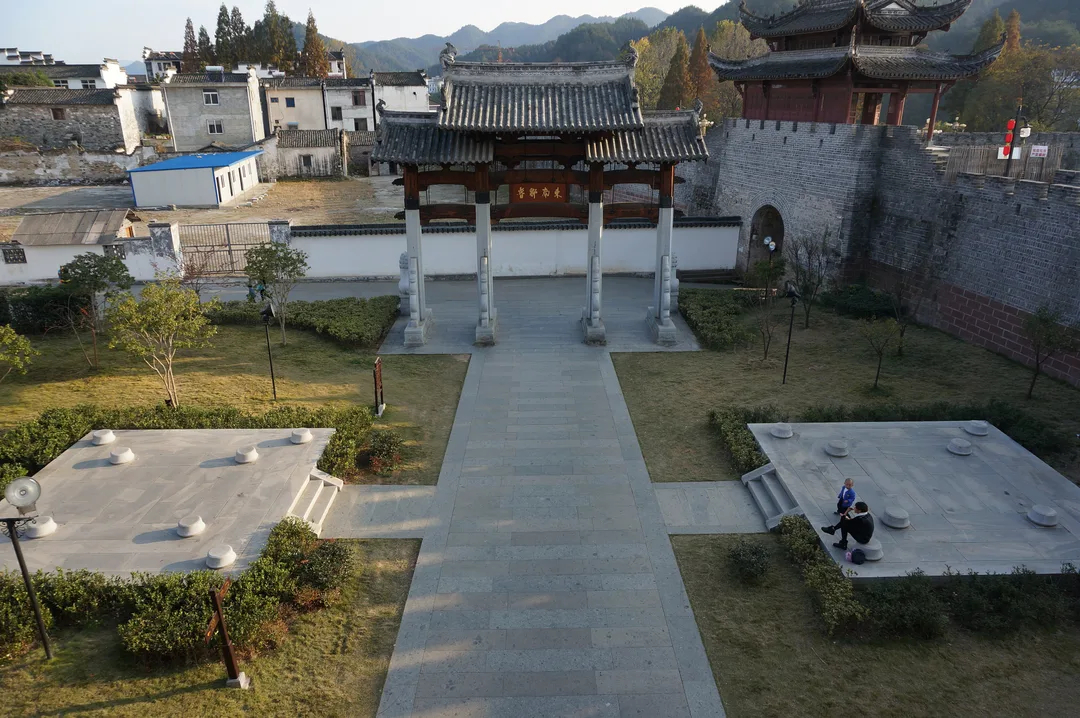
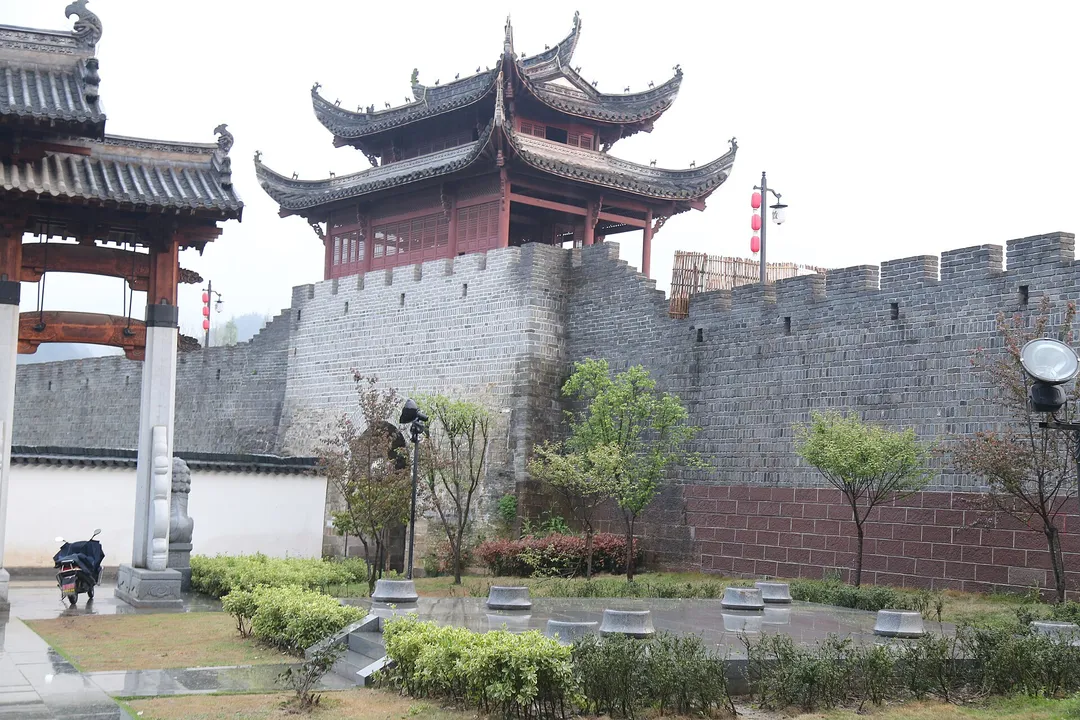
Cradle of Huizhou culture and seat of the Huizhou prefecture from the Tang — its lanes preserve Ming and Qing houses, the Xu Guo Stone Arch and old city walls.
Huangshan · Visitor Guide2026-10-19
Quick Answer
Is Shexian Ancient City worth visiting?
Cradle of Huizhou culture in Huangshan, founded in 221 BC with 2200+ years of history; free to enter with an 80-yuan combo ticket for sights, open 08:00-17:30.
Quick facts
| Ticket | Ancient city free to enter; Xu Guo Stone Arch 20 yuan; combo ticket 80 yuan |
|---|---|
| Hours | City walls open all day; inner sights 08:00-17:30 |
| Recommended duration | 3-5 hours |
| Best time to visit | Year round; best in spring (rapeseed season) and autumn (chrysanthemum shows) |
| How to get there | Tourist bus from Huangshan North station to Shexian (about 40 minutes); by car via the Beijing-Taipei expressway |
| English signage | Partial |
| Wheelchair accessible | Partial |
| Founded | Qin dynasty (221 BC) |
| Prefectural seat | Tang to Qing (618-1912) |
| UNESCO status | Extension project of the Ancient Villages World Heritage listing |
| Key sights | Xu Guo Stone Arch, ancient city walls, Doushan Street |
| Cultural standing | Birthplace of Huizhou culture |
| Protected area | About 2 sq km of old city |
What to expect
Shexian is the birthplace and core of Huizhou culture, with more than 2,200 years of history since the Qin made it a county. From the Tang onward it was the seat of the Huizhou prefecture — the political, economic and cultural centre of the region.
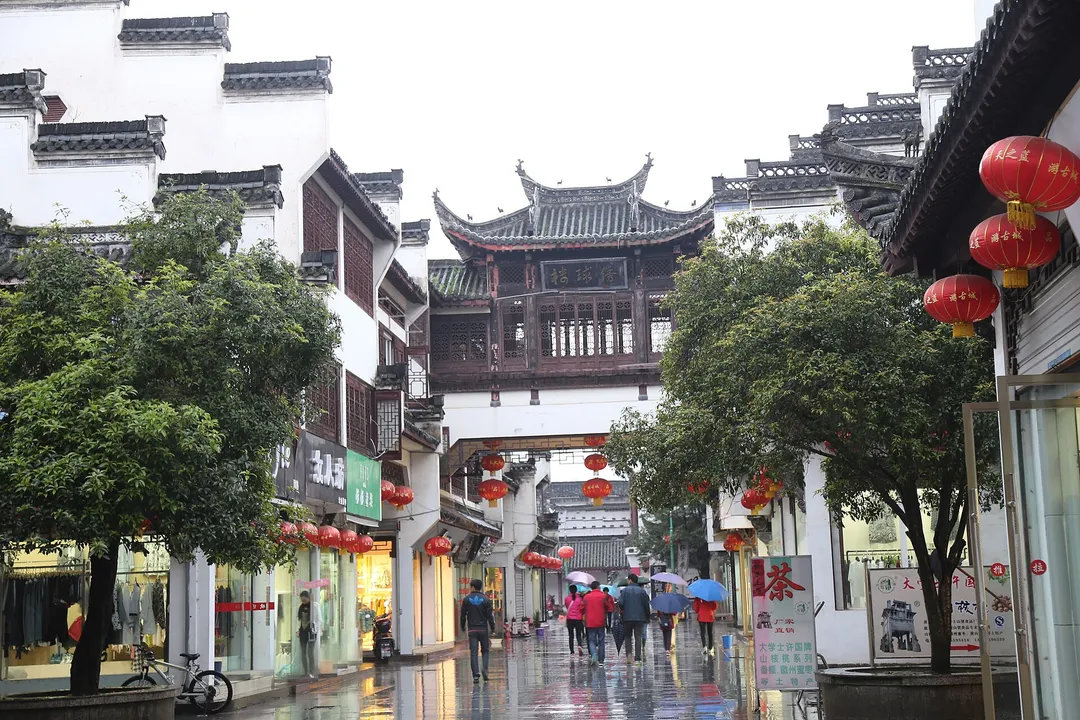
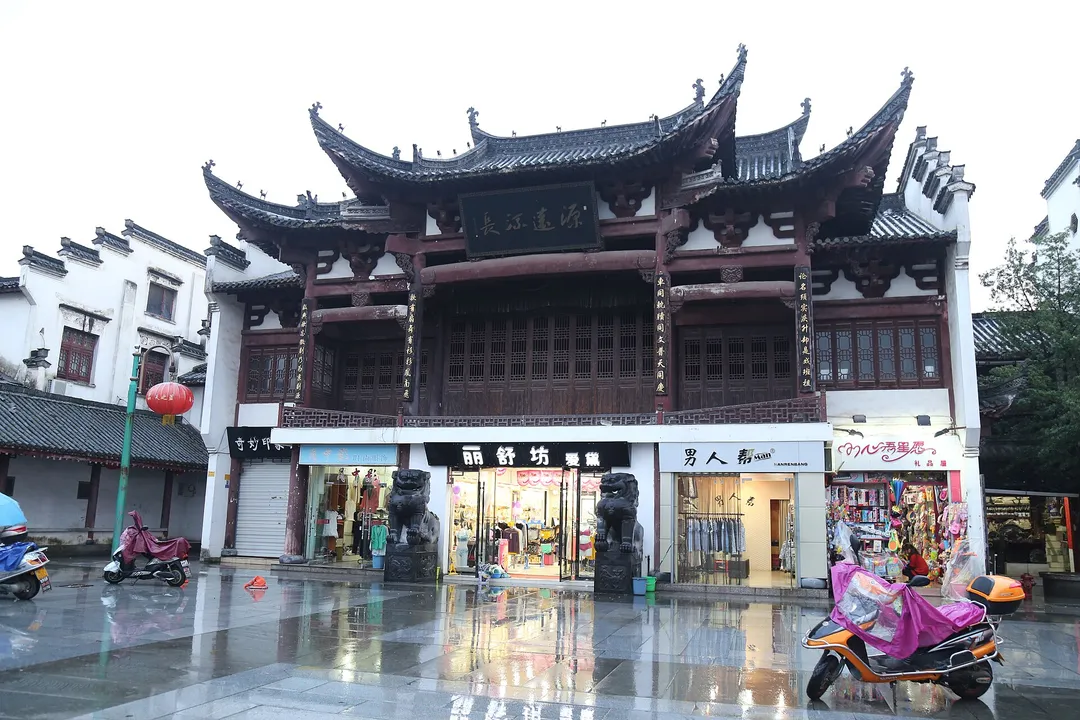
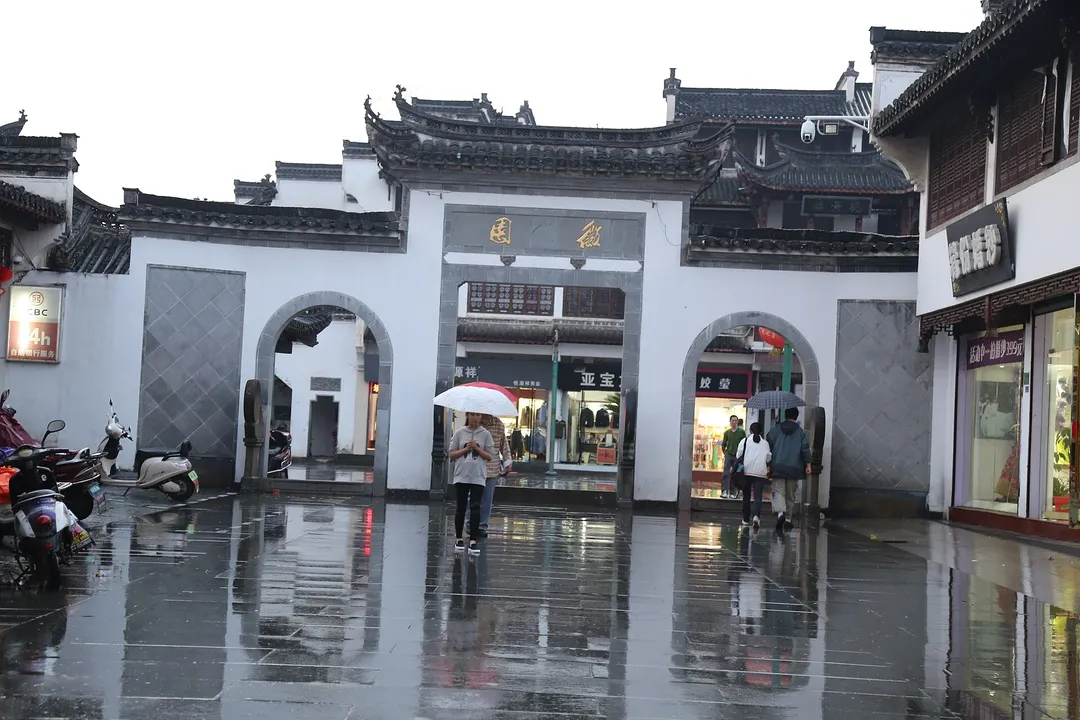
The old city is shaped by water and hills: the Lianjiang river wraps around it as a natural moat. Doushan Street is the best-preserved lane, its flagstone path lined with Ming and Qing houses — a 'living fossil' of Huizhou architecture.
The Xu Guo Stone Arch, raised in the Wanli era of the Ming for Grand Secretary Xu Guo, is the only eight-cornered memorial archway in Huizhou. Its carving is so fine it is crowned the masterpiece of Huizhou stonework.
How to get there
Tourist buses run direct from Huangshan North railway station to Shexian in about 40 minutes; shuttle buses from Tunxi, the city centre, take about an hour. Drivers exit the Beijing-Taipei expressway at Shexian.
Best photo spots
- The Xu Guo Stone Arch in full (best at sunset)
- The flagstone lane of Doushan Street
- The northern stretch of the ancient city wall
- Reflections in the Lianjiang river
- Deep in the old alleys and lanes
Tips
- Pair the day with Baojia Garden and the Tangyue Memorial Archways — combo tickets are available
- Doushan Street photographs best early or late, away from the crowds
- Shexian is the home of Hui ink and She inkstones — genuine scholar's-studio keepsakes are sold here
- The old city has many Huizhou restaurants — try the authentic local flavours
Scams to avoid
- Vendors sell fake She inkstones that are machine-pressed — know how to tell them apart
- Some low-priced guides make it up on commission shopping stops
Frequently asked questions
How do Shexian and Huangshan relate?
Shexian is a county under Huangshan city (the city itself grew out of Tunxi). Shexian is the historic core of Huizhou culture — 'the ancient city of Huizhou'.
Can I see the main sights in one day?
With a hired car or your own, yes: the ancient city, Baojia Garden, the Tangyue archways and Chengkan all fit in a day. By public transport, plan two days.
Does the ancient city charge admission?
The city itself is free; inner sights such as the Xu Guo Stone Arch and the Tao Xingzhi Memorial require tickets. The 80-yuan combo ticket covers them and is better value.
Read next
Other things to do in Huangshan
Baojia Garden
China's largest private garden near Shexian in Huangshan, about 24 hectares (360 mu) with 10000+ Hui-style bonsai; entry 50 yuan, open 08:00-17:00, home to an 800-year-old plum.
Chengkan Village
A fengshui village laid out on the Eight Trigrams pattern, hailed as the finest of Jiangnan — three streams thread past 21 nationally protected Ming buildings. Allow 2-3 hours.
Huangshan Hot Springs
Hot springs in the Huangshan scenic area with over 1000 years of history; water at 37-42°C, about 400 tonnes daily, soak for around 238 yuan, 14:00-22:00, a great break after hiking.
Hongcun
A 900-year-old Huizhou village at the foot of Huangshan — the most beautiful water village in China, with a lotus pond, moon bridges, and traditional Anhui architecture. ¥104. 2–3 hours.
Yellow Mountain
China's most celebrated mountain — 36 granite peaks, seas of cloud, gnarled pines, and hot springs. UNESCO World Heritage Site. ¥150–230. 1–2 days minimum.
Qiyun Mountain
One of China's four sacred Taoist mountains near Huangshan, 585 m high with Taoist sites dating back some 1,300 years to the Tang; 68 yuan entry, cableway 35 one way, best April-October.
Xidi Village
Hui-style ancient village founded in 1047 and UNESCO-listed with Hongcun in 2000; entry 104 yuan, open 07:30-17:30, famed for brick, wood and stone carvings.
Yellow Mountain (Huangshan)
China's most revered mountain — granite peaks, twisted pines, sea of clouds, and summit sunrises. The landscape that inspired classical Chinese ink painting. ¥230. 2 days minimum.