Huangshan · Visitor Guide
Yellow Mountain (Huangshan) (黄山, Huáng Shān)
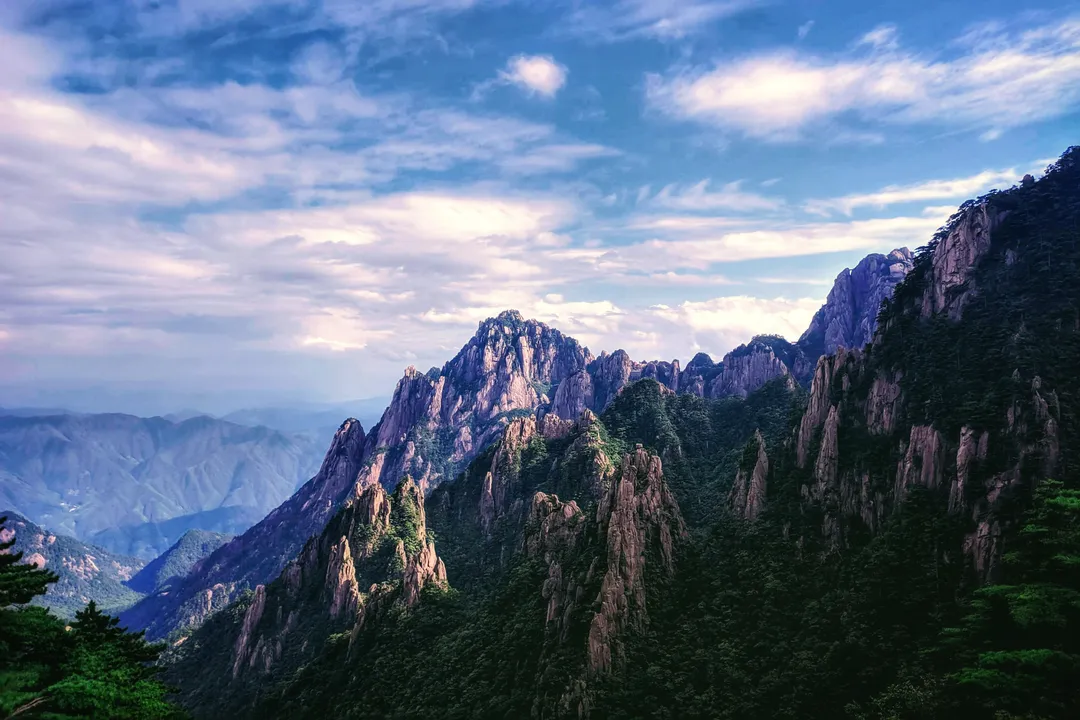
"Yellow Mountain (Huangshan) in Anhui Province is the most celebrated mountain in Chinese art and literature — its granite peaks, ancient twisted pines (Pinus hwangshanensis), and seas of cloud have been the subject of Chinese ink paintings for over 1,000 years. There are 72 named peaks above 1,000 m, with the three tallest — Lotus Peak (1,864 m), Bright Summit (1,860 m), and Celestial Capital (1,829 m) — accessible by cable car or hiking. Sunrises from the summit hotels, the \"sea of clouds\" effect (雲海) on 200+ days per year, and hot springs at the base make it a complete mountain destination. Spend at least one night on the summit.".
Last updated:
Quick Answer
Is Yellow Mountain (Huangshan) worth visiting?
"China's most revered mountain — granite peaks, twisted pines, sea of clouds, and summit sunrises. The landscape that inspired classical Chinese ink painting. ¥230. 2 days minimum.".
Quick facts
| Ticket | ¥230 park entry (3-day pass as of June 2026). Cable cars: ¥80–100 each way. Summit hotel: ¥800–2,500/night (book 2+ weeks ahead). Hot springs: ¥188. |
|---|---|
| Hours | Park open 6:30–17:00. Cable cars operate roughly 7:00–16:30. Summit areas accessible 24/7 for hotel guests. |
| Recommended duration | 2 days minimum. Day 1: ascend + afternoon summit walk. Day 2: sunrise + more peaks + descend. 3 days adds hot springs and Hongcun village. |
| Best time to visit | Late October–November (autumn foliage + highest cloud-sea probability). April–May (azaleas blooming, mild). Winter (snow-dusted peaks, zero crowds, but icy trails). Avoid July–August (rain, heat, Chinese summer holiday crowds). |
| How to get there | Bullet train from Shanghai: 3h to Huangshan North Station. Bus from station to scenic area entrance (Tangkou): 1 hour, ¥20. From Hangzhou: 1.5h train + 1h bus. |
| English signage | partial |
| Wheelchair accessible | no |
| Named peaks | 72 above 1,000 m |
| Highest peak | Lotus Peak — 1,864 m (6,115 ft) |
| Cloud-sea days | 200+ days per year |
| Pine species | Pinus hwangshanensis (Huangshan pine, unique to area) |
| UNESCO | 1990 (dual Cultural + Natural listing) |
What to expect
Yellow Mountain is not the tallest range in China — it is not even the tallest in Anhui. Its genius is proportion: the granite peaks are not a distant massif but rise vertically from valleys like a forest of stone, close enough to feel intimate. The twisted pines (黄山松) grow from cracks in sheer rock faces, each one uniquely sculpted by wind and altitude — the most famous, the "Welcoming Guest Pine" (迎客松, Yíngkè Sōng), has been posing for photographs for 800+ years.
The "sea of clouds" (云海, yúnhǎi) is the defining phenomenon: "on mornings after rain or during rapid temperature" changes, clouds fill the valleys below summit level, creating the illusion that you are standing above an ocean with islands of granite peaks breaking the surface. It is the image that Chinese painters have been chasing for a millennium. The effect occurs on roughly 200 days per year, but predicting it is an art — ask your summit hotel staff at dinner.
I stayed at the Shilin Hotel (狮林大酒店, ¥1,200/night) near Refreshing Terrace — the sunrise viewing spot 5 minutes from the door. At 4:45 AM, the terrace was already crowded with photographers who had hiked up in the dark. When the sun broke over the eastern peaks at 5:12 AM, illuminating the sea of clouds below, the crowd gasped audibly. It is worth the early alarm.
How to get there
Bullet train to Huangshan North Station (黄山北站): Shanghai 3h, Hangzhou 1.5h, Nanjing 2h. From the station: bus to Tangkou town (汤口, ¥20, 1 hour), then park shuttle bus (¥19) to the trailheads/cable car stations. Cable cars ascend from both the east (Cloud Valley, 云谷寺) and west (Mercy Light, 慈光阁) gates.
Best photo spots
- Refreshing Terrace (清凉台) at sunrise — sea of clouds with granite peaks, the money shot
- Bright Summit (光明顶) at golden hour — 360-degree panorama, the highest publicly accessible viewpoint
- Welcoming Guest Pine (迎客松) — the 800-year-old icon, best in morning light
- West Sea Grand Canyon (西海大峡谷) — cliffside boardwalks through enormous granite walls
Tips
- Book a summit hotel 2+ weeks in advance — they sell out in autumn and on weekends year-round
- Stay on the summit — a sunset and sunrise transform Huangshan from beautiful to unforgettable
- Bring rain gear even if the forecast is clear — mountain weather flips in minutes
- The West Sea Grand Canyon (西海大峡谷) is the most dramatic walk — it takes 2–3 hours and involves steep stairs, but the cliffside boardwalks are worth every step
- Pack all food and water for the summit — restaurant food is expensive (¥80–120 per dish) and mediocre
- If you only have one day, cable car up from Cloud Valley, walk to Bright Summit, then descend via Mercy Light cable car — covers the highlights in 6 hours
Scams to avoid
- Touts at Huangshan North Station selling "direct transport packages" that price-gouge the bus fare (¥200+ for a ¥20 bus) and pressure you into a commission hotel
- Summit porters selling "authentic wild Huangshan tea" — it is standard loose-leaf tea bought from the town supermarket
Frequently asked questions
How many days do I need at Huangshan?
Two days minimum. Day 1: ascend (cable car or hike), explore the summit area, sunset at Bright Summit. Overnight at a summit hotel. Day 2: sunrise at Refreshing Terrace, West Sea Grand Canyon hike, descend. One day is possible but you miss sunrise and the sea of clouds — the whole point of coming.
Should I hike up or take the cable car?
The eastern steps (Cloud Valley trail) take 3 hours up, 2.5 hours down — steep, staircase-heavy, hard on knees. The cable car takes 8 minutes. Most visitors cable car up (save energy for summit exploration) and either hike or cable car down. Serious hikers can do both ways on foot — allow 5–6 hours for the full ascent.
How hard is the hiking at Huangshan?
Moderate to difficult. The summit loop contains thousands of stone steps with significant elevation change. The West Sea Grand Canyon section is the most strenuous — very steep stairs clinging to cliff faces. A reasonable fitness level is required. The trails are well-maintained stone paths, not scrambling. Trekking poles are recommended.
When can I see the sea of clouds?
Probability is highest in November–January (40–50% of days), lowest in July (hot and hazy). The best conditions: morning after a day of rain, when humidity is high but the sky clears overnight. Ask hotel staff at dinner — they watch the forecast and can predict with reasonable accuracy.
Can I visit Huangshan in winter?
Yes — winter (December–February) is underrated. Snow-covered granite peaks are striking, crowds are minimal, summit hotels are cheaper. Downsides: some trails and the West Sea Grand Canyon close due to ice; temperatures drop to -10°C on the summit. The cable cars run year-round. Bring microspikes for your shoes.
Is Huangshan better than Zhangjiajie?
They are different experiences. Huangshan = classical Chinese landscape painting come to life (granite peaks, twisted pines, poetic). Zhangjiajie = alien quartz-sandstone pillars, Avatar landscape, otherworldly. Huangshan has the better summit sunrise and cultural resonance. Zhangjiajie is more visually unusual. Both are world-class.
What is there to do around Huangshan besides the mountain?
Hongcun (宏村) — an 800-year-old Huizhou-style village where parts of Crouching Tiger, Hidden Dragon were filmed (40 min drive, ¥104). Xidi (西递) — similar ancient village, less touristy (¥104). Tunxi Old Street (屯溪老街) in Huangshan city — Ming/Qing architecture, ink stone shops. The hot springs (¥188) at the mountain base.