This page is archived and no longer updated — see the current guide: See the current guide
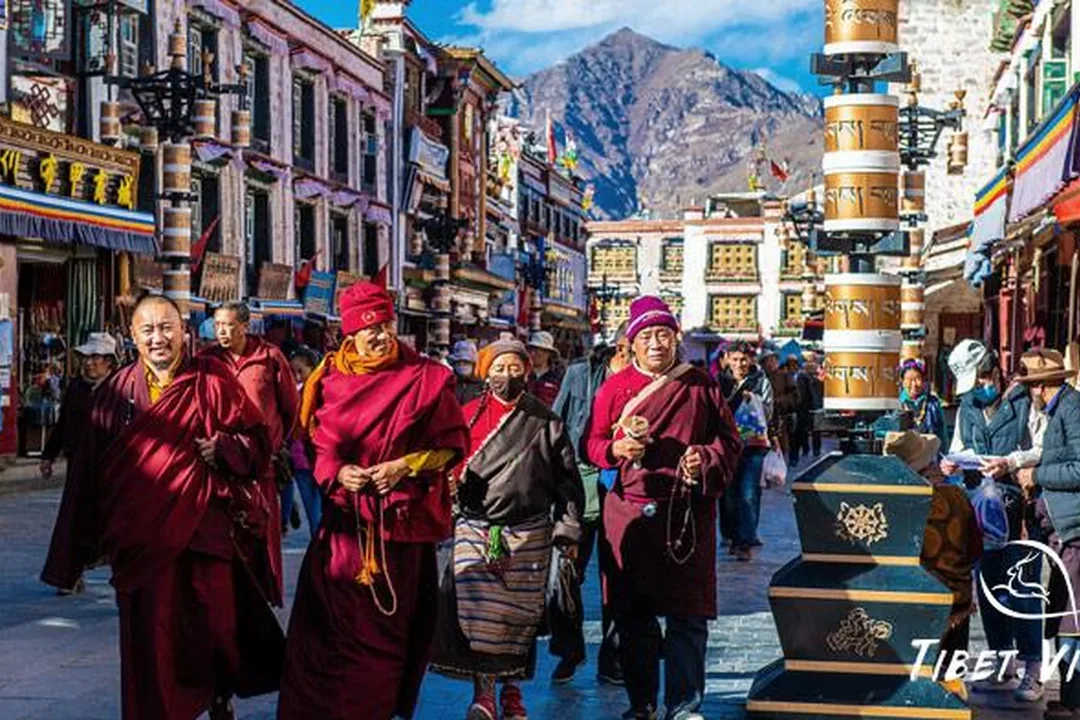
Barkhor Street八廓街
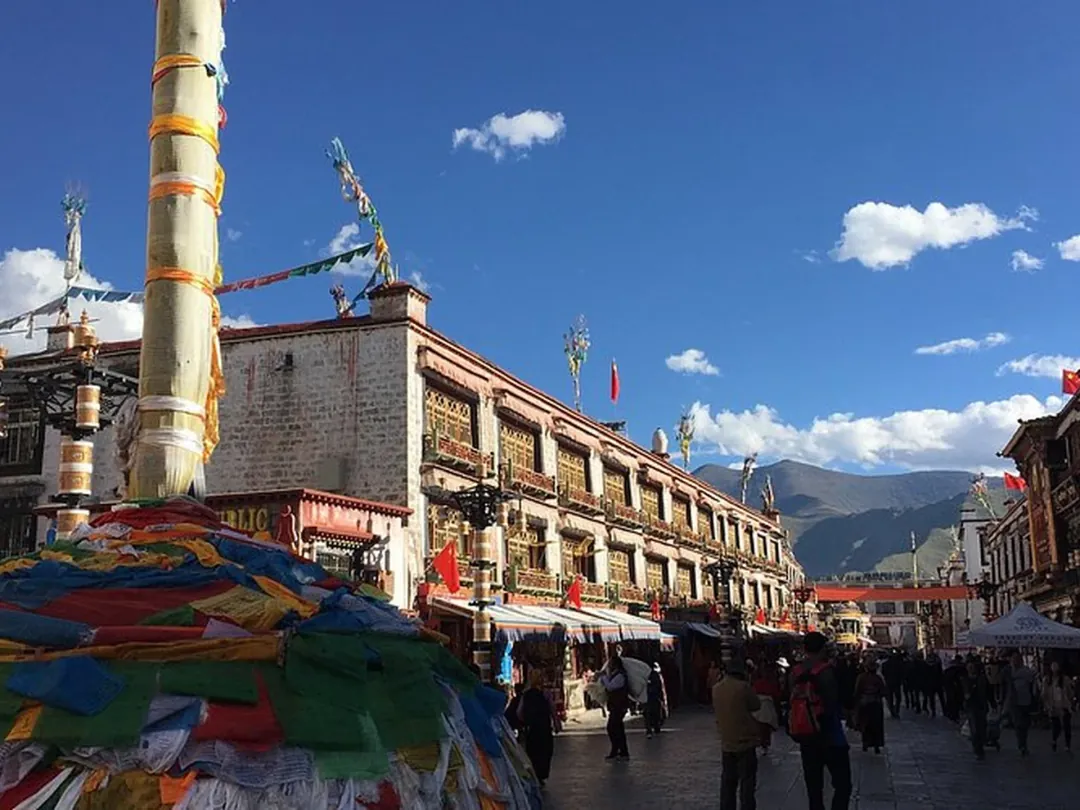
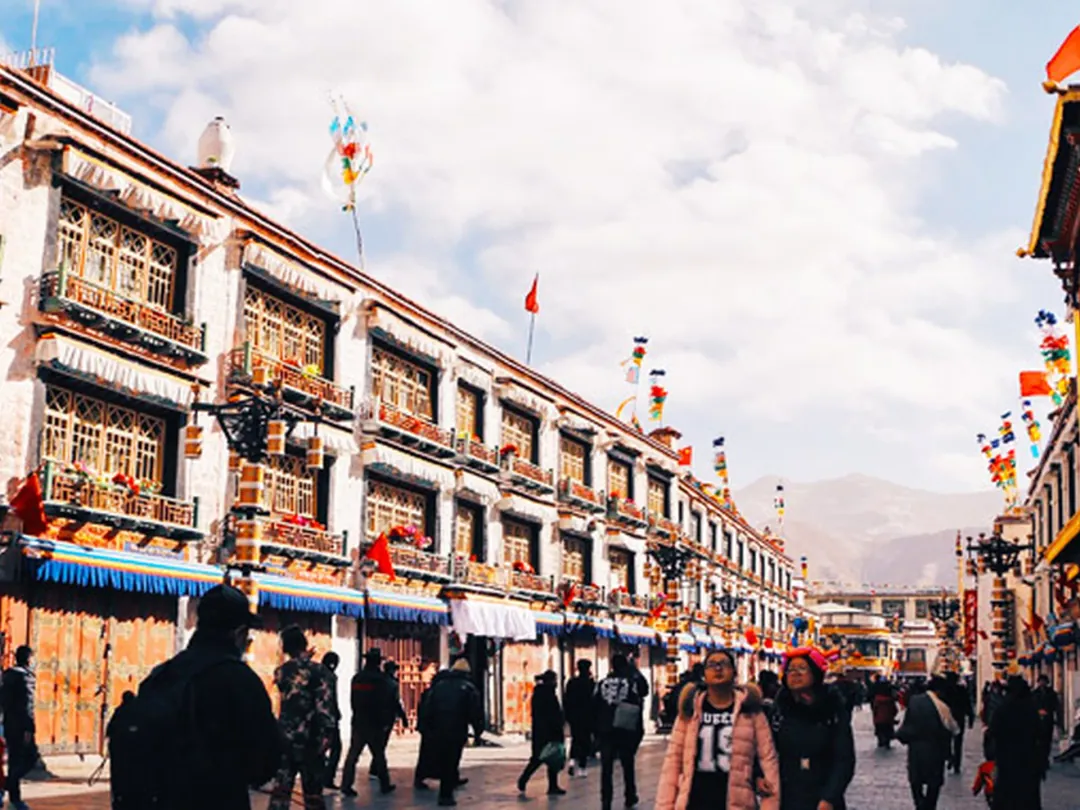
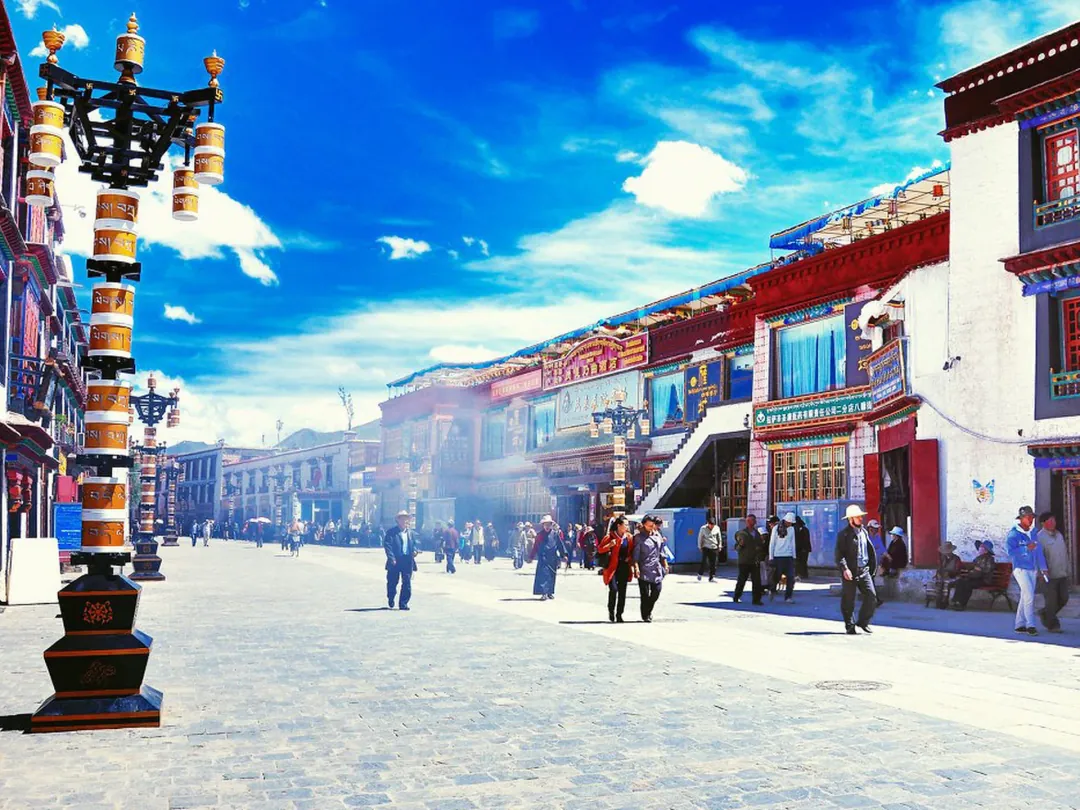
Barkhor Street is the oldest street in Lhasa's old town, a roughly 1,000 m circuit formed around Jokhang Temple. "Barkhor" means "middle pilgrim circuit" in Tibetan, the obligatory route for Tibetan Buddhist pilgrims doing the kora. Tibetan-style shops and homes line both sides, selling Tibetan carpets, thangkas, Buddha statues, Tibetan medicine and jewelry — the best place to experience traditional Tibetan culture and its religious atmosphere.
Lhasa · Visitor Guide2026-10-19
Quick Answer
Is Barkhor Street worth visiting?
Lhasa's oldest street, a roughly 1,000 m pilgrim circuit around Jokhang Temple dating to the 7th century; free to walk, shops 9:00-20:00, full of Tibetan architecture and ritual life.
Quick facts
| Ticket | Free admission |
|---|---|
| Hours | Open all day; shops 9:00-20:00 |
| Recommended duration | 1-3 hours |
| Best time to visit | Year-round; pilgrim crowds are thickest at dawn and dusk |
| How to get there | Walk to the Jokhang Temple area; take the bus to the Jokhang Temple or Chongsai Kang stop |
| English signage | Partial |
| Wheelchair accessible | Partial |
| Total length | About 1,000 m |
| Location | Circles Jokhang Temple |
| Function | Pilgrim circuit and market street |
| Architectural style | Traditional Tibetan |
| Founded | 7th century AD |
| Main goods | Tibetan carpets, thangkas, Tibetan medicine, jewelry |
What to expect
Barkhor Street is Lhasa's most distinctly Tibetan street and preserves a townscape a thousand years old. It forms a ring around the Jokhang Temple where pilgrims walk the circuit clockwise — a singular religious-cultural cityscape. At dawn and dusk, hundreds upon hundreds of pilgrims prostrate and circle here; the scenes of devotion are overwhelming.
Makye Ame restaurant on the street is, by legend, where the sixth Dalai Lama, Tsangyang Gyatso, met his lover; today it is a popular restaurant with distinctive food and atmosphere. Langzisha further along the street is the site of an old-Tibet prison, a witness to how Tibetan society has changed.
How to get there
Walk to the Jokhang Temple area and the street is right in front of you. By bus, get off at the Jokhang Temple or Chongsai Kang stop.
Best photo spots
- Panorama of Barkhor Street
- Pilgrims circling the kora
- Tibetan building facades
- Barkhor Street lights at night
Tips
- Always walk the pilgrim circuit clockwise — walking counterclockwise is considered disrespectful
- Haggle when shopping; start at about one third of the asking price
- Buy valuables such as thangkas and Tibetan carpets from established shops
- Sundays can coincide with traditional Tibetan festival days and the Jokhang area can be packed
Scams to avoid
- Fakes abound among thangkas, Tibetan medicine and beeswax amber — stick to shops with a solid reputation
- Someone on the street offering to guide you may be an unlicensed guide — be cautious
Frequently asked questions
Does Barkhor Street need a ticket?
No — it is a free, open public street.
Can I eat here?
Yes — there are distinctive restaurants such as Makye Ame as well as Tibetan teahouses.
What should I watch out for when doing the circuit?
Walk clockwise, do not step on prayer flags, and never point at Buddha statues with a finger.
Read next
Other things to do in Lhasa
Drepung Monastery
Drepung Monastery (哲蚌寺, Zhébàng Sì), founded in 1416, was once the largest monastery in the world — housing up to 10,000 monks before 1959 — and still clings to a steep hillside 8 km west of Lha.
Jokhang Temple
Tibetan Buddhism's holiest temple, built under Princess Wencheng's direction and home to the life-size statue of Sakyamuni at age 12.
Mount Kailash
Tibet's holiest peak at 6,638m — sacred to four religions. 3-day kora (52 km) around the mountain. Permit required. Remote, high-altitude, deeply spiritual.
Nam Co Lake
Tibet's second-largest lake, at 4,718 m one of the highest in the world — a sacred lake of Tibetan Buddhism set against the Nyenchen Tanglha mountains.
Namtso Lake
At 4,718 m, Namtso is one of the highest large lakes on Earth and Tibet's largest saltwater lake; the run from Lhasa is about 240 km each way and eats a full 12-hour day, so leave before dawn.
Norbulingka
Norbulingka in Lhasa is Tibet's largest garden (about 360,000 sqm) and the Dalai Lamas' summer palace since the 18th century; entry 30-60 yuan, closed Mondays, UNESCO listed.
Potala Palace
The world's highest palace, at 3,700 m above Lhasa — a sacred site of Tibetan Buddhism and a UNESCO World Heritage Site.
Sera Monastery
One of the six great Gelug monasteries of Tibetan Buddhism, founded in 1419 in Lhasa; entry 50 yuan, open 9:00-16:00, with famous monk debating sessions 14:00-17:00 Monday to Saturday.
Yamdrok Lake
A sacred turquoise lake at 4,441 m and one of Tibet's three holy lakes, reached by a 2.5-hour drive from Lhasa over the 4,794 m Kamba La pass.
Museums in Lhasa
Tibet Museum
Lhasa's state-of-the-art museum of Tibetan history and culture — thangka masterpieces, prehistoric artifacts, and an essential orientation before the Potala Palace. Free; 2.5–3.5 hours.
Xizang (Tibet) Museum
Reopened in 2022 after a multi-year renovation. Tibetan history from prehistory to modern era, with world-class thangka and Buddhist art collections. Free.