nihaovisit

Lhasa · Visitor Guide

Potala Palace (布达拉宫, Bùdálā Gōng)

The Potala Palace dominates Lhasa's skyline — a 13-story fortress-palace built in 1645 that served as the winter residence of the Dalai Lamas. Its 1,000+ rooms contain 200,000+ Buddhist statues, the tombs of eight Dalai Lamas (the largest with 3.7 tonnes of gold), and centuries of Tibetan art. The White Palace housed the Dalai Lama's living quarters; the Red Palace is the religious heart. At 3,700 m, the altitude makes climbing the 365 steps genuinely challenging.

Last updated:

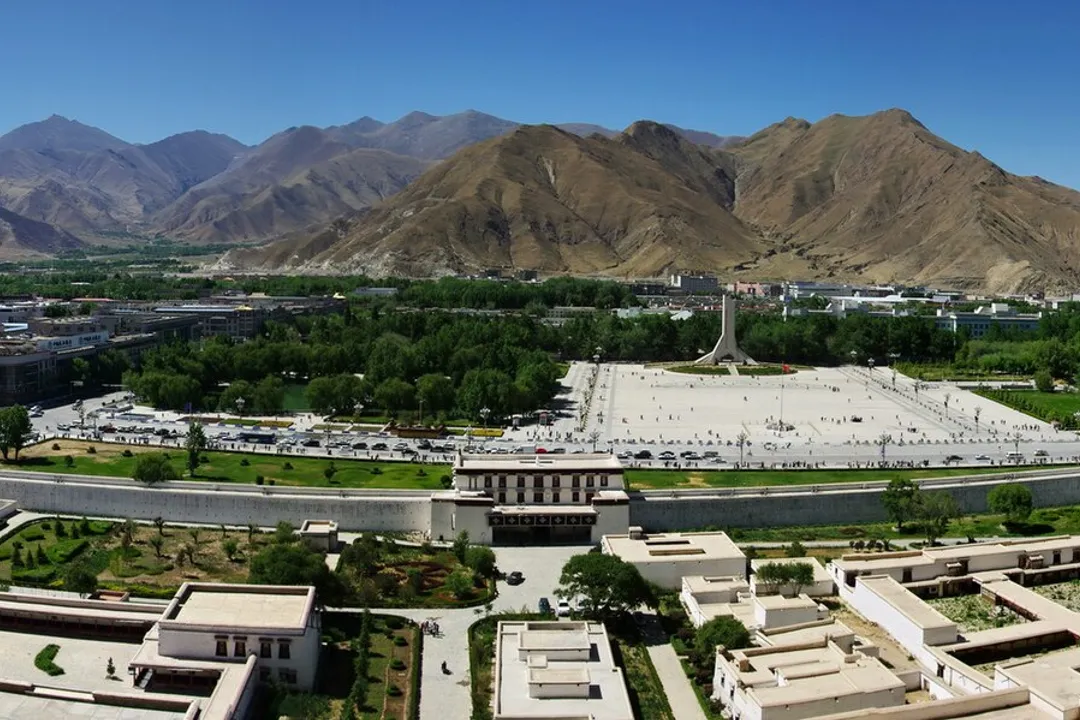
Potala Palace travel photo

Quick Answer

Is Potala Palace worth visiting?

13-story Tibetan palace, 3,700m altitude, 1,000+ rooms, tombs of 8 Dalai Lamas. Tibet permit required. Book weeks ahead. 1 hour inside (enforced).

Quick facts

Ticket¥200 (May–Oct) / ¥100 (Nov–Apr). Book 1–7 days ahead via the official WeChat mini-program.
Hours9:00–16:00 (last entry 15:00).
Recommended duration1 hour inside Potala (strictly enforced). 2–3 hours with exterior photos + Jokhang Temple.
Best time to visitMay–June and September–October. Avoid July–August (rain). Winter is cold but empty.
How to get thereWalk from central Lhasa (Barkhor area). Taxi ¥15 from most hotels. No DiDi in Lhasa.
English signagepartial
Wheelchair accessibleno
Built1645 (5th Dalai Lama)
Height117 m, 13 stories
Rooms1,000+
Altitude3,700 m (12,100 ft)
Gold in 5th Dalai Lama tomb3,727 kg

What to expect

The Potala Palace was built on Red Hill (Marpo Ri) under the 5th Dalai Lama starting in 1645, on the site of an earlier 7th-century fortress. It served as the seat of Tibetan government and the winter residence of successive Dalai Lamas. The building was constructed with yak-blood mortar, timber columns, and manual labor — all at an altitude where oxygen is 40% lower than sea level.

Inside: the Red Palace contains the tombs of eight Dalai Lamas, the largest being the 5th Dalai Lama's chorten — a 14-meter gold stupa encrusted with thousands of pearls, turquoise, and coral. The White Palace holds the Dalai Lama's former living quarters, throne room, and meditation chambers. Photography is strictly forbidden throughout.

How to get there

Walk from Barkhor Square (10 min uphill). Taxi from Lhasa hotels: ¥15. Arrive 30 min before your entry time — the security check is thorough and the altitude makes rushing unpleasant.

Best photo spots

  • Potala Square at ground level — the classic frontal view
  • Chakpori Hill (药王山) — the angle from the ¥50 note
  • The Potala at night — illuminated 21:00–23:00, spectacular reflection in the square's water feature

Tips

  • Tibet Travel Permit mandatory — arranged through a registered agency (¥200–500)
  • Book tickets 1+ week ahead through your agency or the WeChat mini-program
  • Acclimatize in Lhasa 2 full days before attempting the Potala stairs
  • No photography inside. Phones and cameras stored at security
  • Dress modestly — shoulders and knees covered. Remove hats inside chapels

Scams to avoid

  • Unofficial "guides" at the entrance offering shortcut entry — they can't get you in without a ticket
  • Overpriced "blessed" thangkas and malas sold at nearby shops claiming Potala provenance

Frequently asked questions

Do I need a special permit?

Yes — foreign travelers must have a Tibet Travel Permit (TTP), obtained only through a registered Chinese travel agency as part of a tour package. Processing takes 7–10 days. Independent travel in Tibet is not permitted for foreigners.

How do I handle the altitude?

Lhasa is at 3,650 m. Spend 2 full days acclimatizing. Drink 3–4L water/day. Avoid alcohol. The Potala's 365 stairs at this altitude are genuinely hard — rest often. Oxygen canisters (¥20–30) help but the 1-hour time limit means you can't linger.

Can I visit Lhasa independently?

No — all foreign travelers must be part of an organized tour with a licensed guide. You cannot rent a car, use public intercity transport, or stay in budget guesthouses independently within the Tibet Autonomous Region.

Why is the 1-hour limit so strict?

Humidity and CO₂ from visitor breath damage the centuries-old murals and artifacts. The limit protects the palace while allowing 2,300 visitors/day. Guards will move you along if you linger in any hall.

Is photography allowed?

No — strictly forbidden inside all halls and chapels. Phones and cameras must be checked at security. Exterior photos from the courtyards and rooftop are permitted and encouraged.

Read next

Other things to do in Lhasa

Mount Kailash

Tibet's holiest peak at 6,638m — sacred to four religions. 3-day kora (52 km) around the mountain. Permit required. Remote, high-altitude, deeply spiritual.

Jokhang Temple

Tibet's holiest temple, built around 647 CE, holds the Jowo Sakyamuni — the most sacred Buddha image in Tibetan Buddhism. Budget 1.5-2 hours inside plus the Barkhor kora around it.

Sera Monastery

Sera Monastery (色拉寺, Sèlā Sì) is one of the three great Gelug-school monasteries of Lhasa, founded in 1419 by Jamchen Chojey, a disciple of Tsongkhapa. The reason most visitors come is the monk debate (辩经), held Monday to Saturday from 15:00 to 17:00 in the debate courtyard — ¥50 entry (as of 2026), allow 2–3 hours including the chapels.

Drepung Monastery

Drepung Monastery (哲蚌寺, Zhébàng Sì), founded in 1416, was once the largest monastery in the world — housing up to 10,000 monks before 1959 — and still clings to a steep hillside 8 km west of Lhasa. Entry is ¥50 CNY (as of 2026); budget 2-3 hours for the climb, the Ganden Podrang palace, and the assembly halls.

Barkhor Street

A 1 km clockwise pilgrim circuit ringing Jokhang Temple, walked by Tibetans for over 1,000 years and now lined with thangka and turquoise stalls. Allow 1-2 hours, and go at dawn to see real kora devotion before the crowds.

Yamdrok Lake

A sacred turquoise lake at 4,441 m and one of Tibet's three holy lakes, reached by a 2.5-hour drive from Lhasa over the 4,794 m Kamba La pass. Plan a half-day; the postcard turquoise only appears in direct sun, so it's a gamble in monsoon cloud.

Namtso Lake

At 4,718 m, Namtso is one of the highest large lakes on Earth and Tibet's largest saltwater lake; the run from Lhasa is about 240 km each way and eats a full 12-hour day, so leave before dawn.

Norbulingka

The Dalai Lamas' summer garden-palace covers 36 hectares next to the Potala Palace and rewards 2–3 hours of unhurried walking — go in summer to catch the Sho Dun festival.

Museums in Lhasa

Sources