Lhasa · ethnic museum
Tibet Museum (西藏博物馆, Xīzàng Bówùguǎn)
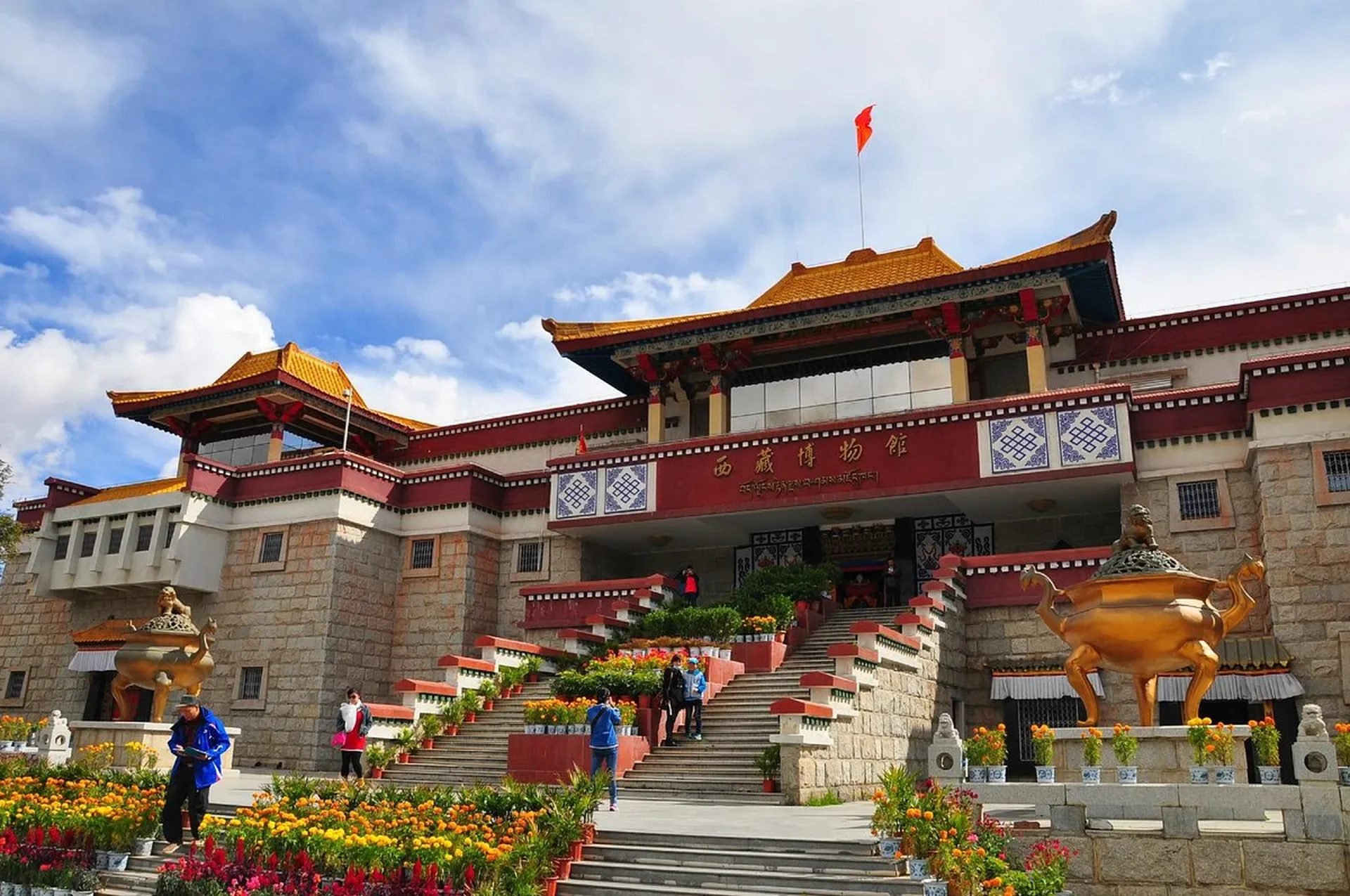
"The Tibet Museum (西藏博物馆) reopened in 2022 after a complete renovation, and it now ranks among China's best-designed regional museums. Located a 10-minute walk from the Potala Palace in central Lhasa, the museum spans three floors of a modern Tibetan-architectural-style building. The permanent collection traces Tibetan history from the Neolithic period (artifacts from the 5,000-year-old Karuo site) through the Tubo Empire (7th–9th century), the Sakya and Gelug monastic periods, and into the modern era. The star exhibits are the thangka (唐卡) galleries — Tibetan Buddhist scroll paintings on cotton and silk, some dating to the 13th century, with extraordinary preserved mineral pigments. Additional galleries cover Tibetan astronomy, medicine, and the region's geological formation. The museum also addresses the region's 1951 peaceful liberation through an official narrative lens. All exhibits are presented in Tibetan, Chinese, and English.".
Last updated:
Quick Answer
Is Tibet Museum worth visiting?
"Lhasa's state-of-the-art museum of Tibetan history and culture — thangka masterpieces, prehistoric artifacts, and an essential orientation before visiting the Potala Palace.".. 2026 verified.
Quick facts
| Category | ethnic |
|---|---|
| Ticket | Free. Tibet Travel Permit (西藏旅行许可证) and passport required. Reservation via WeChat mini-program "西藏博物馆" recommended as of June 2026. |
| Hours | 10:00–17:30, Tuesday–Sunday. Last entry 16:30. Closed Mondays. |
| Recommended duration | 2.5–3.5 hours. |
| Best time to visit | Weekday mornings, 10:00–12:00. Acclimatize to Lhasa's altitude (3,656m) for at least one day before visiting — do not attempt the museum on your arrival day. |
| How to get there | Walking distance: 10 minutes southeast of the Potala Palace along Minzu Road (民族路). Bus 6, 8, 13, or 24 to Tibet Museum Station (西藏博物馆站). About 15 minutes from Barkhor Square on foot. |
| English signage | yes |
Why visit
Visit this museum before the Potala Palace. It provides the historical and cultural framework that makes the palace comprehensible — the religious lineages, the thangka symbolism, the political history — so you spend your palace time seeing rather than learning. In June 2026, the renovated building was in immaculate condition, with thoughtful lighting design and climate control that protects the textiles. The 13th-century thangka of Avalokiteshvara (the bodhisattva of compassion) in Gallery 3 left me standing in front of it for ten minutes — the gold pigment still catches light after 700 years. Note: a Tibet Travel Permit is required to enter Lhasa, and the museum checks both permit and passport at entry.
Collection highlights
- Thangka gallery — 200+ painted and embroidered Buddhist scrolls from the 13th to 19th centuries, with gold and mineral pigments still luminous.
- Neolithic Karuo culture artifacts — 5,000-year-old pottery, bone tools, and millet remains from the earliest known settlement on the Tibetan Plateau.
- Tubo Empire gold and silver objects — the 7th–9th century empire that rivaled Tang Dynasty China, with diplomatic gifts and horse trappings.
- Tibetan astronomical instruments and medical thangkas — anatomical and astrological charts used in traditional Sowa Rigpa medicine.
- Interactive 3D map of the Tibetan Plateau's geological formation — helpful for understanding the region's extreme geography.
Tips
- The Tibet Travel Permit (西藏旅行许可证) is checked at entry. You cannot enter Lhasa — and therefore cannot visit this museum — without one. Arrange it through a registered travel agency at least 10 days before your trip.
- Acclimatize first. Lhasa is at 3,656 meters. The museum has multiple floors and you will walk for 2–3 hours. Spend your first day in Lhasa resting; visit the museum on day 2 or 3.
- Combine with the Potala Palace — but visit the museum first. It takes 2.5–3.5 hours, then walk 10 minutes to the palace for an afternoon visit. The museum provides the context that makes the palace meaningful.
- The museum shop on the ground floor has quality Tibetan crafts and books. The thangka prints are good-quality reproductions at reasonable prices.
Frequently asked questions
Do I need a Tibet Travel Permit to visit this museum?
Yes. The Tibet Travel Permit (also called the TTB permit) is required to enter the Tibet Autonomous Region, and the museum checks both your permit and passport at entry. You cannot obtain this permit independently — it must be arranged through a registered Chinese travel agency as part of an organized tour package. Apply at least 10 days before travel.
What is a thangka and why are they important?
A thangka (唐卡) is a Tibetan Buddhist painting on cotton or silk, usually depicting a deity, mandala, or religious scene. They are used as teaching tools, meditation aids, and temple decorations. The museum's collection includes pieces up to 700 years old, painted with ground mineral pigments (lapis lazuli for blue, cinnabar for red, gold leaf for halos) that do not fade. Each thangka follows precise iconographic rules — the hand gestures (mudras), colors, and placement of figures all carry specific religious meaning.
Can I visit independently or must I be on a tour?
As of June 2026, foreign visitors to Lhasa must be on an organized tour with a licensed guide. However, the museum itself can be visited independently once you are in Lhasa — your tour operator arranges the permit, but you do not need a guide inside the museum. Confirm with your tour operator whether independent museum time is permitted in your itinerary.
Is the museum affected by Lhasa's altitude?
The museum building is climate-controlled but covers three floors with significant walking. At Lhasa's elevation (3,656m), physical exertion feels harder than at sea level. Take the elevator between floors, pause for breaks, and carry water. The museum benches are well-placed for resting.
How objective is the historical presentation?
The museum presents history through the official lens of the People's Republic of China. The pre-1951 sections on Tibetan empire, religion, and material culture are broadly consistent with international scholarship. The 1951 "peaceful liberation" and subsequent periods are presented from the Chinese government's perspective. The artifact selection and craftsmanship are excellent regardless of interpretive framing.
What is the Karuo culture?
Karuo (卡若) is the earliest known Neolithic settlement on the Tibetan Plateau, dating to approximately 3,000–5,000 BC, discovered in 1977 near modern-day Chamdo (Qamdo) in eastern Tibet. Excavations revealed stone tools, pottery, bone needles, and the earliest evidence of millet agriculture at high altitude — proving human habitation of the plateau at least 5,000 years ago. The museum displays Karuo pottery and tools on the ground floor.
Read next
Other things to do in Lhasa
Drepung Monastery
Drepung Monastery (哲蚌寺, Zhébàng Sì), founded in 1416, was once the largest monastery in the world — housing up to 10,000 monks before 1959 — and still clings to a steep hillside 8 km west of Lha…
Jokhang Temple
jokhang-temple in Beijing: 藏传佛教最神圣寺庙,文成公主主持建造,供奉释迦牟尼12岁等身像。
Mount Kailash
"Tibet's holiest peak at 6,638m — sacred to four religions. 3-day kora (52 km) around the mountain. Permit required. Remote, high-altitude, deeply spiritual.".
Nam Co Lake
nam-tso-lake in Beijing: 西藏第二大湖,海拔4718米,藏传佛教圣湖,与念青唐古拉山相映成趣。
Potala Palace
potala-palace in Beijing: 世界最高宫殿,海拔3700米,藏传佛教圣地,世界文化遗产。
Yamdrok Lake
A sacred turquoise lake at 4,441 m and one of Tibet's three holy lakes, reached by a 2.5-hour drive from Lhasa over the 4,794 m Kamba La pass.…