This page is archived and no longer updated — see the current guide: See the current guide
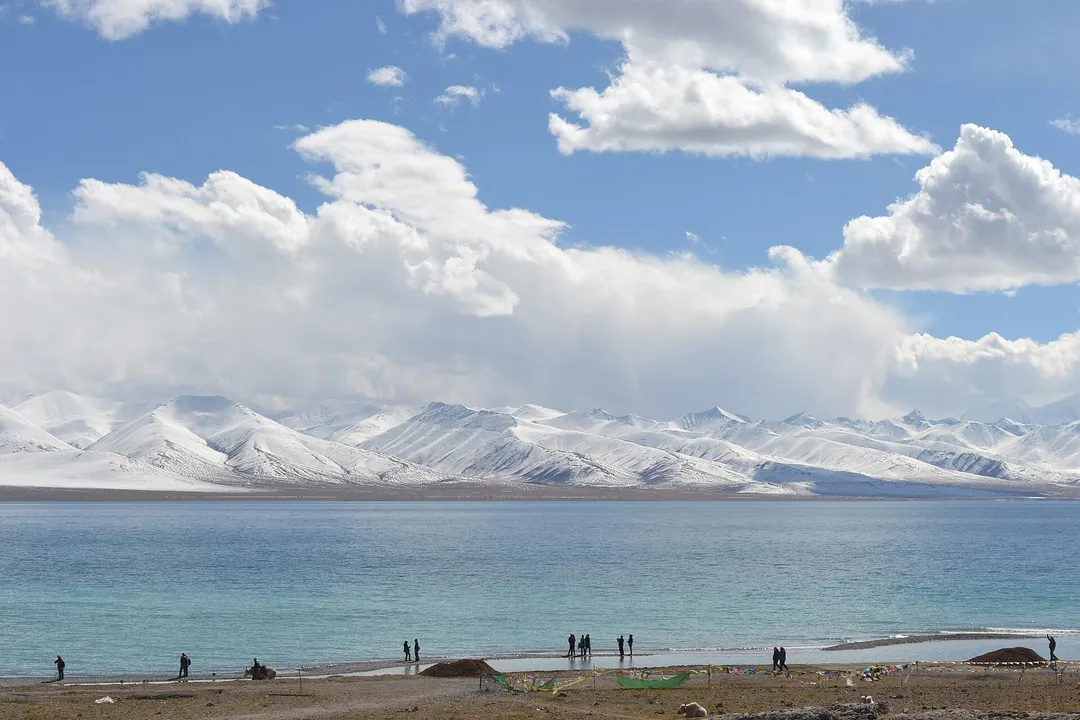
Namtso Lake纳木错
Namtso (纳木错, "Heavenly Lake") is a sacred saltwater lake on the Changtang plateau, revered as one of the three great holy lakes of Tibetan Buddhism alongside Yamdrok and Manasarovar. Its deep blue water against the snow peaks of the Nyenchen Tanglha range draws pilgrims who circumambulate the shore and travelers chasing high-altitude scenery. The catch is the altitude — you sleep at 4,718 m only if your body has earned it.
Lhasa · Visitor Guide2026-10-19
Quick Answer
Is Namtso Lake worth visiting?
At 4,718 m, Namtso is one of the highest large lakes on Earth and Tibet's largest saltwater lake; the run from Lhasa is about 240 km each way and eats a full 12-hour day, so leave before dawn.
Quick facts
| Ticket | Ticket: About 120 RMB in peak season (May to October) and 60 RMB off-season, with an environmental-protection fee (0 CNY) sometimes added on top. Confirm the current figure with your tour agency before booking (as of 2026) (verify) |
|---|---|
| Hours | The ticketed scenic-area gate runs roughly 06:00 to 18:00 in summer. The lake itself is natural and unrestricted, but the Nagenla pass access road closes intermittently for snow from roughly November through April — check road status the day before in winter. |
| Recommended duration | Day trip from Lhasa: 12 to 14 hours round trip with about 2 to 3 hours actually at the lake. Stay overnight at Tashi Do only if you want sunrise and sunset — and only if your body is ready to sleep at 4,718 m, which most are not. |
| Best time to visit | June to September. July and August give the clearest water and wildflowers, but afternoon thunderstorms are routine — leave Lhasa by 6 a.m. so you are off the 5,190 m pass before the weather turns. Winter light is the best of the year for photography, but the pass road closes intermittently for snow from roughly November through April. |
| How to get there | No metro — this is 240 km of highway. Most visitors take an organized day-tour minibus from Lhasa (200 to 400 RMB per person, bookable at any Barkhor-area agency). A private chartered 4WD or van runs 1,000 to 1,500 RMB per day. Public transport only gets you to Damxung (~70 RMB, 2 hr), after which you must hire a local vehicle for the final 60 km over the pass — usually not worth the hassle. |
| English signage | Partial |
| Wheelchair accessible | No |
| Elevation | 4,718 m (15,479 ft) at the shoreline |
| Surface area | ~1,920 km² |
| Type | Saltwater (endorheic) lake |
| Rank | Largest saltwater lake in Tibet; 2nd-largest in China after Qinghai Lake |
| Status | One of the three great holy lakes of Tibetan Buddhism (with Yamdrok and Manasarovar) |
| Distance from Lhasa | ~240 km, about a 5-hour drive each way |
What to expect
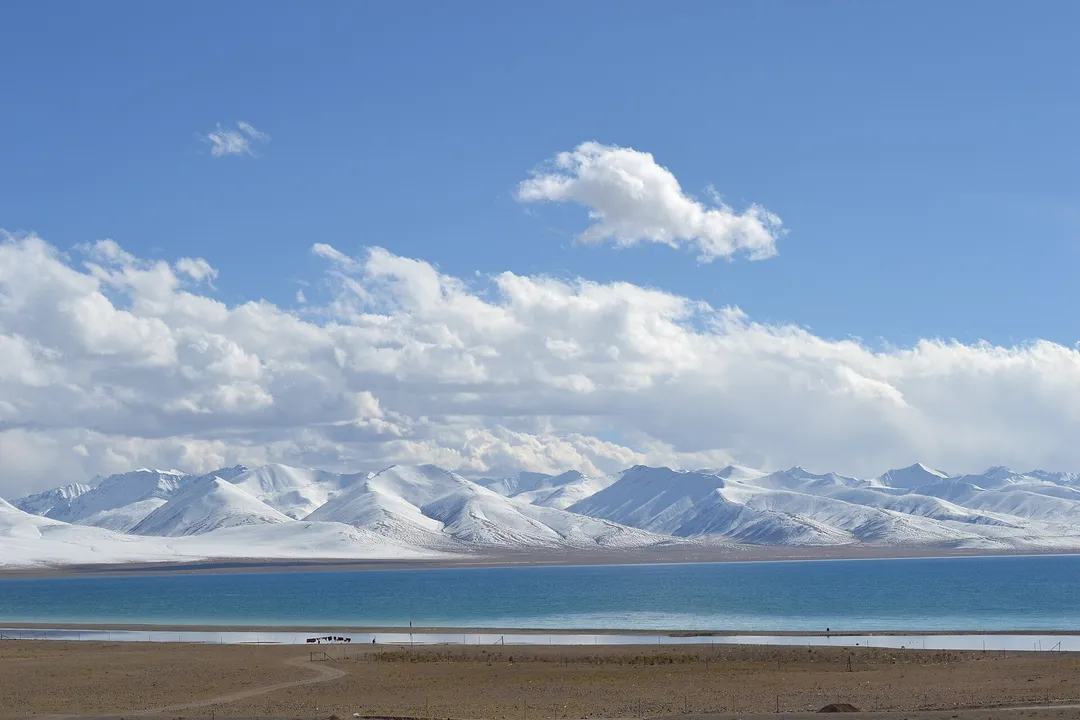
You leave Lhasa in the dark, climbing the Lhasa-Damxung expressway past yak herders and prayer-flag passes. After Damxung the road tilts up toward Nagenla Pass at 5,190 m — prayer flags strung across cairns, a wind that cuts through down jackets, and your first glimpse of the lake far below, a slab of impossible blue wedged against the Nyenchen Tanglha snow peaks. The descent drops you to the Tashi Do peninsula at 4,718 m, where karst caves, mani stones, and a string of basic guesthouses hug the shore. The water really is that blue — the high altitude and low sediment load give it a saturation you do not see at lower lakes.
Tibetan Buddhists count Namtso among the three great holy lakes, alongside Yamdrok and Manasarovar, and the Year of the Sheep brings waves of pilgrims who walk the 80-odd-km shoreline kora over several days. The name means 'Heavenly Lake' in Tibetan, and the lake is paired with the Nyenchen Tanglha range to the south — husband and wife in local mythology. Tashi Do island hosts a small hermitage and meditation caves used by lamas for centuries. Geologically it is a tectonic lake, fed by meltwater and five inflowing rivers with no outlet, so water leaves only by evaporation. That is why it is saline, and why it is slowly shrinking as the plateau dries.
The scenery is not the hard part; the altitude is. Sleeping at 4,718 m after only a few days in Lhasa (3,650 m) is a genuine roll of the dice — headaches and broken sleep are common, and the 5,190 m pass on the way in is where most people first feel sick. Guesthouses at Tashi Do are unheated bunk rooms with squat toilets and no showers; carry a sleeping-bag liner and your own snacks. Most guidebooks sell this as an easy day trip, but the honest version is: it is a 12-hour day at extreme altitude, and you should skip it entirely if you have had any headache or nausea in Lhasa.
How to get there
Lhasa has no metro, so forget train lines — this is 240 km of highway. From central Lhasa (Barkhor or Old Town hotels) you have three real options. 1) Organized day tour — 200 to 400 RMB per person in a minibus or shared 4WD, departing around 6 a.m. and returning around 8 p.m. Book at any agency around Barkhor Square or Beijing Road the day before; this is what roughly 90% of visitors do. 2) Chartered 4WD or van — 1,000 to 1,500 RMB per vehicle per day, which splits well among four people. Negotiate the day before and insist the price covers the driver's meals and the driver's scenic-area ticket. 3) DIY via Damxung — long-distance bus from Lhasa West Bus Station (拉萨西郊客运站) to Damxung County, about 70 RMB and 2 hours, several morning departures. From Damxung you must hire a local vehicle for the final 60 km over the pass to Tashi Do — negotiate 300 to 500 RMB one way. DiDi does not operate on this route. Road note: the Lhasa to Damxung section is paved expressway; the pass road is paved but single-lane in places. In winter the Nagenla pass closes intermittently for snow, so confirm status the day before.
Best photo spots
- Nagenla Pass (5,190 m) — prayer-flag cairns framing the lake far below with the Nyenchen Tanglha range behind; the classic wide shot, best in late morning light.
- Tashi Do (Zaxi) peninsula — karst rock pinnacles, strung prayer flags, and mani stones at the shoreline; peaks at golden hour before sunset.
- The southern shore looking north — captures the full curve of the bay with snow peaks reflected on a calm, windless morning.
- Sunrise from a Tashi Do guesthouse roof — first light hits Nyenchen Tanglha pink a few minutes before the lake itself catches color.
Tips
- If you had any headache or nausea in Lhasa, cancel Namtso — going from 3,650 m to sleep at 4,718 m within a few days is how people end up needing evacuation.
- Take acetazolamide (Diamox) starting the night before; carry it from home, since Tibetan pharmacies are unreliable for foreign buyers.
- Leave Lhasa by 6 a.m. July and August afternoon thunderstorms are routine, and the 5,190 m pass is no place to be caught in a whiteout.
- Book the day tour through a Barkhor-area agency the day before, not online — you pay less and can eyeball the vehicle and driver in person.
- Skip the overpriced oxygen cans hawked at the pass; they are mostly compressed air. Real medical oxygen from a Lhasa clinic is cheaper and actually works.
Scams to avoid
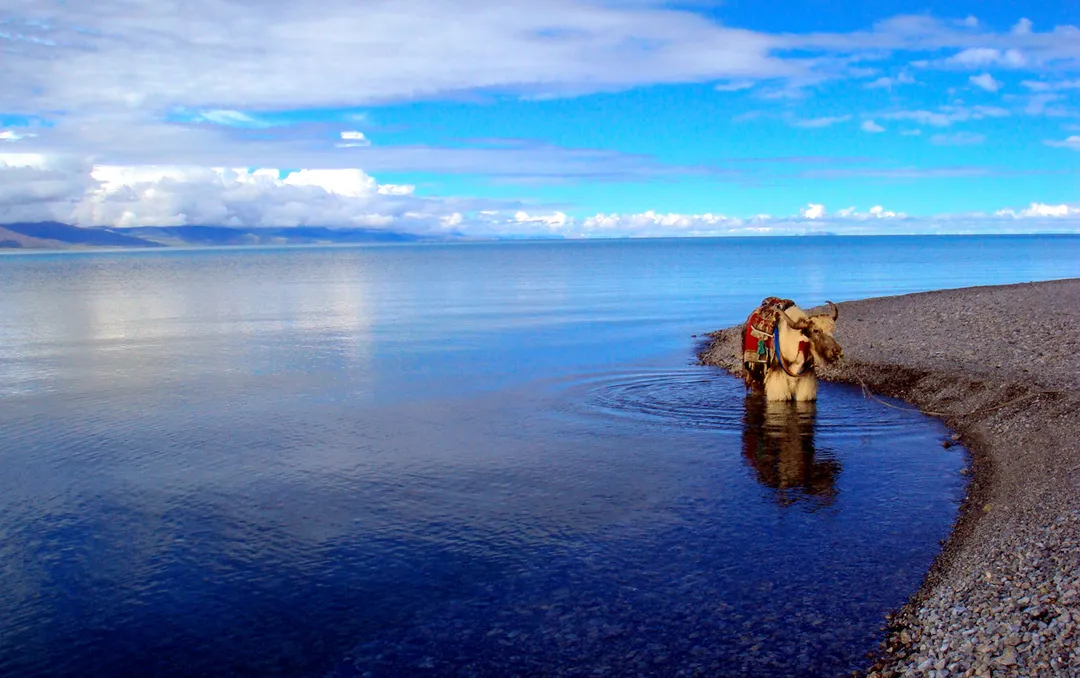
- Yak-photo touts on the shore will pose your friend on a yak 'for free,' then demand 50 to 100 RMB after the shutter clicks. Agree the price first or walk past.
- Self-styled monks at Tashi Do offer a 'blessing' string or prayer flag and then aggressively demand a 100+ RMB donation. Real monastics at the hermitage do not solicit tourists this way.
- Drivers sometimes claim an extra 'Namtso permit' fee on top of the Tibet Travel Permit you already hold — it does not exist; your TTP plus booked itinerary covers the road.
Frequently asked questions
How far is Namtso Lake from Lhasa?
About 240 km by road — a 4.5 to 5 hour drive each way via Damxung, plus the climb over Nagenla Pass at 5,190 m.
Can I do Namtso as a day trip?
Yes. Organized tours leave Lhasa around 6 a.m. and return by 8 p.m., roughly 12 to 14 hours total with 2 to 3 hours at the lake.
How high is Namtso Lake?
4,718 m (15,479 ft) at the shoreline. The Nagenla Pass on the access road reaches 5,190 m, which is where most altitude sickness hits.
Do I need a special permit for Namtso?
Your Tibet Travel Permit plus a booked itinerary usually covers it, but foreign travelers cannot go independently — you must be on an organized tour with a guide and a registered vehicle.
Is it safe to sleep overnight at Namtso?
Only if you are well acclimatized. The 4,718 m sleeping altitude routinely causes headaches and broken sleep for people who reached Lhasa only days before, so most visitors stick to a day trip.
What is the entrance fee?
About 120 RMB in peak season (May to October) and 60 RMB off-season, with an environmental fee sometimes added on top — confirm the current figure with your agency, as prices shift (verify).
When is the best time to visit?
June through September. July and August give the clearest water and wildflowers; winter has the best light but the pass road often closes for snow.
Is Namtso freshwater or saltwater?
Saltwater. It is endorheic — no outlet — so water leaves only by evaporation and salt builds up. It is the largest saltwater lake in Tibet.
How big is Namtso Lake?
Roughly 1,920 square km, which makes it the second-largest saltwater lake in China after Qinghai Lake and the largest in Tibet.
Can I take a public bus to Namtso?
Only partway. A Lhasa to Damxung bus (about 70 RMB, 2 hours) reaches the county seat, and from there you must hire a local vehicle for the final 60 km over the pass. DiDi does not run on this route.
Read next
Other things to do in Lhasa
Barkhor Street
Lhasa's oldest street, a roughly 1,000 m pilgrim circuit around Jokhang Temple dating to the 7th century; free to walk, shops 9:00-20:00, full of Tibetan architecture and ritual life.
Drepung Monastery
Drepung Monastery (哲蚌寺, Zhébàng Sì), founded in 1416, was once the largest monastery in the world — housing up to 10,000 monks before 1959 — and still clings to a steep hillside 8 km west of Lha.
Jokhang Temple
Tibetan Buddhism's holiest temple, built under Princess Wencheng's direction and home to the life-size statue of Sakyamuni at age 12.
Mount Kailash
Tibet's holiest peak at 6,638m — sacred to four religions. 3-day kora (52 km) around the mountain. Permit required. Remote, high-altitude, deeply spiritual.
Nam Co Lake
Tibet's second-largest lake, at 4,718 m one of the highest in the world — a sacred lake of Tibetan Buddhism set against the Nyenchen Tanglha mountains.
Norbulingka
Norbulingka in Lhasa is Tibet's largest garden (about 360,000 sqm) and the Dalai Lamas' summer palace since the 18th century; entry 30-60 yuan, closed Mondays, UNESCO listed.
Potala Palace
The world's highest palace, at 3,700 m above Lhasa — a sacred site of Tibetan Buddhism and a UNESCO World Heritage Site.
Sera Monastery
One of the six great Gelug monasteries of Tibetan Buddhism, founded in 1419 in Lhasa; entry 50 yuan, open 9:00-16:00, with famous monk debating sessions 14:00-17:00 Monday to Saturday.
Yamdrok Lake
A sacred turquoise lake at 4,441 m and one of Tibet's three holy lakes, reached by a 2.5-hour drive from Lhasa over the 4,794 m Kamba La pass.
Museums in Lhasa
Tibet Museum
Lhasa's state-of-the-art museum of Tibetan history and culture — thangka masterpieces, prehistoric artifacts, and an essential orientation before the Potala Palace. Free; 2.5–3.5 hours.
Xizang (Tibet) Museum
Reopened in 2022 after a multi-year renovation. Tibetan history from prehistory to modern era, with world-class thangka and Buddhist art collections. Free.