This page is archived and no longer updated — see the current guide: See the current guide
Nam Co Lake纳木措
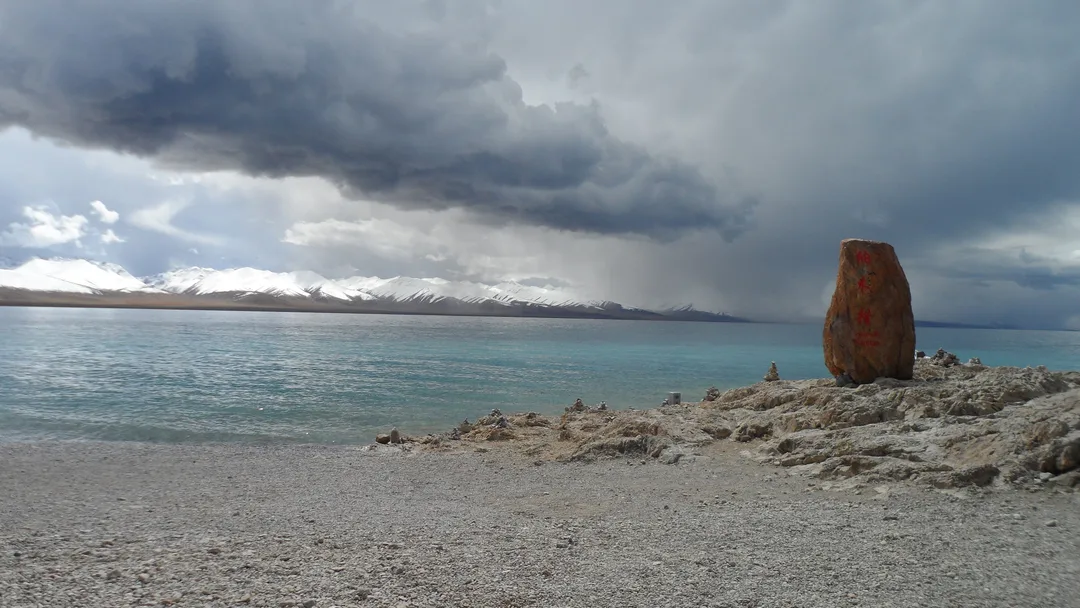
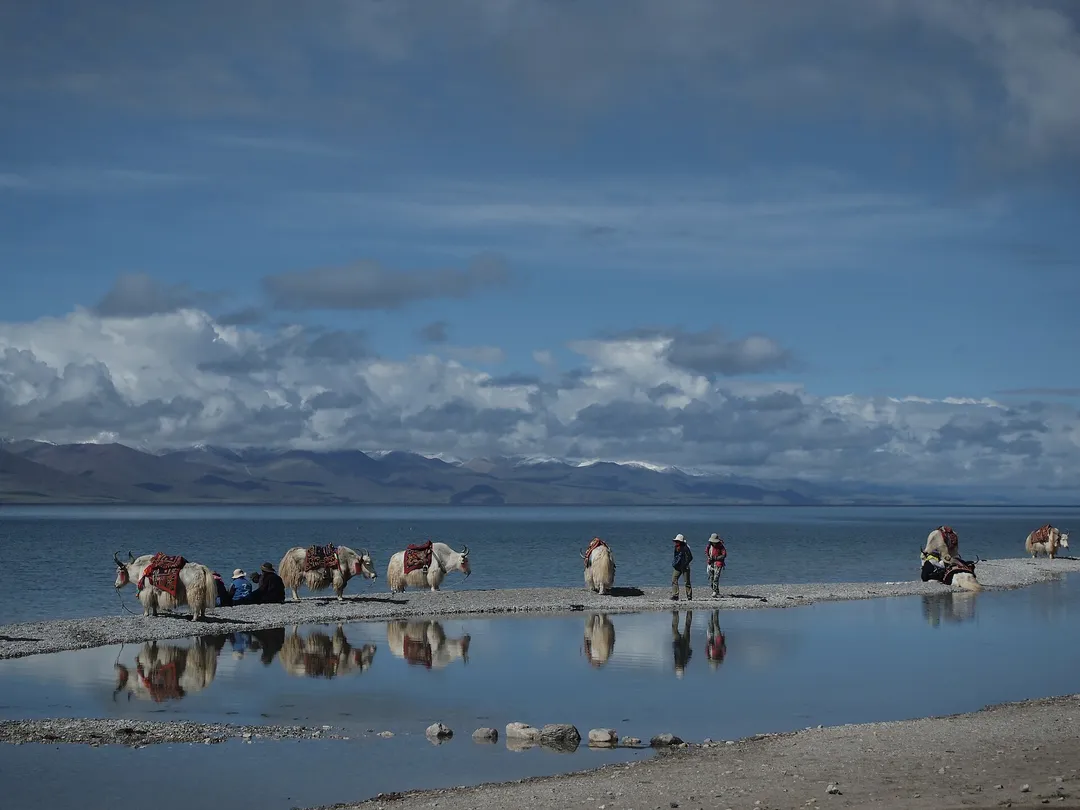
Namtso straddles Damxung County outside Lhasa and Bango County in Nagqu, and is Tibet's second-largest lake as well as the highest large lake in the world. Its Tibetan name means 'Heavenly Lake', and devout Buddhists revere its waters as nectar that washes away sin. To the southeast rises the perpetually snow-capped main peak of the Nyenchen Tanglha range, and the pairing of snow mountain and lake makes for an utterly magnificent scene.
Lhasa · Visitor Guide2026-10-19
Quick Answer
Is Nam Co Lake worth visiting?
Tibet's second-largest lake, at 4,718 m one of the highest in the world — a sacred lake of Tibetan Buddhism set against the Nyenchen Tanglha mountains.
Quick facts
| Ticket | CNY 120 in peak season; CNY 60 in low season |
|---|---|
| Hours | Daily 0:00-24:00 |
| Recommended duration | 1-2 days recommended |
| Best time to visit | May-Oct; the lakeside wildflowers are at their best in July-August |
| How to get there | Buses to Namtso leave from Lhasa's East Suburb Bus Station; drive the G109 Qinghai-Tibet highway to Damxung, then take the Namtso branch road |
| English signage | Partial |
| Wheelchair accessible | Partial |
| Lake surface elevation | 4,718 m |
| Surface area | 1,920 sq km |
| Maximum depth | 33 m |
| Status | Second-largest lake in Tibet |
| Type | Saltwater lake |
| Adjacent range | Nyenchen Tanglha mountains |
What to expect
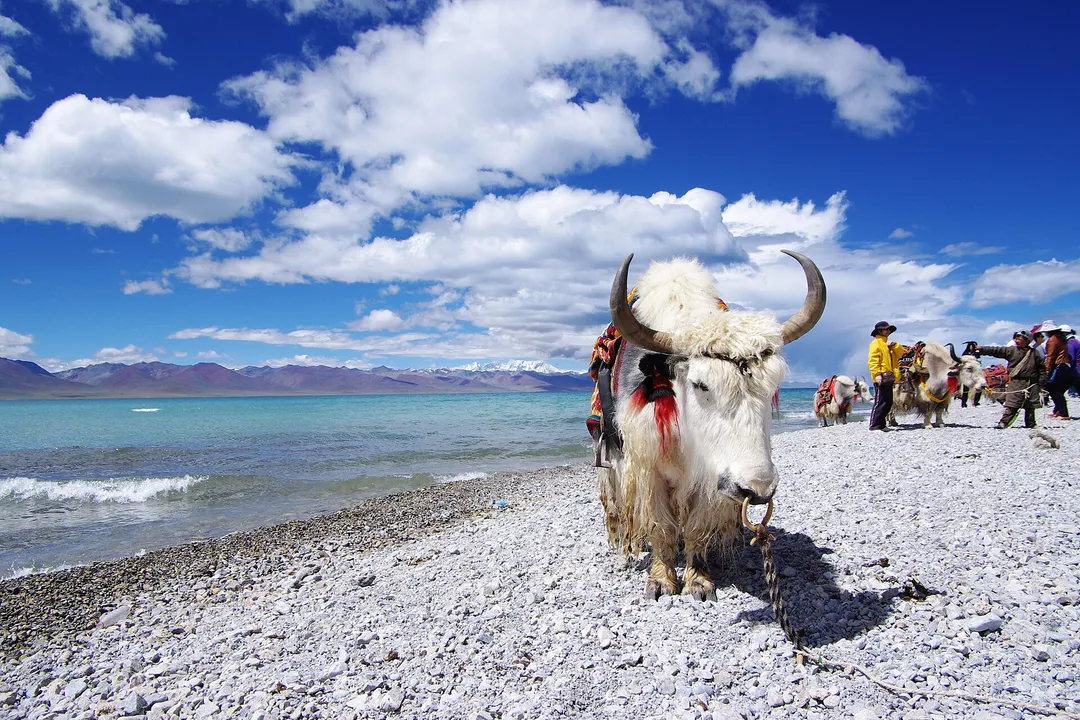
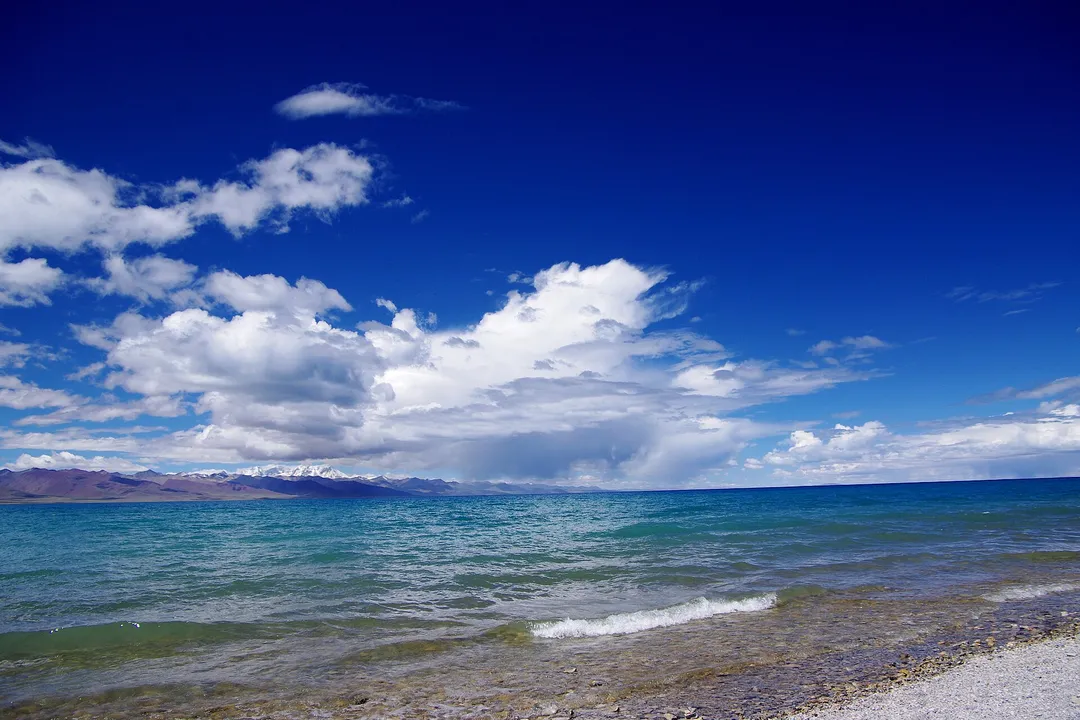
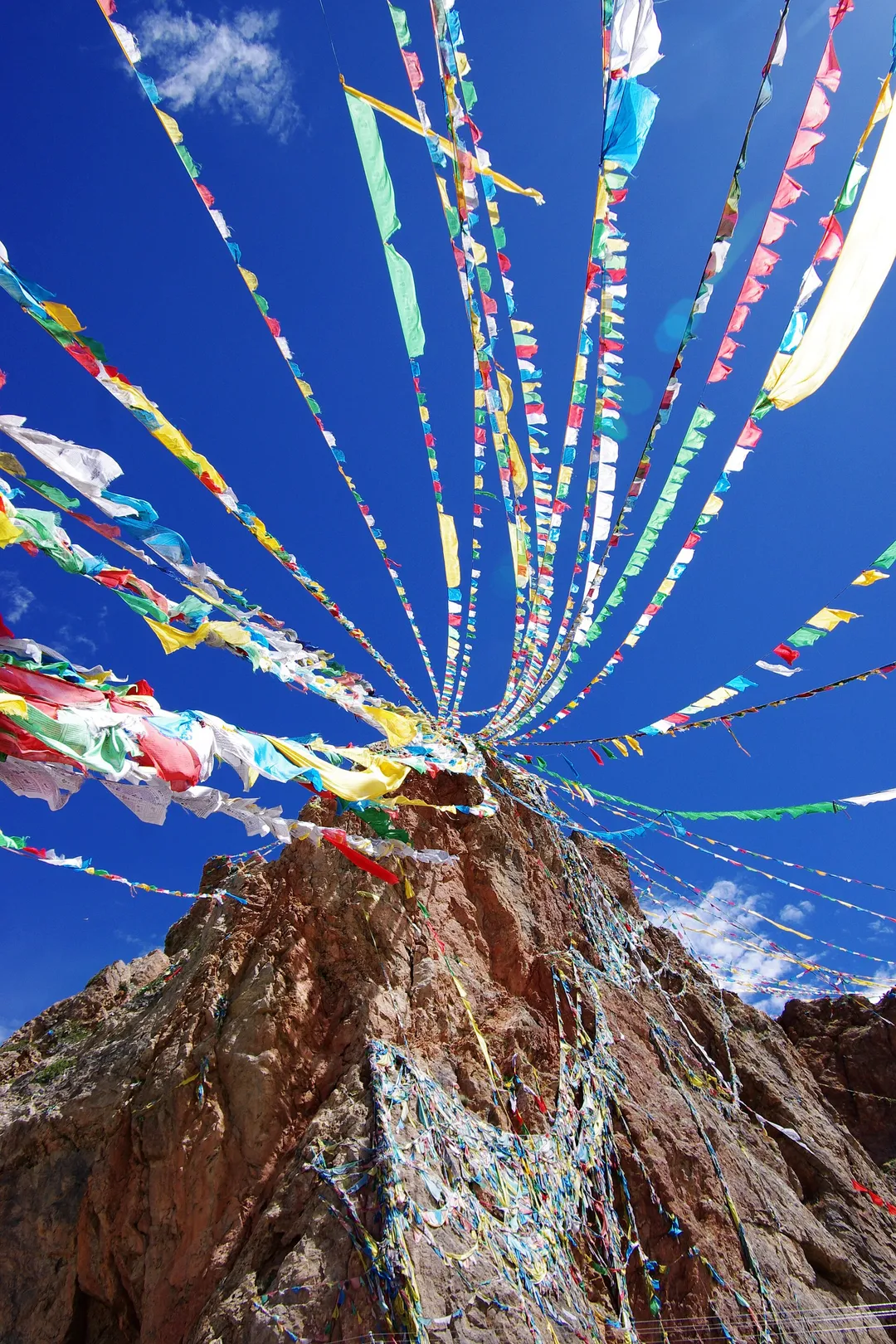
Namtso is one of Tibet's most celebrated lakes. The water is a deep, limpid blue with the sky mirrored on its surface, and the Nyenchen Tanglha range in the distance completes the picture. Broad meadows run along the shore — in summer the grass is lush and wildflowers everywhere, with yaks and Tibetan sheep grazing at their leisure. Pilgrims hold Namtso to be holy ground, and each year great numbers come to circle the lake in prayer.
The main peak of Nyenchen Tanglha stands 7,111 m, snowbound year-round and often wreathed in cloud. Legend has it that the mountain and Namtso are lovers bound for life — the mountain shields the lake from wind, the lake adorns the mountain. At dawn the lake lies mirror-calm, and when sunrise spills gold across the snow peaks the sight is breathtaking.
The well-known Tashi Peninsula juts into the lake, dotted with natural caves and strangely shaped rocks. Its Praying Hands Rock — two boulders joined like pressed palms — is one of Namtso's signature sights. After dark the lake becomes a superb place for stargazing: the Milky Way is clearly visible and the sky doubles itself in the water, as if you were floating in space.
How to get there
Scheduled buses leave from Lhasa's East Suburb Bus Station (about 5 hours). Driving, take the G109 Qinghai-Tibet highway to Damxung, then the Namtso branch road (about 1.5 hours).
Best photo spots
- Lakeshore panoramas of Namtso
- Nyenchen Tanglha peaks framed against the lake
- The Praying Hands Rock on Tashi Peninsula
- Lakeside sunsets and starry skies
Tips
- The altitude is extreme (4,718 m) — acclimatize on arrival and avoid strenuous activity
- Weather shifts fast and mornings and evenings are cold; pack windproof, warm layers
- Lakeside lodging is basic; return to Lhasa the same day or stay in Damxung county town
- UV is ferocious — sun protection is essential
Scams to avoid
- No notable scams to worry about
Frequently asked questions
Will I get altitude sickness at Namtso?
At 4,718 m the lake sits a full 1,000 m higher than Lhasa, so altitude sickness is common. Spend 2-3 days acclimatizing in Lhasa first.
Can I drive to Namtso myself?
Yes, but you will want a four-wheel-drive — parts of the road are in poor condition.
Is one day enough?
It's tight. Two days is better: arrive on the afternoon of day one and return the next morning.
Read next
Other things to do in Lhasa
Barkhor Street
Lhasa's oldest street, a roughly 1,000 m pilgrim circuit around Jokhang Temple dating to the 7th century; free to walk, shops 9:00-20:00, full of Tibetan architecture and ritual life.
Drepung Monastery
Drepung Monastery (哲蚌寺, Zhébàng Sì), founded in 1416, was once the largest monastery in the world — housing up to 10,000 monks before 1959 — and still clings to a steep hillside 8 km west of Lha.
Jokhang Temple
Tibetan Buddhism's holiest temple, built under Princess Wencheng's direction and home to the life-size statue of Sakyamuni at age 12.
Mount Kailash
Tibet's holiest peak at 6,638m — sacred to four religions. 3-day kora (52 km) around the mountain. Permit required. Remote, high-altitude, deeply spiritual.
Namtso Lake
At 4,718 m, Namtso is one of the highest large lakes on Earth and Tibet's largest saltwater lake; the run from Lhasa is about 240 km each way and eats a full 12-hour day, so leave before dawn.
Norbulingka
Norbulingka in Lhasa is Tibet's largest garden (about 360,000 sqm) and the Dalai Lamas' summer palace since the 18th century; entry 30-60 yuan, closed Mondays, UNESCO listed.
Potala Palace
The world's highest palace, at 3,700 m above Lhasa — a sacred site of Tibetan Buddhism and a UNESCO World Heritage Site.
Sera Monastery
One of the six great Gelug monasteries of Tibetan Buddhism, founded in 1419 in Lhasa; entry 50 yuan, open 9:00-16:00, with famous monk debating sessions 14:00-17:00 Monday to Saturday.
Yamdrok Lake
A sacred turquoise lake at 4,441 m and one of Tibet's three holy lakes, reached by a 2.5-hour drive from Lhasa over the 4,794 m Kamba La pass.
Museums in Lhasa
Tibet Museum
Lhasa's state-of-the-art museum of Tibetan history and culture — thangka masterpieces, prehistoric artifacts, and an essential orientation before the Potala Palace. Free; 2.5–3.5 hours.
Xizang (Tibet) Museum
Reopened in 2022 after a multi-year renovation. Tibetan history from prehistory to modern era, with world-class thangka and Buddhist art collections. Free.