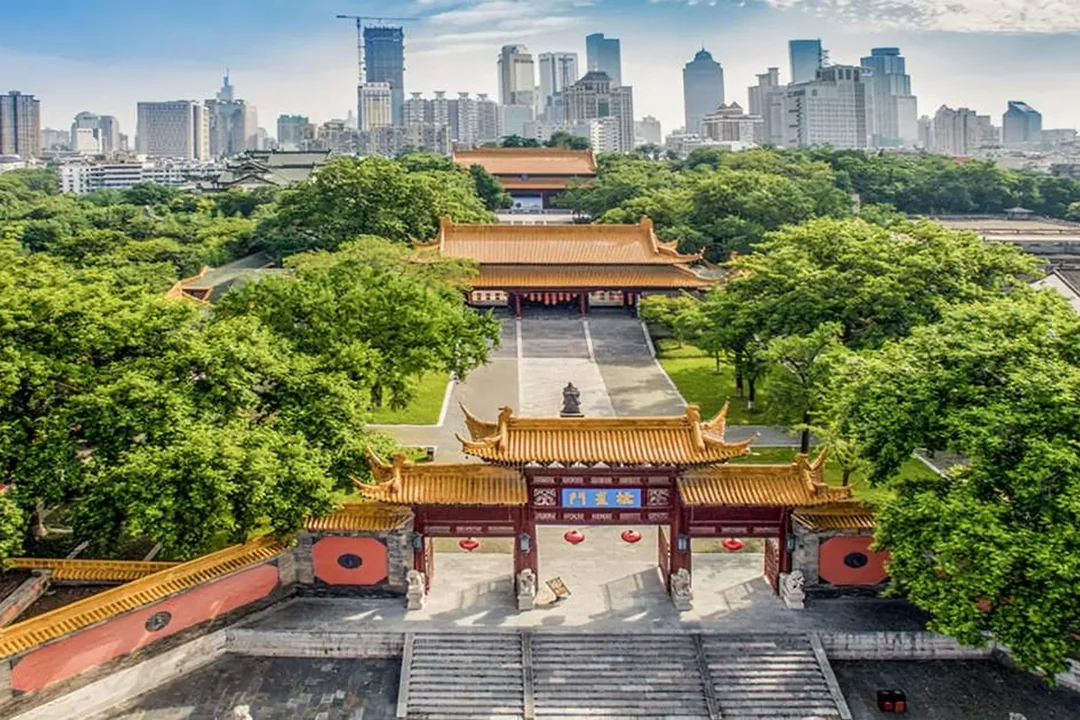
Chaotian Palace朝天宫
Chaotian Palace (Chaotian Gong) is the best-preserved Ming dynasty palace complex in southeastern China, serving historically as the imperial venue for worship ceremonies and the seat of the Ministry of Rites. Built in 1384 and extensively rebuilt in 1393 and 1859, it now houses the Nanjing Municipal Museum's collection of 50,000+ artifacts. The complex is famous for its vermillion columns, blue-tiled roofs, free-roaming peacocks, and the historic Baota, a 47-meter pagoda visible across the district.
Nanjing · Visitor Guide2026-10-18
Quick Answer
Is Chaotian Palace worth visiting?
Ancient Ming dynasty palace complex now housing the Nanjing Municipal Museum. Best-preserved ceremonial architecture in southeast China; free-roaming peacocks in the courtyard. 600+ years old.
Quick facts
| Ticket | Adults: CNY 25 (includes museum); Free on the 28th of each month (for museum only); Audio guide: CNY 20 (English) |
|---|---|
| Hours | 09:00–18:00 (Tuesday–Sunday); closed Mondays; extended to 21:00 on Friday and Saturday evenings (museum only) |
| Recommended duration | 1.5–3 hours |
| Best time to visit | Year-round; spring for courtyard flowers; early morning for uncrowded photography |
| How to get there | Metro Line 1 to Zhangjiakou Station (Exit 2); Bus 4, 41, 48, 83 to Chaotian Palace; 10-minute walk from Confucius Temple area |
| English signage | Yes |
| Wheelchair accessible | Partial |
| Original Construction | 1384 (Ming dynasty; Hongwu Emperor) |
| Current Structure | Rebuilt 1393 and 1859 (Taiping Rebellion reconstruction) |
| Building Count | 23 buildings across 70,000 square meters |
| Museum Collection | 50,000+ artifacts; 3,000 years of Nanjing history |
| Pagoda Height | 47 meters (Baota, 9 stories) |
| Heritage Status | National Key Cultural Relic; 4A scenic spot |
What to expect
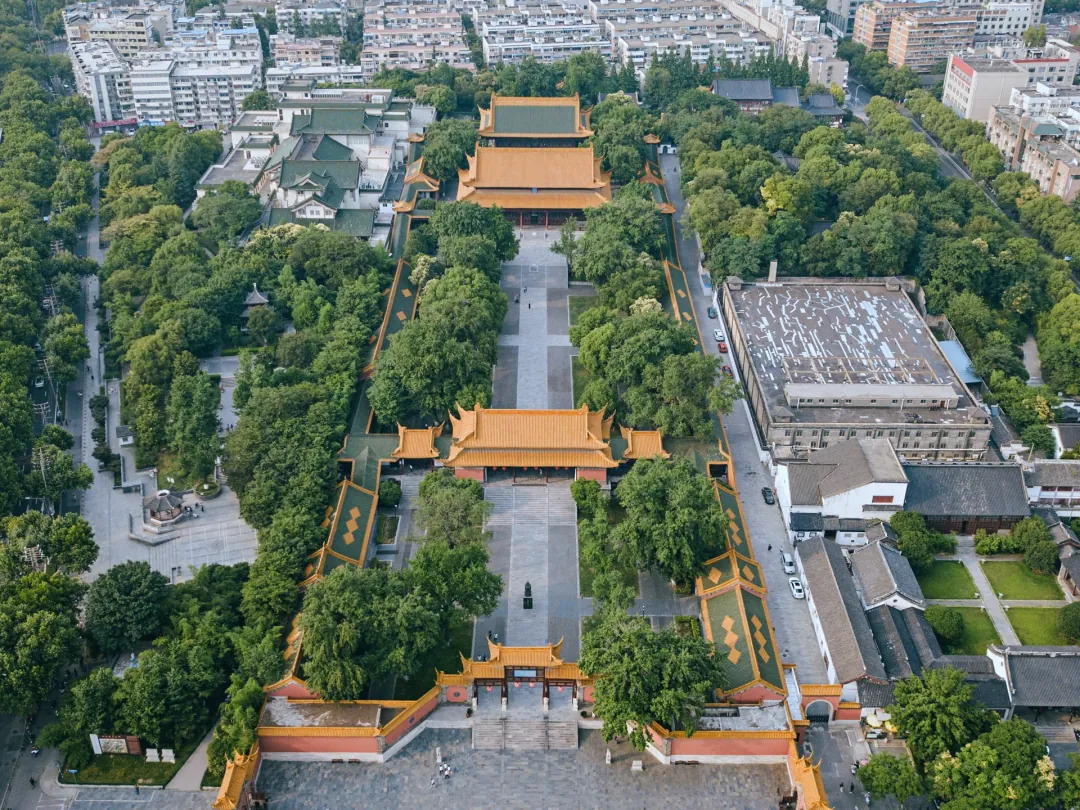
Chaotian Palace was built in 1384 by the Hongwu Emperor as the chief ceremonial center for worshiping heaven, earth, and the imperial ancestors — functions previously performed in Beijing's Forbidden City but replicated here for the southern capital. The name 'Chaotian' (Facing Heaven) reflects its function as the emperor's earthly interface with celestial powers. The complex covers 70,000 square meters with 23 buildings arranged in strict axial symmetry, including the main hall (Da Cheng Dian), the Baota pagoda (9 stories, 47 meters), ceremonial courtyards, and the administrative offices of the Ministry of Rites. The architecture represents the height of Ming ceremonial design in southeastern China.
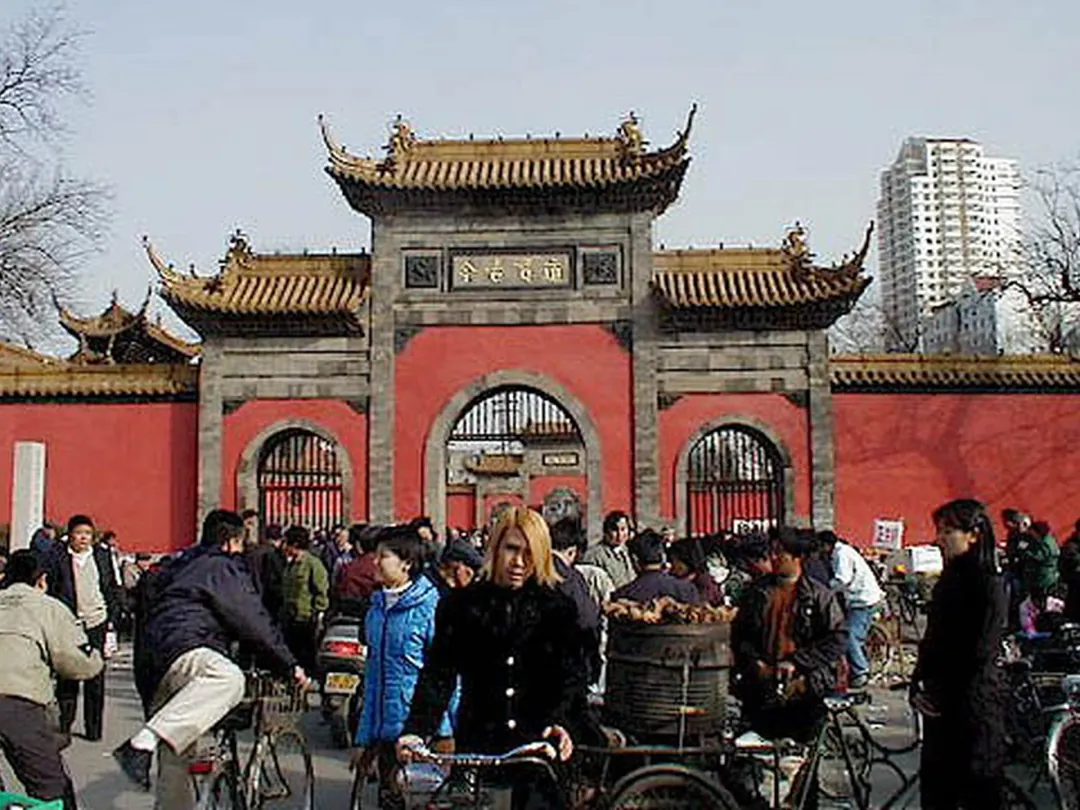
During the Taiping Heavenly Kingdom period (1853–1864), Chaotian Palace served as the headquarters of the Taiping rebels' religious and administrative apparatus. The original complex was largely destroyed during the Taiping suppression but was rebuilt in 1859 under the Xiang Army. The current structure dates substantially from this reconstruction, with subsequent repairs in the Republican and People's Republic periods. The distinctive vermillion paint, blue-glazed tile roofs, and the prominent Baota pagoda visible across the district all date from the 1859 reconstruction, giving the complex its current appearance.
The Nanjing Municipal Museum (南京博物院) relocated to Chaotian Palace in 1952 and has since assembled a collection of over 50,000 artifacts spanning 3,000 years of regional history. Highlights include jade artifacts from the Spring and Autumn period, a renowned porcelain collection (including Ming and Qing dynasty pieces from the imperial kilns), Buddhist sculptures, and the archaeological finds from nearby Nanjing sites. The museum's most famous object is the 'Ming Xiaoling Golden Ornament' — a set of gold and jade imperial burial accessories. The palace's courtyards also host free-roaming peacocks and turtles in the ornamental ponds, adding unexpected wildlife to the historic setting.
How to get there
From Nanjing railway station, take Metro Line 1 to Zhangjiakou Station (Exit 2), 5-minute walk. From Confucius Temple area, walk north 10 minutes through the historical district. The Baota pagoda is visible from the station and serves as a navigation landmark.
Best photo spots
- The main courtyard — vermillion columns with blue-tiled roofs and peacocks
- Baota (Pagoda) — 47-meter nine-story pagoda reflected in the lotus pond
- Da Cheng Dian main hall — classical Chinese palatial architecture
- The peacock-courtyard composition — traditional architecture with living wildlife
Tips
- The 28th of each month offers free museum admission — arrive early as queues are long
- Allow 1.5 hours for the museum collection plus 30 minutes for the palace architecture
- The peacocks are most active in morning (09:00–11:00); bring nuts if permitted
- Combine with the nearby Confucius Temple and Imperial Examination Museum (both within 1 km) for a full cultural day
- Evening openings (Friday–Saturday to 21:00) offer atmospheric low-light photography of the illuminated complex
Scams to avoid
- There are no significant scam risks at this cultural site
Frequently asked questions
What is the difference between Chaotian Palace and the Nanjing Museum (Nanjing Museum)?
Chaotian Palace houses the Nanjing Municipal Museum (南京博物院), a local history museum with 50,000+ artifacts. The larger Nanjing Museum (南京博物院, same Chinese name confusingly) is a separate, much larger institution located near Zhonghua Gate. The two should not be confused.
Can I see the peacocks year-round?
Yes, the peacocks are permanent residents of the palace courtyard. They are most visible during daytime hours. Peak peacock activity (displaying feathers) occurs during spring breeding season (March–May).
Is the Baota pagoda open for climbing?
No, the Baota is not open to the public for climbing. It serves as a visual landmark and is best photographed from the courtyard or the entrance road.
Is the museum suitable for children?
Yes, the museum has a dedicated children's archaeology education zone on the first floor with hands-on activities. The palace grounds are safe for children. The peacocks are a particular attraction for young visitors.
Read next
Other things to do in Nanjing
China Imperial Examination Museum (Gongyuan)
Ancient examination halls where scholars competed for imperial civil service positions over 600+ years. Now a world-class museum with reconstructed cubicles, artifacts, and immersive exhibits.
Confucius Temple (Fuzimiao)
A riverside temple complex turned lively pedestrian district — Confucian shrine, Qinhuai River boats, and Nanjing's best snack street. Temple ¥30, area free. 2–3 hours.
Zhonghua Gate Castle
The world's largest surviving ancient city gate complex, part of Nanjing's Ming dynasty wall. Three-tiered瓮城 (wengcheng/retreat defense) with 27藏兵洞 (hidden troop caves).
Ming Xiaoling Tomb
The tomb of the Hongwu Emperor (founder of the Ming dynasty, d. 1398) and his empress Ma. The largest imperial Ming tomb in China, with a 600-year-old stone avenue of elephants and lions.
Memorial Hall of the Victims of the Nanjing Massacre
One of China's most significant war memorial museums, built on the site of a mass grave of Nanjing massacre victims (1937–38). Solemn, powerful, and essential. Free admission.
Nanjing Museum
China's third-largest museum by collection size, with 1.2 million+ artifacts spanning 5,000 years. Exceptional jade, porcelain, Ming dynasty artifacts, and an outstanding digital civilization exhibit.
Stone City Park
Urban park built along a 300-meter stretch of Ming dynasty city wall, featuring the famous 'Stone City' cliff formation where the ancient wall is exposed.
Presidential Palace
Nanjing Presidential Palace historic site - served as Taiping Heavenly Kingdom headquarters, Qing provincial office, Sun Yat-sen 1912 office, and Chiang Kai-shek 1948 inauguration.
Purple Mountain (Zijinshan)
Nanjing's central mountain, home to Sun Yat-sen Mausoleum, Ming Xiaoling Tomb, and the Purple Mountain Observatory. Free area entry; allow a full day (5–8 hours) for the sites.
Qinhuai River
Nanjing's famous cultural river, 110 km long, flowing through the historic Confucius Temple district.
Sun Yat-sen Mausoleum
The 392-step blue-tile mausoleum where the founder of modern China rests. Free with national park ticket. The staircase is one of the most dramatic pieces of Republican-era architecture in Asia.
Xuanwu Lake Park
Nanjing's central lake park, 4.7 km² of islands, pavilions, lotus fields, and walking paths. Free entry, excellent for sunset walks and boat rides. Urban oasis with 2,000+ years of history.
Yongle Temple
Historic Buddhist temple on Purple Mountain's southern slope, founded 1455 during Ming dynasty. Famous for pink peach-blossom gardens in spring and traditional architecture.
Zhangfuyuan Historical District
Nanjing historic residential quarter near Confucius Temple, Ming-Qing courtyard houses, 15th-century Wanmin Bridge stone arch. Free to walk district. Metro Line 1 Zhangfuyuan Station (Exit 1).
Museums in Nanjing
Jiangsu Provincial Museum
Note: Jiangsu's primary museum is the national-level Nanjing Museum in Nanjing, not a standard provincial museum; treat this entry as reference only (2026).
Memorial Hall of the Victims in Nanjing Massacre by Japanese Invaders
One of China's most significant war memorial museums — documenting the 1937 Nanjing Massacre when Japanese forces killed 300,000 Chinese civilians and soldiers.
Nanjing Museum
China's third-largest museum after the Palace Museum and National Museum of China — a combined history and art museum with strong Han/Tang collections. Free with passport; 4–6 hours.