Shanghai · art museum
M50 Art District (莫干山路50号艺术区, Mògānshān Lù 50 Hào Yìshù Qū)
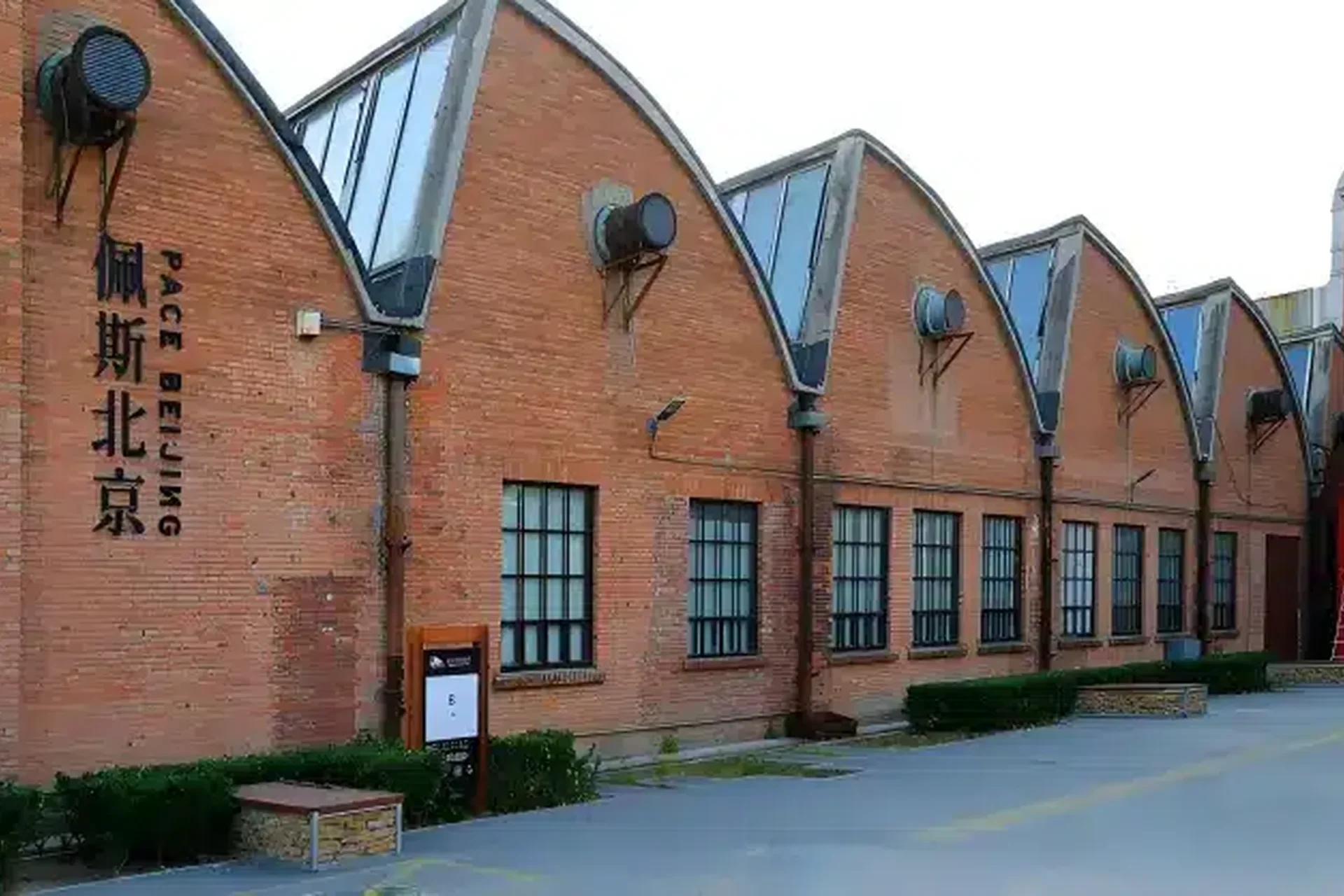
"M50 Art District occupies the former Shanghai No. 12 Wool Spinning Mill (Spring Light Mill / 春明粗纺厂), a brick complex originally built in 1937 along Suzhou Creek. From around 2002 onward, artists began renting cheap loft space here, and the cluster grew into Shanghai's most established contemporary-art district. Today it is home to roughly 130–160 galleries, studios, and design shops, and functions as the city's de facto home for working Chinese contemporary artists.".
Last updated:
Quick Answer
Is M50 Art District worth visiting?
"A converted 1930s wool-spinning mill on Moganshan Road now hosting 130+ artist studios and galleries; plan 2–3 hours for a real walk-through, not a quick photo stop.".
Quick facts
| Category | art |
|---|---|
| Ticket | Free (most galleries are individually free; special exhibitions ticketed separately, typically ¥20–¥80). Free entry to the district itself is standard as of 2026. |
| Hours | Most galleries open 10:00–18:00, Tuesday–Sunday. Many studios and small galleries are closed on Mondays. Individual hours vary — check ahead for any specific gallery you want to enter. |
| Recommended duration | 2–3 hours for a proper look; 1 hour if you just want a quick photo loop around the main courtyard and Moganshan Road frontage. |
| Best time to visit | Weekday afternoons (Tue–Thu, 14:00–17:00) when the largest galleries are open and crowds thin out. Saturday mornings are lively but busier; Sunday afternoons are the worst — many studios close by 16:00. Autumn (Oct–Nov) is comfortable; July–August Shanghai heat makes the un-air-conditioned warehouses uncomfortable. |
| How to get there | Metro Line 13 to Jiangning Road Station (江宁路站), Exit 3, then walk south ~800m along Moganshan Road (about 10 minutes). Alternatively Line 3 / Line 4 to Zhongshan Park Station (中山公园站), Exit 6, then walk ~10 minutes north. From People's Square, a DiDi is ¥30–¥45 and takes ~25 minutes in light traffic (verify). Bus 105, 56, and 206 stop nearby on Changyang Road. |
| English signage | partial |
Why visit
If you care about Chinese contemporary art at all, M50 is where you actually see artists working, not just polished museum displays. It is older, grittier, and less curated than the Power Station of Art or West Bund Museum, which is precisely the point — you can walk from a working oil painter's studio into a video-art collective into a woodblock print shop in the same afternoon. For an English-speaking visitor who has already done the headline museums, M50 is the place to slow down, see what's actually being made in Shanghai right now, and (unlike Tianzifang) buy a piece that isn't a tourist-market reproduction. Skip it only if your time in Shanghai is under 48 hours or you have zero interest in contemporary art.
Collection highlights
- ShanghART Gallery (香格纳画廊) — China's first contemporary gallery, founded 1996, with permanent space inside M50 and a separate West Bund location
- M97 Gallery — long-running photography and mixed-media space, reliable for serious exhibition programming
- Island6 (Liu Dao 六岛) — interdisciplinary collective blending contemporary Chinese ink with LED, robotics, and pixel art
- OFOTO Gallery — established photography-focused gallery, often showing documentary work from mainland photographers
- Spring Light Mill historical brick facades — original 1937 industrial architecture along Suzhou Creek, the visual backbone of the district
- Artist open studios on upper floors (gates #3 and #5) — active working spaces you can peek into on weekends
Tips
- M50 is not a single museum with one entrance — there is no ticket booth. You enter through the main gate on Moganshan Road and walk in; the courtyards themselves are public space.
- Carry small cash (¥50–¥200) and a WeChat or Alipay account. Many smaller studios and any on-site purchases still don't take foreign credit cards, despite official "Visa accepted" signs that haven't been updated since 2019.
- If you only have time for one gallery, make it ShanghART — it has the most consistent English-language wall texts and the most historically significant programming.
- Skip the cafés on the main courtyard; they are tourist-priced and unremarkable. Better coffee and food is one street east on Anyuan Road (安远路).
- Ask before photographing artists working in open studios — most say yes, a few genuinely don't want their work-in-progress online. A simple "可以拍吗?" works.
Frequently asked questions
Is M50 Art District the same as Tianzifang?
No. Tianzifang (田子坊) in the French Concession is a 2005 tourist redevelopment aimed at shoppers, with mostly craft shops and cafés. M50 is older (artists moved in from ~2002), larger, less touristed, and oriented toward working galleries and contemporary art rather than souvenirs. Choose Tianzifang if you want a 1-hour browse with dinner; choose M50 if you actually want to see art.
Do I need a ticket to enter M50?
No. Entry to the M50 complex and its courtyards is free as of 2026. Individual galleries inside may charge for special exhibitions, typically ¥20–¥80, but most are free. There is no central ticket booth.
What is the closest metro station to M50 Art District?
Jiangning Road Station (江宁路站) on Line 13, Exit 3, is the closest — about a 10-minute walk south along Moganshan Road. Zhongshan Park Station (Lines 3 and 4), Exit 6, is roughly the same walking distance from the north gate.
Is M50 worth visiting if I only have one day in Shanghai?
Probably not. With one day, prioritize the Bund, Yu Garden, and either the Shanghai Museum or the Power Station of Art. M50 rewards visitors with at least 2–3 hours and some prior interest in contemporary art — it is a "second or third day" stop, not a headline attraction.
Can I buy original art at M50?
Yes, and this is one of M50's real advantages over Tianzifang or the tourist markets. Prints and small works start around ¥500–¥2,000; mid-range originals from established artists run ¥5,000–¥50,000. Larger galleries like ShanghART handle higher-end sales; expect them to ask for ID and a Chinese phone number for invoicing on purchases over ¥10,000.
What are M50's opening hours?
The complex itself is open roughly 10:00–18:00, though individual galleries set their own hours and many studios close Mondays. Plan a Tuesday–Friday afternoon visit for the best chance of having the larger galleries open without weekend crowds.
Is there an English audio guide at M50?
No central audio guide — M50 is a district, not a museum. ShanghART and M97 typically have English wall texts for current exhibitions; smaller studios often have nothing in English. If you want context, read a brief on Shanghai contemporary art before you go rather than expecting on-site interpretation.
When was M50 originally built?
The mill complex dates to 1937, built during the Republican era as the Shanghai No. 12 Wool Spinning Mill (also called Spring Light Mill / 春明粗纺厂). It operated as a state-owned textile factory through the 1990s before artists began renting space there from around 2002.
Is M50 Art District accessible for wheelchair users?
Partially. The main courtyard and ground-floor galleries are mostly accessible, but the 1937 brick warehouses have uneven floors, narrow doorways, and stairs to upper studios. Specific accessibility varies by gallery — call ahead if it matters for your visit.
How many galleries are in M50?
Sources vary between roughly 130 and 160 galleries, studios, and design shops at any given time. The number fluctuates as leases turn over; the core group of 15–20 established contemporary galleries has remained stable since the late 2000s.
Read next
Other things to do in Shanghai
Century Park
century-park in Beijing: "浦东最大公园,140公顷,草地音乐节,赏花好去处.".
City God Temple (Chenghuang Temple)
city-god-temple in Beijing: "上海老城厢文化核心,豫园商圈,小商品市场.".. 2026 verified.
Sweet Love Road (Dixing Road)
dixing-road in Beijing: "上海最浪漫街道,300米梧桐隧道,网红打卡地.".
Hefang Street (Near West Lake)
hangzhou-park in Beijing: 清河坊历史街区,杭州最著名古街,南宋1000多年历史,免费。地铁1号线定安路站步行10分钟,胡庆余堂、方回春堂等百年老店汇聚。
Oriental Pearl Tower
oriental-pearl-tower in Beijing: "上海地标,468米,旋转餐厅,俯瞰夜景最佳点.".
Shanghai Disneyland
The first Disney park on mainland China, open since June 2016 in Pudong, with the tallest Disney castle anywhere (~60 m) and rides you can't get elsewhere like TRON and the redesigned Pirates.…
Shanghai Tower
shanghai-tower in Beijing: "中国最高楼,632米,世界第二高,龙形螺旋设计.".
The Bund
the-bund in Beijing: "52栋历史建筑群,上海名片,万国建筑博览会,夜景最佳.".
World Financial Center (Shanghai IFC)
world-financial-center in Beijing: "陆家嘴三件套之一,开瓶器造型,100层观光厅.".
Zhujiajiao Water Town
"A 1,700-year-old canal town 45 minutes from Shanghai — stone bridges, boat rides, and lane food. Free entry (attractions cost extra). Half day.".
Museums in Shanghai
China Art Museum
"Modern and contemporary Chinese art in the striking former China Pavilion from Expo 2010. Free entry. Home of the animated digital \"Along the River During the Qingming Festival.\".".
China Maritime Museum
"Maritime Silk Road, Zheng He's treasure ships, and a full-size Ming Dynasty junk replica inside a sail-shaped building near Dishui Lake. China's national maritime museum. ¥50.".
HOW Art Museum
"A private contemporary art museum in Pudong with about 3,000 sqm of exhibition space, walkable in 90 minutes if you skip the gift-shop vortex.".
Long Museum (Pudong)
"Two million RMB and eight years of collecting went into this private art museum in the Pudong riverfront — set aside about 2 hours and arrive before noon.".
Long Museum West Bund
"Shanghai's largest private art museum inside a former coal物流 warehouse — 33,000 sqm of contemporary and modern Chinese art, the Wang Jianwei installation,.".
Power Station of Art
"China's first state-run contemporary art museum, set inside a converted 1897 British-built coal-fired power plant on the Huangpu River — admission is free and 2-3 hours covers the main halls.".
Rockbund Art Museum
"Contemporary art in a striking 1933 Art Deco building on the Bund. ¥50. Rotating exhibitions by Chinese and international artists. The building rivals the art.".
Shanghai History Museum
"Shanghai's journey from fishing village to 1930s \"Paris of the East\" — told through artifacts, photographs, and immersive street scenes. Below the Oriental Pearl Tower. Free.".
Shanghai Museum
"\"China's best museum for ancient Chinese art — 5 floors of masterworks: ancient bronzes, jades, ceramics, calligraphy, paintings, coins, and Ming-Qing家具. Free. Located on People's Square.\".".
Shanghai Natural History Museum
"A world-class natural history museum inside Shanghai's famous \"Plant-Bulb\" building on People's Square — 10 million specimens, evolution galleries,.".
Shanghai Propaganda Poster Art Centre
"Private collection of Mao-era propaganda posters in a basement gallery. ¥20. One of Shanghai's most distinctive small museums. A window into 20th-century Chinese political art.".
Power Station of Art
"Shanghai's state-run contemporary art museum inside a former thermal power plant — China's first state-run contemporary art museum,.".. 2026 verified.
Shanghai Science and Technology Museum
"A family-oriented science museum with robot musicians, a walk-through animal world, and Shanghai's best hands-on physics exhibits — budget a full afternoon (4–5 hours). ¥60 adults, ¥30 students.".
Shanghai Urban Planning Museum
"A 5-floor museum inside Shanghai's municipal government building showing the city's past, present, and future urban planning — the highlight is a 1:500 scale model of Shanghai in 2035. ¥50.".