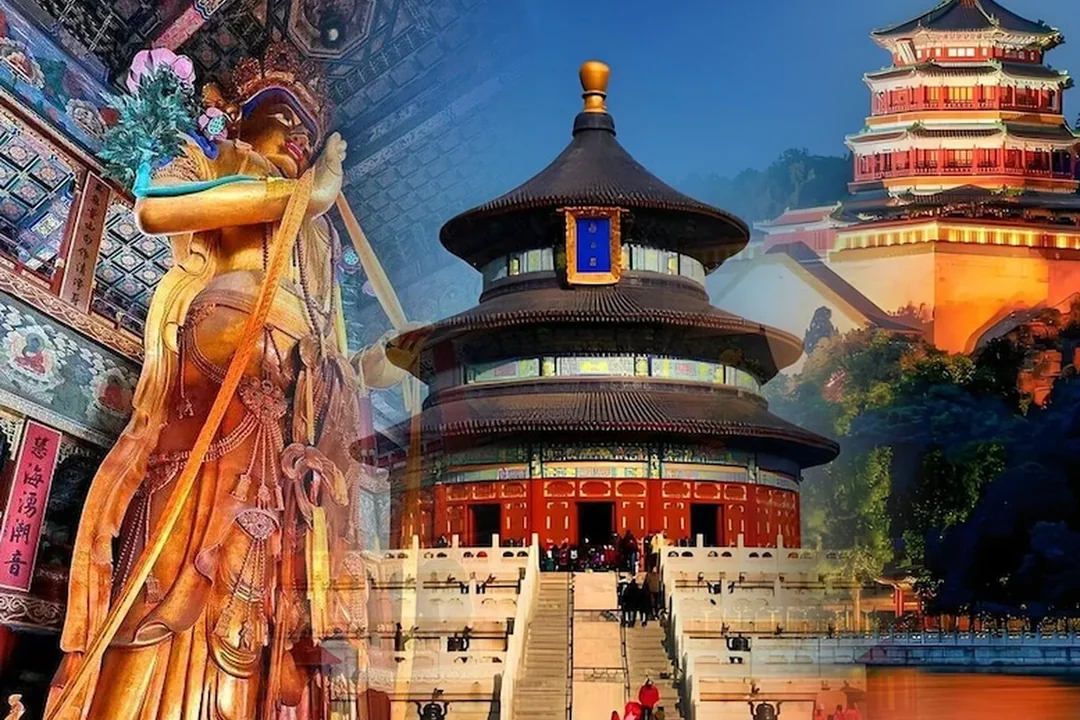
Nanhai Temple (Temple of the God of the South Sea)南海神庙
Nanhai (Boluo) Temple in Huangpu, founded in 594, is one of China's four great ancient sea-god temples, a Maritime Silk Road witness; Boluo Dan on lunar 2/13.
Guangzhou · Visitor Guide2026-10-18
Quick Answer
Is Nanhai Temple (Temple of the God of the South Sea) worth visiting?
One of ancient China's four great sea-god temples, founded in the Sui dynasty to bless fleets on the Maritime Silk Road. Admission CNY 10, and the Boluo Dan fair is a spectacular riot.
Quick facts
| Ticket | CNY 10 |
|---|---|
| Hours | 08:30-17:00 |
| Recommended duration | Allow 1.5-2.5 hours |
| Best time to visit | During the Boluo Dan fair (second lunar month) for maximum spectacle; spring and autumn on ordinary days |
| How to get there | Metro Line 5 to Wenchong Station Exit A, then bus B1 or B29 to Nanhai Temple stop; or a taxi of about CNY 15 |
| English signage | Partial |
| Wheelchair accessible | Partial |
| Founded | Sui dynasty, 594 (Kaihuang 14) |
| Status | One of ancient China's four great sea-god temples |
| History | Key site of the Maritime Silk Road |
| Temple fair | Boluo Dan, 13th day of the second lunar month |
| Admission | CNY 10 |
What to expect
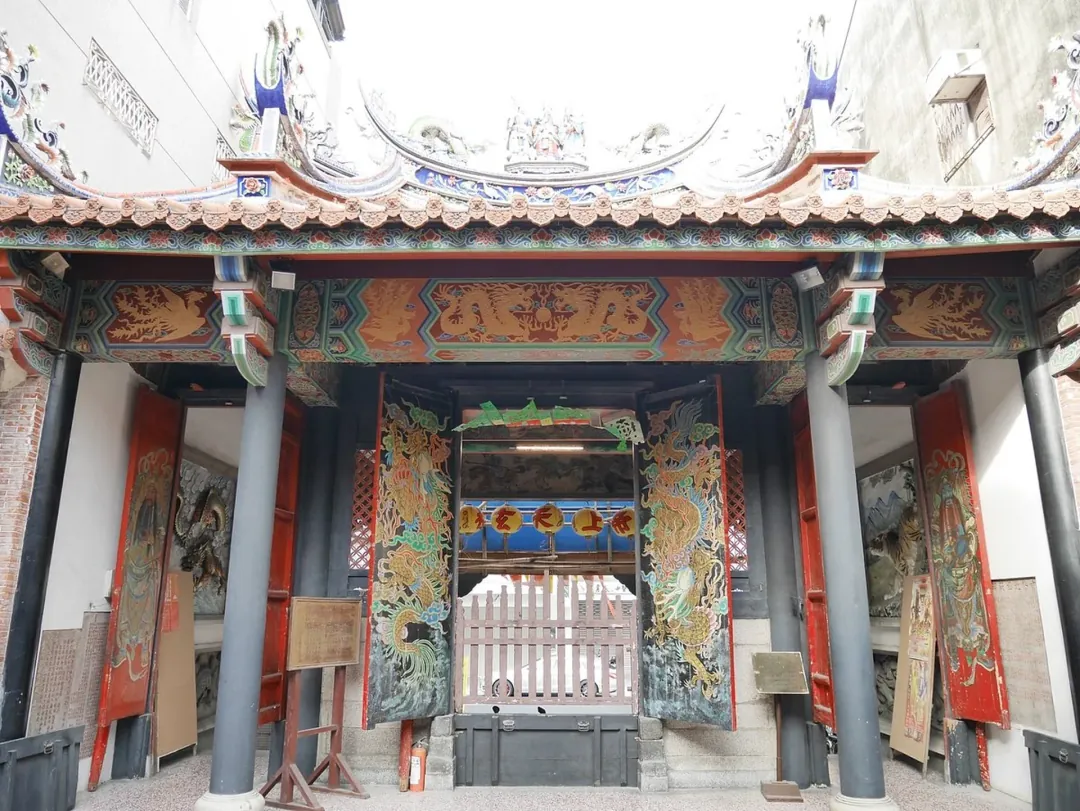
Nanhai Temple sits in Miaotou Village, Huangpu District, Guangzhou — the imperial temple where dynasties sacrificed to the God of the South Sea, ranking with Shandong's Penglai Pavilion, Jiangsu's Donghai Temple and Zhejiang's Goujian Temple among ancient China's four great sea-god temples. Founded in 594 during the Sui dynasty's Kaihuang era, it carries more than 1,400 years of history. From the Tang onward, emperors dispatched officials here to pray for safe shipping and favourable weather. More than 30 stone stelae from the Tang, Song, Yuan, Ming and Qing survive in the grounds — a 'southern forest of stelae' and precious primary material on ancient sea-god worship and maritime trade.
The temple is also a milestone of the Maritime Silk Road: merchant ships leaving Guangzhou for Southeast Asia, South Asia and the Arabian seas customarily sacrificed here before setting sail. The 'Calm Seas' (Hai Bu Yang Bo) stone archway and other inscriptions record ancient China's trade and cultural exchange with the world beyond. Each year from the 11th to the 13th of the second lunar month, the Boluo Dan fair draws crowds from the Pearl River Delta, Hong Kong and Macau — one of Guangzhou's grandest traditional temple fairs. Themed souvenirs include the ancient Boluo talisman and the seal of the God of the South Sea.
Practical notes: the temple is far from downtown — allow half a day. The grounds are compact but steeped in history, so a guide or some background reading greatly helps. It is quiet and rarely crowded; during Boluo Dan it is packed, so a plain day is the better choice. The Danshuikeng scenic area and Guangzhou Maritime University nearby round out a visit.
How to get there
Metro Line 5 to Wenchong Station Exit A, transfer to bus B1, B29 or 517 to Nanhai Temple stop, then about a 5-minute walk. From Guangzhou South railway station allow about an hour by metro (Line 2, transferring to Line 5); from Guangzhou East railway station, Line 1 to Yangji then Line 5, about 50 minutes.
Best photo spots
- The 'Calm Seas' (Hai Bu Yang Bo) stone archway
- The forest of stelae from successive dynasties
- The main hall of Nanhai Temple
- The Boluo Dan fair (second lunar month)
- The ancient boluo tree (a millennium-old tree in the grounds)
Tips
- The Boluo Dan fair (11th-13th of the second lunar month) is Guangzhou's liveliest temple fair, but extremely crowded — ordinary days are more rewarding
- QR codes around the temple give free audio commentary
- Century-old trees and quiet courtyards make it a photographer's delight
- Danshuikeng scenic area nearby can be combined in one trip
Scams to avoid
- No major scams, though vendors may inflate prices around the temple during the Boluo Dan fair
Frequently asked questions
Why is Nanhai Temple also called Boluo Temple?
An ancient boluo tree stands in the grounds, said to have been planted personally by the monk Bodhidharma during the Southern Dynasties. Bodhidharma was also known as the 'Boluo monk', so the tree — and with it the temple and the annual fair — took the name Boluo.
Nanhai Temple or the South Sea Guanyin?
Nanhai Temple is the old imperial shrine to the sea god, with an official sacrificial tradition; the South Sea Guanyin is a Buddhist devotion to the bodhisattva. They are entirely different in nature.
How long does a visit take?
About 1.5-2 hours. The grounds are modest, but the stelae and their stories reward a slow look.
What is there to see nearby?
Danshuikeng scenic area (about a 20-minute walk) and Guangzhou Maritime University (adjacent).
Read next
Other things to do in Guangzhou
Baiyun Mountain (Guangzhou)
Guangzhou's 'green lung' and the top hill of Yangcheng, with admission at just CNY 5. Moxing Ridge tops out at 382 m — a great hiking escape whose summit square overlooks the whole city.
Canton Tower (Guangzhou Tower)
Guangzhou's 'Slim Waist' icon stands 600 m tall, with a rooftop Ferris wheel and Sky Drop; observation tickets from CNY 107. The Pearl River night panorama is unbeatable.
Chen Clan Ancestral Hall
The finest ancestral hall in Guangdong and a jewel of Lingnan architecture — wood, brick, stone and lime carving at every turn. Admission CNY 10; now the Guangdong Folk Art Museum.
Chen Clan Academy (Chen Lineage Hall)
The formal name of the Chen Clan Ancestral Hall, Guangdong's finest lineage hall and a distillation of Lingnan architecture. Admission CNY 10; now the Guangdong Folk Art Museum.
Guangdong Museum
Guangdong's largest general museum in Guangzhou's Zhujiang New Town, holding about 180,000 objects in a 2010 building; free with reservation, 09:00-17:00, metro direct.
Guangzhou Opera House
A Zaha Hadid-designed, 1,800-seat hall opened in 2010 in Zhujiang New Town and ranked among the world's ten great opera houses. Lobby free; show tickets CNY 100-1280.
Shangxia Walkway
Cantonese Art Deco shopping street — 1.2 km of restored 1930s arcade buildings, milk custard, and silk shops, 15 minutes from the Beijing Lu pedestrian zone. Free. 1–2 hours.
Kaiping Diaolou (Watchtower Villages)
About 1,833 surviving fortified tower-houses scattered across rural Kaiping, built mainly between the 1890s and 1930s by returned overseas Chinese; plan a full day, ideally an overnight, to see.
Pearl River Night Cruise
A 60-to-80-minute boat ride down Guangzhou's lit-up Pearl River past Canton Tower and the Zhujiang New Town skyline.
Shamian Church (Our Lady of Lourdes Church)
The best-known church on Shamian Island, built by the French in 1890 in Gothic style. Free to enter, and open for photos outside Mass times — arguably Guangzhou's most romantic church.
Shamian Island
Guangzhou's most European quarter — a British and French concession after the Opium Wars, now an island of 150-plus European buildings. Free to wander and a favorite for wedding photos.
Shangxiajiu Pedestrian Street
Guangzhou's most famous qilou arcade shopping street, about 1,200 m along Shifu and Xiajiu roads. Free to browse, dense with century-old food names, with Hualin Temple's jade street next door.
Sun Yat-sen Memorial Hall
A 1931 octagonal, blue-roofed hall to Sun Yat-sen on the site of his 1921 presidential office — 49 m tall with a 71 m column-free auditorium span.
Pearl River Night Cruise
Guangzhou's classic evening experience: a boat ride along the Pearl River past the floodlit Canton Tower, Haixinsha and Liede Bridge. Tickets run about CNY 80-150; book ahead for holidays.
Yuexiu Park
Guangzhou's largest comprehensive park, about 860,000 sq m, home to the 11-m Five Rams statue — the city's emblem. Free entry; Zhenhai Tower (Guangzhou Museum) CNY 10 extra. Allow 2-4 hours.
Museums in Guangzhou
Guangdong Museum
Guangdong's flagship museum in Guangzhou's Zhujiang New Town, holding the world's finest collection of Lingnan culture and Chao porcelain; verified in 2026.
Chen Clan Ancestral Hall
Guangzhou's finest example of traditional Cantonese (Lingnan) architecture — a Qing Dynasty ancestral hall with intricate brick, wood, and stone carvings. ¥10.
Guangzhou Museum (Zhenhai Tower)
Inside Zhenhai Tower (1380) overlooking the Pearl River — Cantonese history from Neolithic to modern. ¥10. 1.5 hours. Less crowded than the bigger museums.
Museum of the Mausoleum of the Nanyue King
A 2,000-year-old royal tomb you can walk into — the intact burial of the second Nanyue King, Zhao Mo, with his jade burial suit sewn in silk thread.