Kaiping · Visitor Guide
Kaiping Diaolou (Watchtower Villages) (开平磉楼, kāi píng diāo lóu)
"Kaiping Diaolou is a UNESCO World Heritage cluster of multi-story defensive village towers in Guangdong's Kaiping, blending Chinese, European, and even Malay architectural influences brought back by overseas Chinese laborers and merchants. The four designated sites — Zili Village, Li Garden, Sanmenli, and Jinjiangli — were inscribed by UNESCO in 2007 and remain the single best-preserved example of the qiao (overseas Chinese) building tradition in China.".
Last updated:
Quick Answer
Is Kaiping Diaolou (Watchtower Villages) worth visiting?
About 1,833 surviving fortified tower-houses scattered across rural Kaiping, built mainly between the 1890s and 1930s by returned overseas Chinese; plan a full day, ideally an overnight, to see …
Quick facts
| Ticket | Combined ticket for Zili Village + Li Garden + Jinjiangli + Sanmenli: ¥180/person (as of 2026). Single-site tickets around ¥50–80. Free entry for children under 1.2 m. Verify at the on-site window — counters sometimes add a ¥10 insurance fee not reflected online. |
|---|---|
| Hours | Most diaolou sites open 8:30–17:30 (last entry ~17:00); Li Garden closes slightly later than Zili. Closed for maintenance on some Mondays — call ahead in low season. |
| Recommended duration | Full day minimum (8–10 hours) if doing Zili + Li Garden by shuttle; overnight recommended to add Sanmenli at dawn when the light hits the rows of towers and there are no tour buses. |
| Best time to visit | October to early December: dry, post-typhoon, rice paddies still green around the towers. Avoid Golden Week (Oct 1–7) and Chinese New Year week — every diaolou is overrun and shuttle buses queue 40+ minutes. Spring (March–April) is wet and the village lanes flood. |
| How to get there | No metro — Kaiping is 130 km southwest of Guangzhou. From Guangzhou South Railway Station, high-speed rail to Kaiping South Station takes 50 minutes (¥70–90 second-class), then a DiDi to Zili Village is about ¥50–70 / 35 minutes. Direct shuttle buses from Guangzhou's Provincial Bus Station to Kaiping Changsha bus terminal run every hour (¥65, 2 hours), then local bus 13 or a DiDi (¥20) to the diaolou scenic area. Driving via G15/Fokai Expressway is 1.5–2 hours without traffic. |
| English signage | partial |
| Wheelchair accessible | no |
| UNESCO Inscription | 2007 (criteria ii, iii, iv) |
| Number of Towers | ~1,833 surviving (peak ~3,000+) |
| Main Built Period | 1890s–1930s, peak in 1920s |
| Inscribed Area | ~372 hectares across 4 villages |
| Distance from Guangzhou | ~130 km southwest |
| Style Influences | Chinese, Greek, Roman, Gothic, Malay |
What to expect
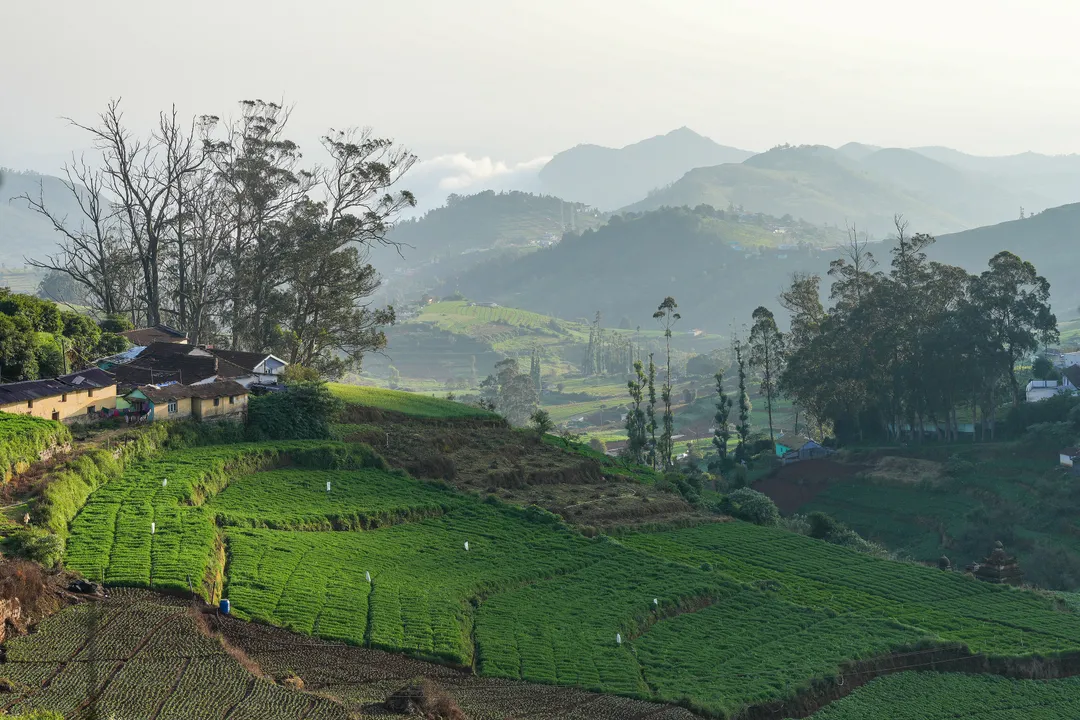
You will see rows of 3- to 7-story concrete and brick towers rising improbably out of flat rice fields and banyan-shaded villages. Inside the most-visited ones (Ruishi Lou and Nan Lou in Zili, the six towers of Li Garden) you climb narrow tiled stairs past living rooms, ancestral halls, and rooftop parapets that still carry the original steel shutters, gun-slits, and Thai-style ironwork shipped back from Bangkok or San Francisco. Interpretive panels are mostly in Chinese with some English captions; hiring the unofficial village guides (¥50–80 for a group) is honestly worth it for the family stories behind each tower, which the placards skip.
Kaiping sits in the Wuyi diaspora heartland, and most diaolou were paid for with remittances from Kaiping men working in North America, Southeast Asia, and Australia between the 1880s and 1930s. The defensive hardware — bomb-proof walls, narrow slit windows, reinforced roofs, family living quarters sized for 20+ people — was a direct response to banditry and the lawless interregnum of the early Republic; many towers doubled as village fortresses where neighbors could shelter together during raids. After 1949 the diaspora flow reversed, money dried up, and the towers were simply left standing in fields, which is exactly why so many survived when other regional styles got demolished. UNESCO inscribed the four core villages in 2007, making them the only diaolou entry on the World Heritage list.
The practical reality: this is not a polished Disney site. Zili Village in particular is still a living village with chickens, drying laundry, and old women watching TV in 1920s parlor rooms. Roads between the four inscribed villages are narrow and the official shuttle bus runs infrequently — renting an e-bike (¥80/day) or a DiDi for the half-day is faster. Expect weak mobile signal at the back of Li Garden, almost no Western food in the surrounding villages, and cash-only ticket windows at the smaller sites. Hot weather from May to September is brutal because there is almost no shade between the towers.
How to get there
From Guangzhou (most common start): 1) High-speed rail from Guangzhou South Railway Station to Kaiping South Station — 50 min, ¥70–90 second class, roughly 30 daily trains. From Kaiping South, take a DiDi to Zili Village (~¥60, 35 min) or a local bus to Changsha Bus Terminal then transfer to bus 13 toward Zili (¥5, slow). 2) Direct coach from Guangzhou Tianhe Bus Station or Provincial Bus Station to Kaiping Changsha terminal — every 30–60 min, ¥65, 2 hours, then taxi/DiDi ¥20 to the diaolou area. 3) Self-drive via G15 Shenhai Expressway south then S49 Kaizhong Expressway — 1.5–2 hours off-peak, 2.5+ hours during holidays; parking at Li Garden costs ¥20/day. From Foshan or Jiangmen there are also frequent intercity buses to Kaiping (¥40–55, 1.5 hours). Once at the scenic area, an official sightseeing shuttle loops between the four UNESCO villages for ¥20/day but runs only every 40–60 minutes; an e-bike or DiDi gives you total freedom and is what locals actually use.
Best photo spots
- Zili Village reflected in the lotus pond at sunrise, with Ruishi Lou (the tallest, 9 stories) silhouetted against the eastern sky
- Li Garden's main tower viewed from across the artificial lake, where the Greco-Roman columns and curved bridge line up for a symmetrical shot
- The bamboo lane behind the row of towers at Jinjiangli village, where 3–5 diaolou line up at slightly different angles in a single frame
- The roof terrace of Nan Lou in Zili at golden hour, looking out over tiled rooftops and paddy fields toward the distant hills
Tips
- Buy the ¥180 combined ticket even if you only plan to visit Zili — Li Garden alone is worth half the day and single-site tickets are barely cheaper.
- Rent an e-bike at Zili Village entrance (¥80/day) instead of relying on the shuttle bus; the 5 km between villages is flat and shaded.
- Bring cash (¥200–300 in small notes); the smaller village sites and e-bike rental don't take WeChat from foreign cards reliably.
- Eat lunch in Changsha town (10 min by DiDi from the scenic area) rather than at the overpriced tourist restaurants near Zili — try a local eel-and-rice claypot at a 港式茶餐厅 for under ¥40.
- If you shoot video, ask before filming inside any still-inhabited tower; some Zili families still live in the ground floors and resent being on camera.
Scams to avoid
- Unofficial "guides" at the Zili Village entrance quoting ¥150–200/person — the real price with a registered village guide is ¥50–80 for a small group; politely decline and walk to the ticket window to find an English-speaking one.
- DiDi drivers from Kaiping South Station occasionally take the longer S49 toll road to bump the fare from ~¥60 to ~¥120; insist on the Gaozui Road route or pin the destination on the map.
- Souvenir stalls near Li Garden sell "antique diaolou bricks and Ming-era roof tiles — they are almost always modern concrete reproductions stamped 百年老砖"; do not pay more than ¥20 for any of them.
Frequently asked questions
How much does it cost to enter the Kaiping Diaolou scenic area in 2026?
The combined ticket covering all four UNESCO villages (Zili, Li Garden, Jinjiangli, Sanmenli) is ¥180 per adult. Single-village tickets run ¥50–80 each, with kids under 1.2 m free. Prices are stable but always check at the gate, as the official window may add a small insurance fee.
What are the opening hours of Kaiping Diaolou?
Most sites run 8:30 to 17:30 with last entry around 17:00. Li Garden sometimes stays open until 18:00. Some smaller villages close on Mondays for maintenance, particularly outside peak season.
How do I get from Guangzhou to Kaiping Diaolou?
Fastest is the 50-minute high-speed train from Guangzhou South to Kaiping South (¥70–90), then a 35-minute DiDi to Zili Village (~¥60). Direct coaches from Guangzhou also run every 30–60 minutes (¥65, 2 hours). Self-drive via the G15 expressway takes 1.5–2 hours without traffic.
When were the Kaiping Diaolou built and why?
Most surviving towers were built between the 1890s and 1930s, with the peak around the 1920s. They were paid for by overseas Kaipingese who had made money abroad and remitted it home, primarily as a defense against bandits during the chaotic early Republican period.
How many Kaiping Diaolou still exist?
About 1,833 diaolou are still standing in the Kaiping area, down from a historical peak of over 3,000. The UNESCO-protected core comprises 4 villages containing roughly 40 of the most architecturally significant towers.
When did Kaiping Diaolou become a UNESCO World Heritage site?
UNESCO inscribed "Kaiping Diaolou and Villages" in 2007 under cultural criteria ii, iii, and iv. It was the first and remains the only diaolou-related entry on the World Heritage list.
Is Kaiping Diaolou worth an overnight stay?
Yes — an overnight lets you catch the four villages at dawn and dusk without the tour bus crowds, plus try the local eel-and-claypot restaurants in Changsha town. A one-day trip from Guangzhou is doable but rushed, especially if you want to see more than two villages.
What is the difference between Zili Village and Li Garden?
Zili (自力村) is the larger, more rustic of the two with around 15 towers spread across rice fields, including the 9-story Ruishi Lou. Li Garden (立园) is a single estate built in the 1920s by an overseas Chinese businessman, with 6 towers arranged around landscaped gardens and a lake — it is the more "designed" and tourist-polished of the two.
Can I see the Kaiping Diaolou in one day from Guangzhou?
Yes, plan for an early 7:00 am departure to catch Zili Village and Li Garden comfortably; add Sanmenli only if you leave by 6:30 am. The 130 km one-way drive plus shuttle time makes a true four-village loop impossible without an overnight.
Are the Kaiping Diaolou wheelchair accessible?
No. Tower staircases are narrow, steep, and made of uneven brick or tile; most have no ramp access. The grounds at Li Garden are flatter and partially navigable, but the tower interiors themselves are not.
Read next
Other things to do in Kaiping
Baiyun Mountain
baiyun-mountain in Beijing: 广州市肺,羊城第一山,门票5元,摩星岭海拔382米,徒步登山好去处,山顶广场俯瞰广州全景,秋季山顶石刻最著名。
Nanhai Temple (Temple of the God of the South Sea)
beiji-temple in Beijing: 中国古代四大海神庙之一,隋朝始建,古代出海祭海圣地,门票10元,菠萝诞庙会热闹非凡,值得历史爱好者探访。
Canton Tower (Guangzhou Tower)
canton-tower in Beijing: 广州新地标,小蛮腰昵称,600米高,观光票150元起,塔顶有摩天轮和速降轨道,俯瞰珠江三角洲夜景极佳。
Chen Clan Ancestral Hall
chen-clan-ancestral-hall in Beijing: 广东最精美的祠堂建筑,岭南建筑艺术明珠,门票10元,木雕、砖雕、石雕、灰塑精美绝伦,现为广东民间工艺博物馆。
Chen Clan Academy (Chen Lineage Hall)
chen-lineage in Beijing: 陈家祠的正式名称,广东最精美祠堂建筑,门票10元,岭南建筑艺术精华,砖木石雕精美绝伦,现为广东民间工艺博物馆。
Guangzhou Opera House
guangzhou-opera in Beijing: 珠江新城四大文化建筑之一,扎哈·哈迪德设计,2010年建成,约1800座。免费进大厅参观,演出票100-1280元。世界十大歌剧院之一,建筑爱好者必朝圣。
Shangxia Walkway
"\"Cantonese Art Deco shopping street — 1.2 km of restored 1930s arcade buildings, milk custard, and silk shops, 15 minutes from the Beijing Lu pedestrian zone. Free. 1–2 hours.\".".
Pearl River Night Cruise
A 60-to-80-minute boat ride down Guangzhou's lit-up Pearl River past Canton Tower and the Zhujiang New Town skyline.…
Shamian Church (Our Lady of Lourdes Church)
shamian-church in Beijing: 沙面岛上最著名的教堂,法国建于1890年,哥特式建筑,免费参观,非弥撒时间可入内拍照,是广州最浪漫的教堂。
Shamian Island
shamian-island in Beijing: 广州最具欧洲风情的历史街区,鸦片战争后英法租界,150余座欧式建筑,免费漫步,婚纱照圣地,美食遍及。
Shangxiajiu Pedestrian Street
shangxiajiu in Beijing: 广州最著名的传统骑楼商业街,全长约1200米,十甫路和下九路组成,免费逛,老字号美食云集,华林寺玉器街相邻。
Sun Yat-sen Memorial Hall
A 1931 octagonal, blue-roofed hall to Sun Yat-sen on the site of his 1921 presidential office — 49 m tall with a 71 m column-free auditorium span.…
Pearl River Night Cruise
sunset-pearl-river in Beijing: 广州最经典的夜游体验,乘船赏珠江两岸夜景,广州塔、海心沙、猎德大桥美景,票价约80-150元,节假日需提前订票。
Yuexiu Park
yuexiu-park in Beijing: 广州最大的综合性公园,面积约86万平方米,五羊石像高11米。门票免费,镇海楼(广州博物馆)另票10元。明代古城墙,镇海楼高28米。地铁2号线越秀公园站A口或B口出。建议2-4小时。
Museums in Kaiping
Chen Clan Ancestral Hall
Guangzhou's finest example of traditional Cantonese (Lingnan) architecture — a Qing Dynasty ancestral hall with intricate brick, wood, and stone carvings. ¥10.
Guangzhou Museum (Zhenhai Tower)
"Inside Zhenhai Tower (1380) overlooking the Pearl River — Cantonese history from Neolithic to modern. ¥10. 1.5 hours. Less crowded than the bigger museums.".
Museum of the Mausoleum of the Nanyue King
"A 2,000-year-old royal tomb you can walk into — the intact burial of the second Nanyue King, Zhao Mo, with his jade burial suit sewn in silk thread.".