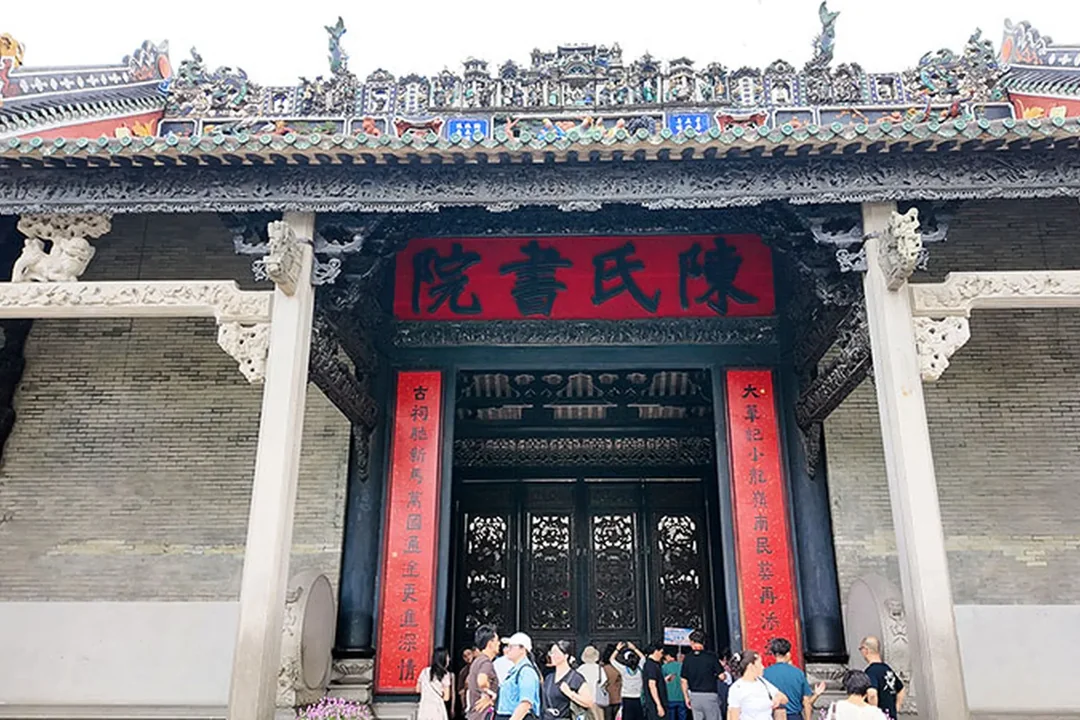
Chen Clan Academy (Chen Lineage Hall)陈氏书院
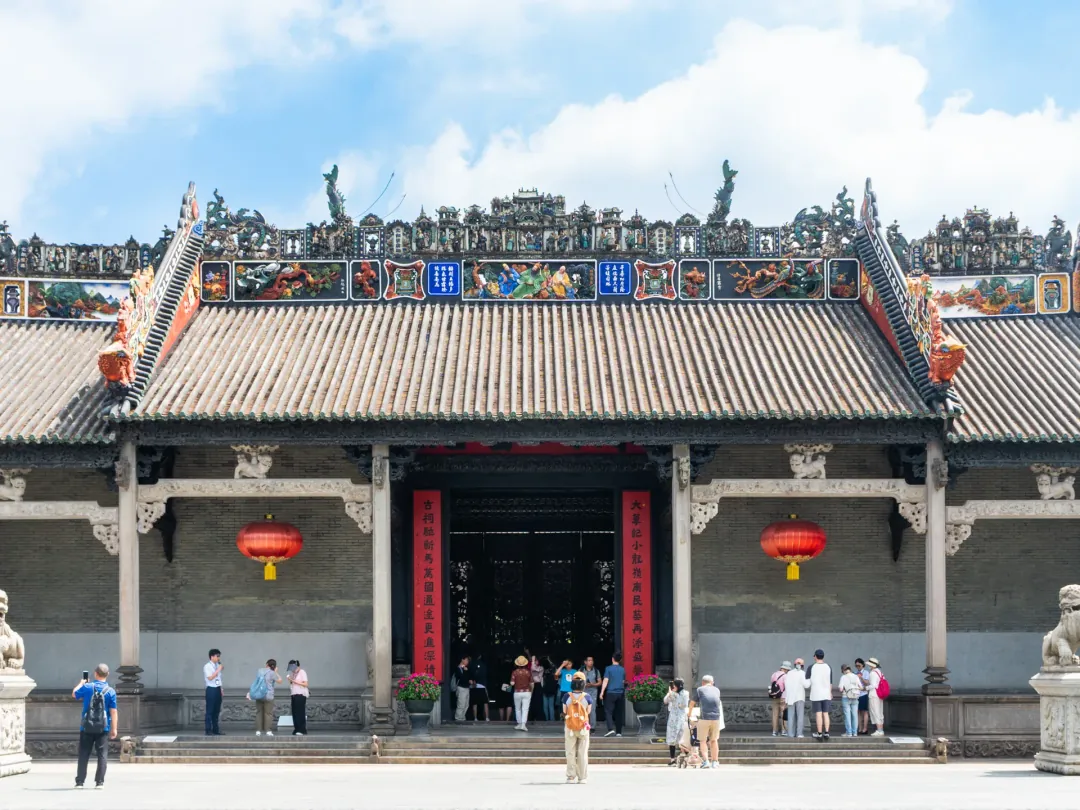
The Chen Clan Academy, known colloquially as the Chen Clan Ancestral Hall, is the finest ancestral-hall building in Guangdong, on Zhongshan 7th Road in Liwan District. Begun in 1888 (Guangxu 14) and completed five years later, it gathers the full repertoire of Guangdong's building crafts — wood, brick and stone carving, Shiwan pottery and lime sculpture — earning its title as the pearl of Lingnan architecture. Now the Guangdong Folk Art Museum, it is the single best place to meet Lingnan culture and traditional craftsmanship.
Guangzhou · Visitor Guide2026-10-18
Quick Answer
Is Chen Clan Academy (Chen Lineage Hall) worth visiting?
The formal name of the Chen Clan Ancestral Hall, Guangdong's finest lineage hall and a distillation of Lingnan architecture. Admission CNY 10; now the Guangdong Folk Art Museum.
Quick facts
| Ticket | CNY 10 |
|---|---|
| Hours | 08:30-17:30 (last tickets 17:00); closed Mondays except public holidays |
| Recommended duration | Allow 1.5-2.5 hours |
| Best time to visit | Any season; winter is quietest; in the rainy season the Lingnan buildings take on an ink-wash mood |
| How to get there | Metro Line 1 to Chen Clan Academy Station Exit D, about a 3-minute walk; buses 85 and 88 to Chen Clan Academy stop |
| English signage | |
| Wheelchair accessible | Partial |
| Built | Qing Guangxu 14 (1888) |
| Construction time | 5 years |
| Status | Major historical site protected at the national level |
| Now | Guangdong Folk Art Museum |
| Admission | CNY 10 |
What to expect
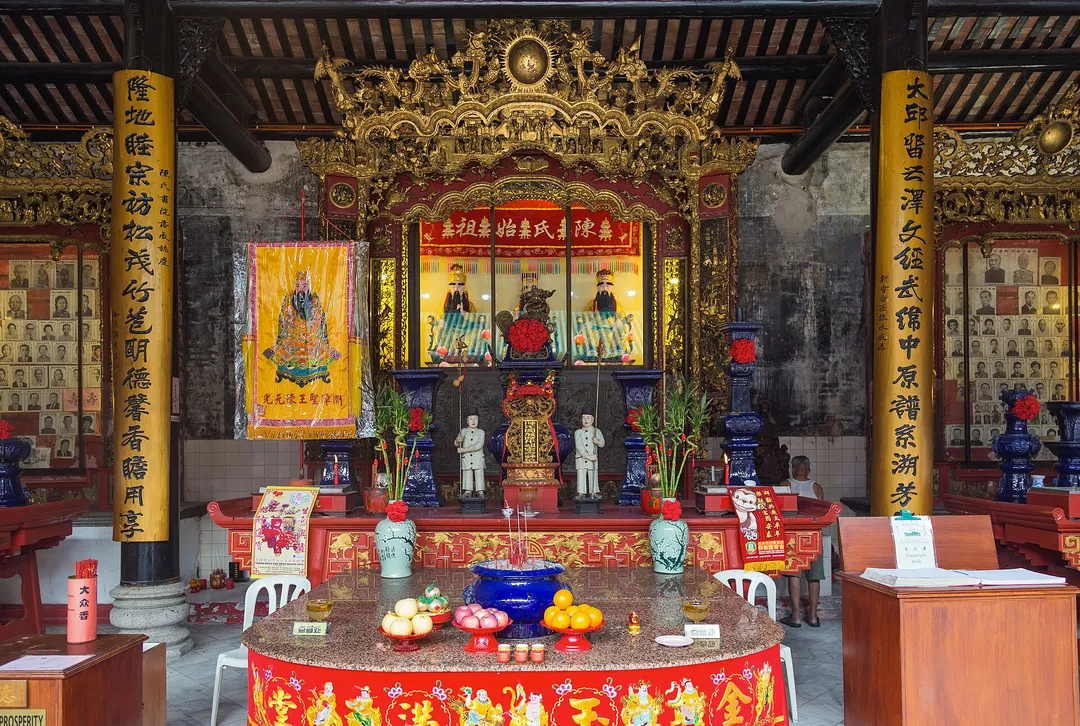
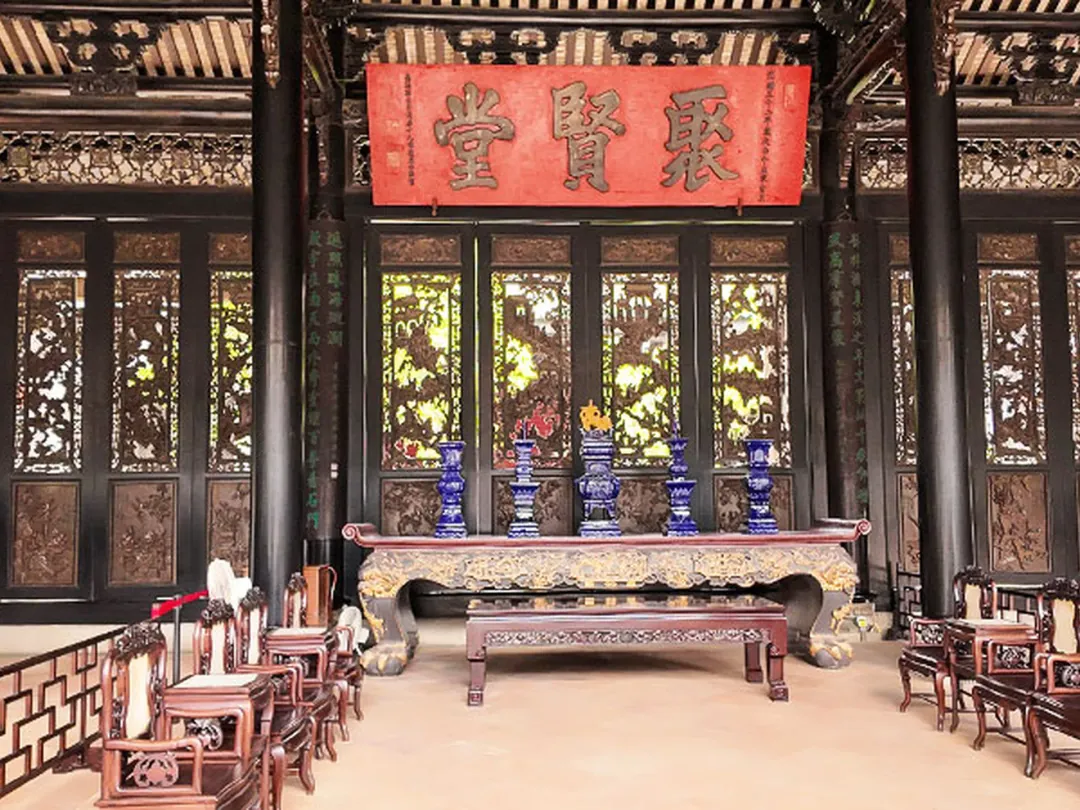
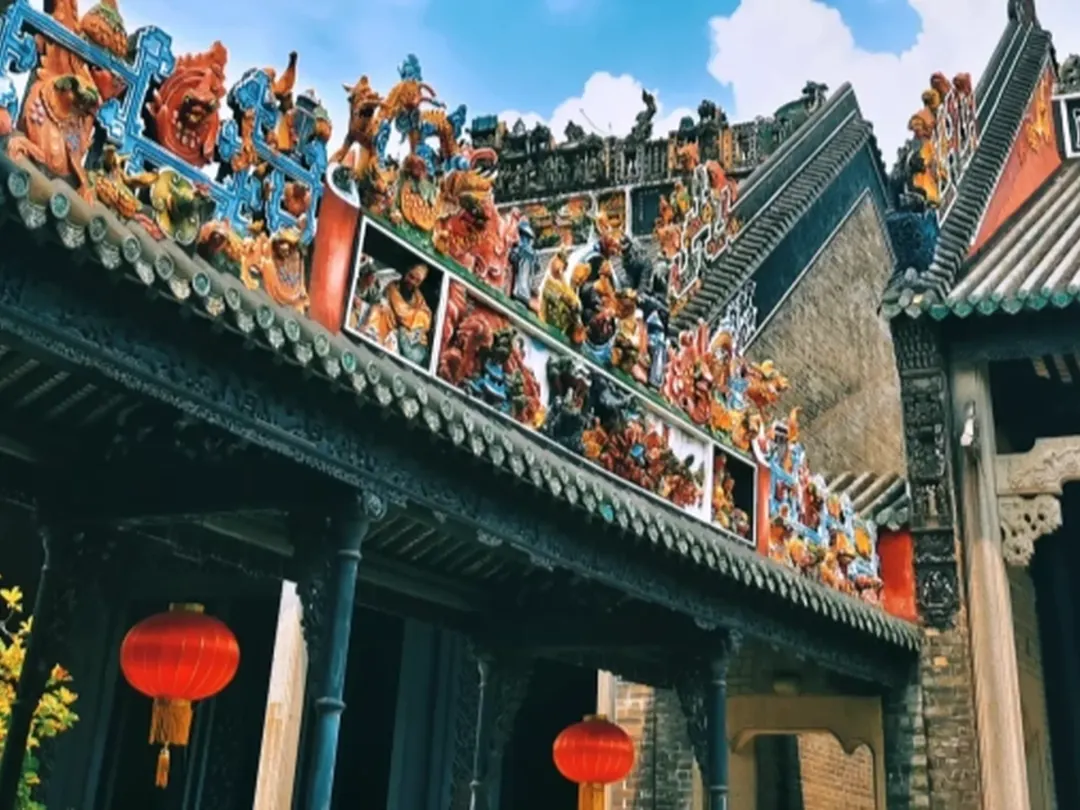
The Chen Clan Academy stands on Zhongshan 7th Road in Liwan District — a joint ancestral hall funded by Chen clansmen from 72 counties across Guangdong. Facing south on a plan of three entries, three rows, nine halls and two flanking wings, it covers 15,000 sq m with over 8,000 sq m of floor area. The brick-and-timber structure is dressed with wood, brick and stone carving, Shiwan ceramic figures, lime sculpture and cast copper and iron, every surface finely worked. The roof-ridge pottery is the most spectacular — animated figures in saturated colour; the brick carving is minute, the stone columns dignified and restrained. The carved wooden screens, cut through multiple layers of openwork, depict history and legend and stand at the summit of the Guangdong wood-carving tradition.
The academy is the classic statement of Lingnan ancestral architecture — the 'pearl of Lingnan architectural art' — and its decoration leads all the lineage halls that survive in Guangdong. It is, of course, one and the same complex as the Chen Clan Ancestral Hall, and one of Guangzhou's most rewarding historic buildings. Set up as the Guangdong Folk Art Museum in 1994, it displays Lingnan crafts — Guangzhou and Chaozhou embroidery, wood and brick carving, ceramics, paper-cutting. The exhibition of Guangzhou traditional-craft masterworks includes national intangible-heritage pieces such as Guangcai porcelain, Cantonese embroidery, Shiwan pottery and Chaozhou wood carving — rare treasures all.
Practical notes: prioritise the roof pottery (bring binoculars for the figures), the carved screen doors and the stone column plinths. Light inside is dim — mind your exposure. Allow 1.5-2 hours. Liwanhu Park and Litchi Bay next door make a half-day Liwan culture route. Closed Mondays (public holidays excepted) — plan accordingly.
How to get there
Metro Line 1 to Chen Clan Academy Station Exit D, about 3 minutes on foot; or Metro Line 8 to Hualin Temple Station Exit B, about 8 minutes. Buses 85, 88, 104 and 109 stop at Chen Clan Academy.
Best photo spots
- The main gate of the academy (a Lingnan memorial arch)
- The roof-ridge pottery tableaux (unmissable)
- The carved wooden screen doors (exquisite detail)
- The central courtyard (symmetry at its most photogenic)
- The lime-sculpted gable walls
Tips
- Closed Mondays (public holidays excepted) — plan accordingly
- Bring binoculars or a long lens; the roof figures reward close inspection
- Cool inside — a fine summer retreat
- Liwanhu Park and Litchi Bay nearby combine well in one outing
- The museum shop's cultural-creative souvenirs are fairly priced
Scams to avoid
- Fortune tellers may strike up conversation nearby — ignore them
- Unlicensed vendors at the gate push fruit on passers-by — keep walking
Frequently asked questions
Are the Chen Clan Academy and the Chen Clan Ancestral Hall the same?
Yes — Chenshi Shuyuan (Academy) is the formal name and Chenjiaci (Ancestral Hall) the popular one; both refer to the same complex.
What is the relationship to Liwanhu Park?
The two adjoin, about 300 m apart — a 5-minute walk. Liwanhu is a large old-town park with evening water-screen shows.
Do I need to book ahead?
Not on weekdays; book ahead on the official platform for holidays, when entry may be capped.
Where should I eat nearby?
Liwan is one of Guangzhou's classic food districts — near the hall are time-honoured houses like Tao Tao Ju, Lianxiang Lou and Guangzhou Restaurant.
Read next
Other things to do in Guangzhou
Baiyun Mountain (Guangzhou)
Guangzhou's 'green lung' and the top hill of Yangcheng, with admission at just CNY 5. Moxing Ridge tops out at 382 m — a great hiking escape whose summit square overlooks the whole city.
Nanhai Temple (Temple of the God of the South Sea)
One of ancient China's four great sea-god temples, founded in the Sui dynasty to bless fleets on the Maritime Silk Road. Admission CNY 10, and the Boluo Dan fair is a spectacular riot.
Canton Tower (Guangzhou Tower)
Guangzhou's 'Slim Waist' icon stands 600 m tall, with a rooftop Ferris wheel and Sky Drop; observation tickets from CNY 107. The Pearl River night panorama is unbeatable.
Chen Clan Ancestral Hall
The finest ancestral hall in Guangdong and a jewel of Lingnan architecture — wood, brick, stone and lime carving at every turn. Admission CNY 10; now the Guangdong Folk Art Museum.
Guangdong Museum
Guangdong's largest general museum in Guangzhou's Zhujiang New Town, holding about 180,000 objects in a 2010 building; free with reservation, 09:00-17:00, metro direct.
Guangzhou Opera House
A Zaha Hadid-designed, 1,800-seat hall opened in 2010 in Zhujiang New Town and ranked among the world's ten great opera houses. Lobby free; show tickets CNY 100-1280.
Shangxia Walkway
Cantonese Art Deco shopping street — 1.2 km of restored 1930s arcade buildings, milk custard, and silk shops, 15 minutes from the Beijing Lu pedestrian zone. Free. 1–2 hours.
Kaiping Diaolou (Watchtower Villages)
About 1,833 surviving fortified tower-houses scattered across rural Kaiping, built mainly between the 1890s and 1930s by returned overseas Chinese; plan a full day, ideally an overnight, to see.
Pearl River Night Cruise
A 60-to-80-minute boat ride down Guangzhou's lit-up Pearl River past Canton Tower and the Zhujiang New Town skyline.
Shamian Church (Our Lady of Lourdes Church)
The best-known church on Shamian Island, built by the French in 1890 in Gothic style. Free to enter, and open for photos outside Mass times — arguably Guangzhou's most romantic church.
Shamian Island
Guangzhou's most European quarter — a British and French concession after the Opium Wars, now an island of 150-plus European buildings. Free to wander and a favorite for wedding photos.
Shangxiajiu Pedestrian Street
Guangzhou's most famous qilou arcade shopping street, about 1,200 m along Shifu and Xiajiu roads. Free to browse, dense with century-old food names, with Hualin Temple's jade street next door.
Sun Yat-sen Memorial Hall
A 1931 octagonal, blue-roofed hall to Sun Yat-sen on the site of his 1921 presidential office — 49 m tall with a 71 m column-free auditorium span.
Pearl River Night Cruise
Guangzhou's classic evening experience: a boat ride along the Pearl River past the floodlit Canton Tower, Haixinsha and Liede Bridge. Tickets run about CNY 80-150; book ahead for holidays.
Yuexiu Park
Guangzhou's largest comprehensive park, about 860,000 sq m, home to the 11-m Five Rams statue — the city's emblem. Free entry; Zhenhai Tower (Guangzhou Museum) CNY 10 extra. Allow 2-4 hours.
Museums in Guangzhou
Guangdong Museum
Guangdong's flagship museum in Guangzhou's Zhujiang New Town, holding the world's finest collection of Lingnan culture and Chao porcelain; verified in 2026.
Chen Clan Ancestral Hall
Guangzhou's finest example of traditional Cantonese (Lingnan) architecture — a Qing Dynasty ancestral hall with intricate brick, wood, and stone carvings. ¥10.
Guangzhou Museum (Zhenhai Tower)
Inside Zhenhai Tower (1380) overlooking the Pearl River — Cantonese history from Neolithic to modern. ¥10. 1.5 hours. Less crowded than the bigger museums.
Museum of the Mausoleum of the Nanyue King
A 2,000-year-old royal tomb you can walk into — the intact burial of the second Nanyue King, Zhao Mo, with his jade burial suit sewn in silk thread.