Chengdu · specialty museum
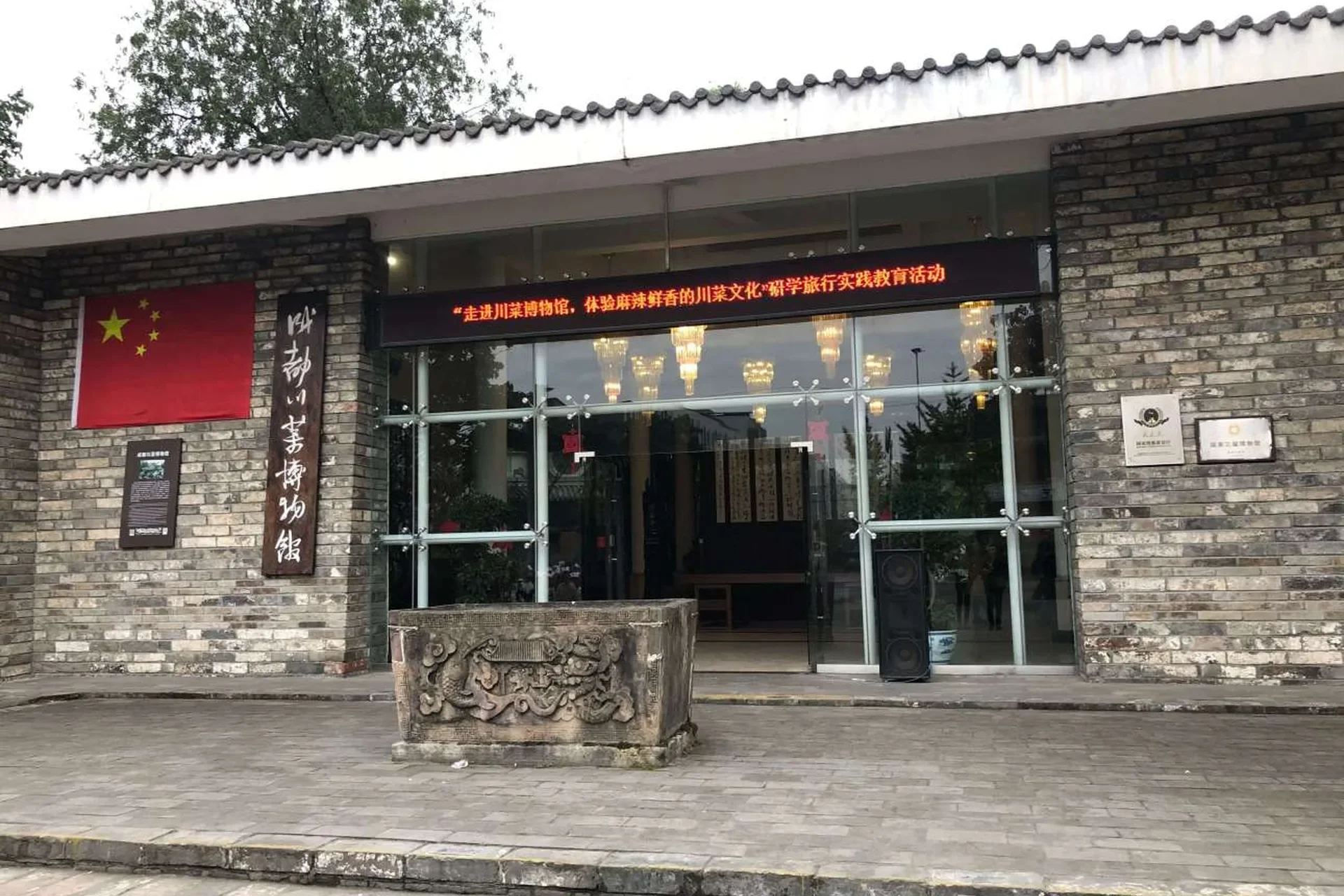
Sichuan Cuisine Museum (川菜博物馆, Chuāncài Bówùguǎn)
"The Sichuan Cuisine Museum (川菜博物馆) sits in Chengdu's Pixian district, the birthplace of doubanjiang (豆瓣酱, fermented chili bean paste). Unlike a conventional museum, this is a living culinary workshop spread across a Qing Dynasty-style garden compound. You move between pavilions to grind spices with a stone mortar, stir a vat of fermenting broad beans, watch a master chef pull noodles by hand, and taste dishes cooked on the spot — the admission ticket doubles as an all-you-can-eat pass. The collection traces Sichuan gastronomy from the Shang Dynasty (1600–1046 BC) through to modern banquet culture, with ancient bronze cooking vessels, Qing-era recipe manuscripts, and an entire hall dedicated to the 24 official flavor profiles (味型, wèixíng) unique to Sichuan cuisine.".
Last updated:
Quick Answer
Is Sichuan Cuisine Museum worth visiting?
"The world's only museum where you can eat your way through 4,000 years of Sichuan food history — and make your own Pixian chili bean paste.".
Quick facts
| Category | specialty |
|---|---|
| Ticket | ¥60 (adult), includes unlimited tasting and one DIY cooking session. |
| Hours | 9:00–18:00, Tuesday–Sunday. Closed Mondays. |
| Recommended duration | 3–4 hours (including lunch). |
| Best time to visit | Weekday mornings, 9:00–11:00 — kitchens are most active and the garden is quiet. |
| How to get there | Metro Line 2 to Xipu (犀浦), transfer to a Didi (about ¥30). Bus P22 from Xipu Station also reaches the museum gate. Budget 50 minutes from central Chengdu. |
| English signage | partial |
Why visit
Every other museum asks you not to touch. This one insists you taste. In June 2026, I spent twenty minutes hand-grinding Sichuan peppercorns while a chef corrected my wrist angle — that tactile intimacy with the ingredients is something no glass-case museum can deliver. You leave understanding not just what Sichuan food is, but why it tastes the way it does: the chemistry of ma la (麻辣), the fermentation alchemy of doubanjiang, and the cultural geography that made Chengdu a UNESCO City of Gastronomy.
Collection highlights
- Live doubanjiang fermentation yard — thousands of clay urns aging in the sun, the air thick with fermented chili aroma.
- Hands-on spice-grinding station where you pulverize Sichuan peppercorns and dried chilis with a traditional stone mortar.
- Noodle-pulling demonstrations by master la mian (拉面) chefs — and you get to eat the results.
- The 24-flavor gallery explaining Sichuan's official weixíng system with physical spice samples you can smell and touch.
- Qing Dynasty banquet hall recreating a full imperial Sichuan feast with period-accurate porcelain and lacquerware.
Tips
- Arrive hungry. The ¥60 entry includes unlimited food — do not eat breakfast beforehand.
- The doubanjiang yard is most photogenic between 10:00–11:00 when morning light hits the clay urns.
- Wear clothes you don't mind getting chili oil on. The DIY stations are genuinely hands-on.
- Buy a jar of the museum's own 3-year-aged doubanjiang from the gift shop — it is far better than supermarket versions.
Frequently asked questions
Is this a real museum or just a tourist cooking class?
It is both. The museum holds a serious collection of ancient bronze cooking vessels (some dating to the Shang Dynasty, 1600–1046 BC) and Qing-era culinary manuscripts housed in climate-controlled galleries. The hands-on cooking and tasting function as the museum's interpretation layer — curators of gastronomy consider it a model for living heritage museums worldwide.
Can vegetarians enjoy the museum?
Yes — many classic Sichuan dishes are vegetable-based, and the tasting stations include mapo tofu (麻婆豆腐), dan dan noodles (担担面) with mushroom mince, and seasonal greens. Tell staff "wǒ chī sù" (我吃素, I eat vegetarian) and they will guide you to appropriate stations.
Do I need to book in advance?
Walk-ins are accepted but weekends can sell out. Booking via WeChat mini-program "川菜博物馆" 1–2 days ahead is recommended. As of June 2026, foreign visitors can book on-site at the ticket counter with passport.
What is doubanjiang and why is it important?
Doubanjiang (豆瓣酱) is a fermented paste of broad beans, chilis, salt, and wheat flour — the backbone of Sichuan cooking. Pixian doubanjiang is a China Geographical Indication product, meaning only paste made in this specific district can carry the name. The museum's fermentation yard lets you see the entire 1–3 year aging process.
Is the museum accessible for non-Mandarin speakers?
English signage covers key exhibits (about 60%). The food stations need no translation — you point, they cook. The DIY cooking instructor uses gesture and demonstration. Bringing a translation app for the 24-flavor gallery is helpful.
How spicy is the food?
The museum deliberately calibrates to tourist-friendly heat levels. You can request milder versions. That said, the freshly-ground Sichuan pepper station lets you experience the full numbing ma sensation (麻) — which is more about tingling than heat — at your own tolerance.
Read next
Other things to do in Chengdu
Baoguo Temple
baoguo-temple in Beijing: "成都新都区著名佛教寺院,隋代建立。宝光寺罗汉堂号称500罗汉。门票30元。必去指数★★★.".
Du Fu's Thatched Cottage
"\"The memorial park of Tang dynasty poet Du Fu — reconstructed bamboo cottage, exposed stone inscriptions, and a museum of his life. ¥50. 2 hours.\".".
Chengdu Research Base of Giant Panda Breeding
chengdu-research-base in Beijing: "全球最大熊猫繁育机构,圈养熊猫最全。门票55元,观光车30元。上午去熊猫活跃。必去指数★★★★★.".
Du Fu's Thatched Cottage
dufu-thatched-cottage in Beijing: "诗圣杜甫成都故居,唐代诗人纪念地。门票50元。园林环境清幽,诗词文化浓郁。必去指数★★★★.".
Dujiangyan Irrigation System
"Li Bing built this dam-free irrigation system around 256 BCE, and it still waters ~530,000 hectares of the Chengdu Plain today. ¥80, allow 2–3 hours, 30 minutes by train from Chengdu.".
Huanhua Stream
huanu-stream in Beijing: 成都诗意公园,全长约2公里,2003年建成,唐代诗人杜甫曾在此居住。免费参观,全天开放。地铁4号线草堂北路站B口出,与杜甫草堂相邻。
Jinsha Site Museum
jinsha-site in Beijing: "古蜀文明遗址,商周时期遗存。太阳神鸟金饰出土地。门票70元。考古爱好者必去。必去指数★★★.".
Jiuzhaigou Valley
"Turquoise travertine lakes, 100+ multi-tiered waterfalls, and snow-capped Tibetan peaks in a UNESCO park at 2,000–4,500 m altitude. ¥169. 2 days recommended.".
Wide and Narrow Alleys
Three restored Qing-dynasty courtyard alleys in central Chengdu (free, open 24/7), laid out on the grid of a 1718 Manchu garrison.…
Leshan Giant Buddha
leshan-giant-buddha in Beijing: "世界最大石刻弥勒佛,通高71米。门票80元,游船50元另付。佛是一座山,山是一尊佛。必去指数★★★★★.".
Longmen Mountain
longmenshan in Beijing: "成都北郊地质公园,地震遗址纪念地。彭州白鹿镇是核心。免费或门票30元。徒步探险推荐。必去指数★★★.".
Mount Emei
mount-eme in Beijing: "中国佛教四大名山之一,普贤菩萨道场。门票160元+摆渡车90元+索道另行。金顶日出是精髓。必去指数★★★★★.".
Chengdu Research Base of Giant Panda Breeding
"See 50+ giant pandas including cubs at 8:00 AM feeding time in a 100-hectare bamboo-forested breeding center. The best panda experience in China. 3-4 hours.".
People's Park
A free, century-old city park where Chengdu's teahouse culture plays out under plane trees — pay ¥15-30 for a pot of jasmine tea and settle in for two hours of mahjong, ear-cleaning, and people-…
Qianfo Mountain
qianfo-mountain in Beijing: "成都西郊道教名山,宗教文化与自然风光兼有。门票30元。山不太高,适合全家出行。必去指数★★★.".
Mount Qingcheng
One of China's four sacred Taoist mountains, birthplace of the Taoist "Way of the Celestial Masters" (142 AD). Forested paths, pavilions, Taoist temples. ¥90. 1 hour from Chengdu.
Sanxingdui Museum
sanxingdui-museum in Chengdu: Bronze masks with protruding eyes, a 2.62-meter figure, and a 4-meter sacred tree from a 3,000-year-old civilization that left no written records.
Shuangliu District
shuangliu in Beijing: 成都双流国际机场所在地,距市中心约20公里。彭镇老茶馆(百年历史)体验老成都生活。免费参观。距双流机场约15分钟车程。建议2-3小时,上午去老茶馆最有氛围。
Sichuan Opera Show (Face Changing)
sichuan-opera in Beijing: "四川传统文化体验,川剧变脸、吐火、滚灯。演出约70分钟。蜀风雅韵或芙蓉国粹。必去指数★★★★.".
Wolong Panda Reserve
woliong-panda-reserve in Beijing: "四川最大熊猫保护区,野生熊猫栖息地。距成都约130公里,需要一整天。自然探索推荐。必去指数★★★★.".
Wolong Giant Panda Nature Reserve
"The original wild panda reserve — 200,000 hectares of bamboo forest, 150+ wild pandas. Volunteer programs available. 1.5 hours from Chengdu. ¥90. Full day.".
Wuhou Shrine (Temple of the Marquis of Wu)
"China's most famous Three Kingdoms memorial — dedicated to Zhuge Liang, the master strategist of Shu Han. Ming Dynasty architecture, 1,800-year-old cypress trees. ¥60.".
Museums in Chengdu
Chengdu Museum
"Chengdu's city-level museum at Tianfu Square — documenting the Shu (蜀) civilization, the ancient Jinsha (金沙) site, and the Panda (熊猫) conservation. Free.".. 2026 verified.
Chengdu Research Base of Giant Panda Breeding
chengdu-research-base-panda in Chengdu: The world's largest panda breeding center — 150+ giant pandas in a natural forest habitat, plus red pandas. ¥58.
Sichuan Museum of Traditional Chinese Medicine
"A small but dense university museum with 3,000+ TCM artifacts covering Sichuan herbal medicine — plan 60–90 minutes and skip the gift-shop photo backdrop.".
Sichuan Museum
"Sichuan's premier provincial museum at the edge of People's Park — strong in Three Kingdoms Shu culture, Tibetan Buddhist art, ancient Shu (三星堆) civilization,.".. 2026 verified.