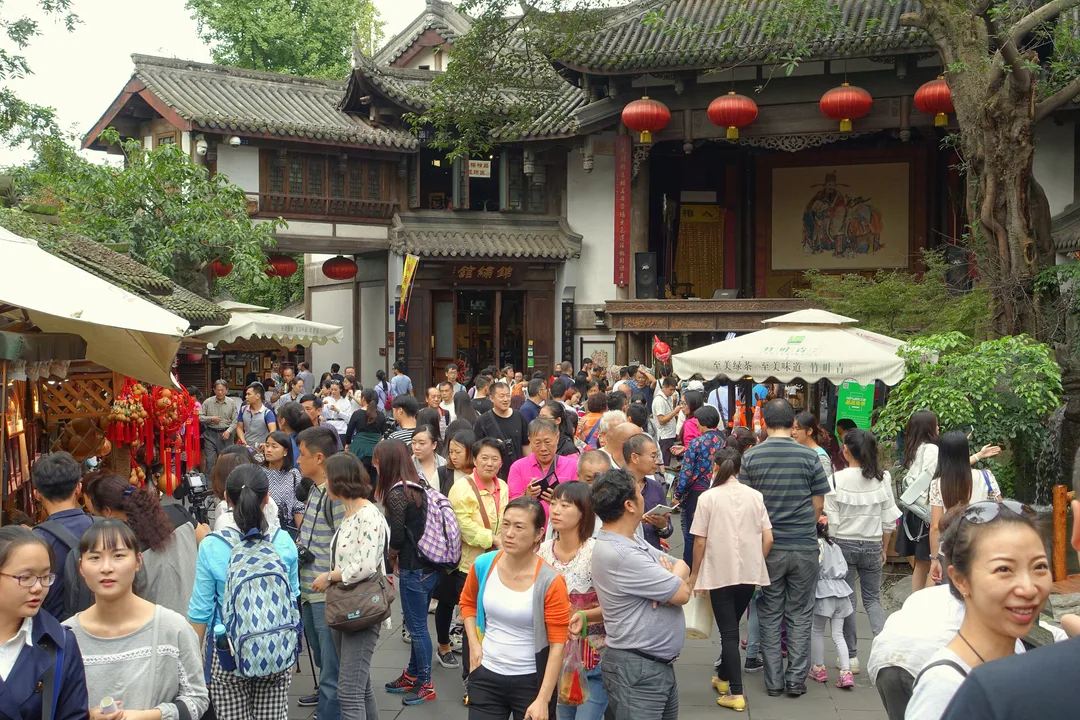
Jinli Ancient Street锦里古街
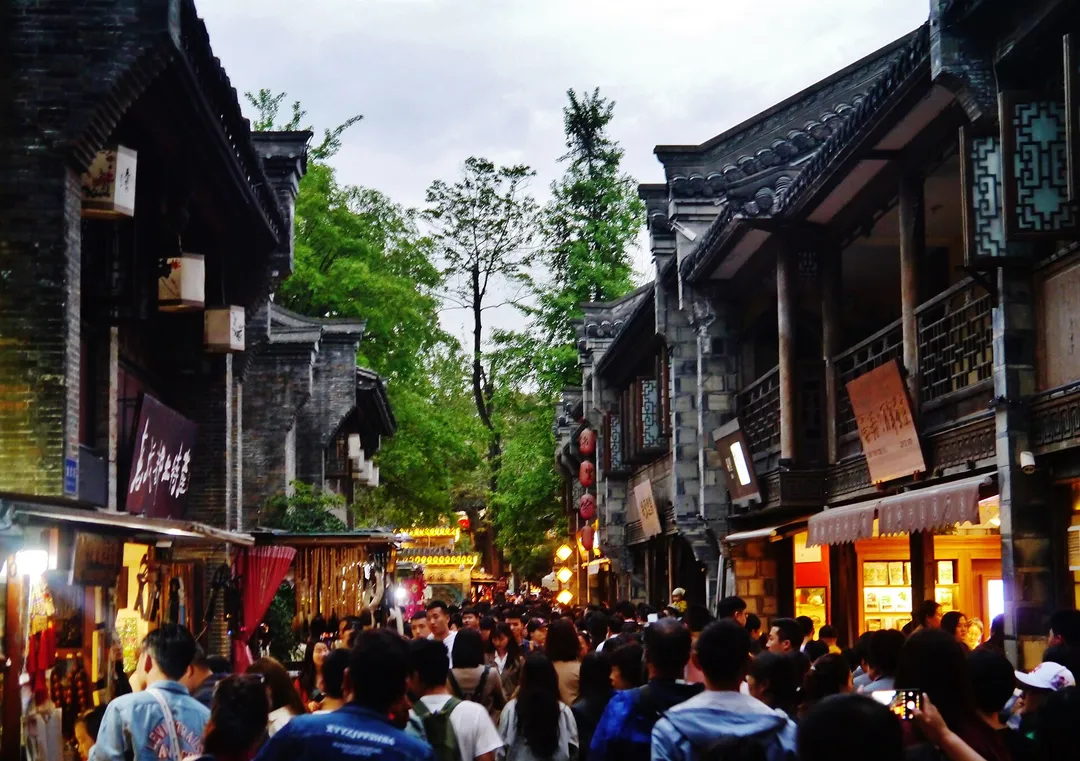
Jinli Ancient Street sits on Wuhouci Dajie and is Chengdu's most famous antique-style commercial pedestrian street, about 550 m long and themed on Three Kingdoms culture and Sichuan folk customs. Snack stalls, handicraft shops and teahouses line the lane, making it the first stop for experiencing old-Chengdu life.
Chengdu · Visitor Guide2026-10-18
Quick Answer
Is Jinli Ancient Street worth visiting?
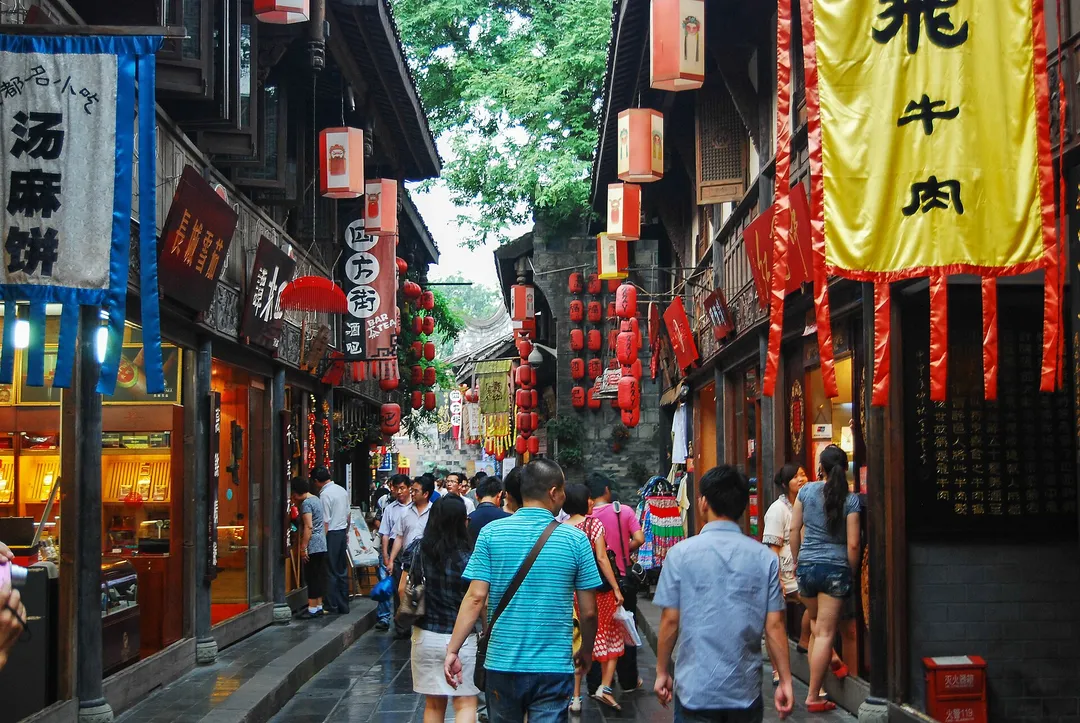
Chengdu's most famous old street, about 550 m of Three Kingdoms culture and Sichuan folk charm beside Wuhou Shrine; free entry, shops 09:00-23:00, red lanterns glow best at night.
Quick facts
| Ticket | Free entry; food and shopping at your own cost |
|---|---|
| Hours | Open all day (shops roughly 09:00-23:00) |
| Recommended duration | 1-3 hours |
| Best time to visit | Late afternoon into the evening — the atmosphere peaks when the red lanterns come on |
| How to get there | Metro Line 3 to Gaoshengqiao Station, Exit C, then about 10 minutes on foot; buses 1/57/77/334 to the Wuhouci stop |
| English signage | Partial |
| Wheelchair accessible | Partial |
| Location | 231 Wuhouci Dajie |
| Length | About 550 m |
| Style | Ming-Qing style antique street |
| Theme | Three Kingdoms culture + western Sichuan folk customs |
| Opened | 2004 |
| Next door | Wuhou Shrine (ticketed) |
What to expect
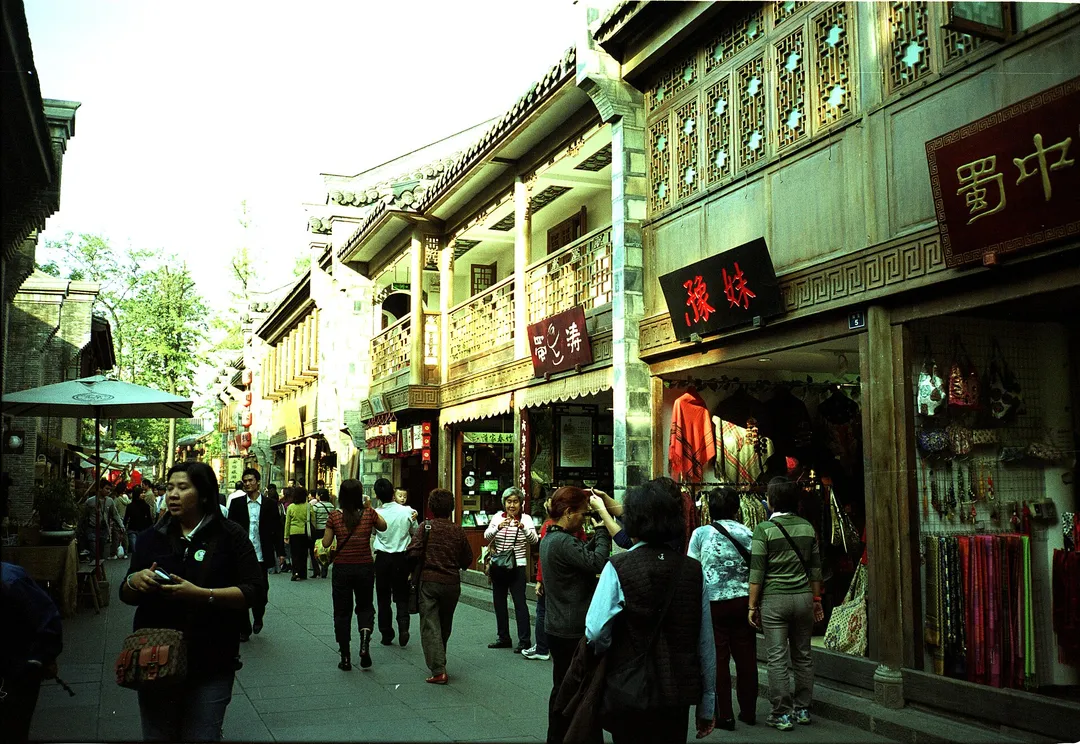
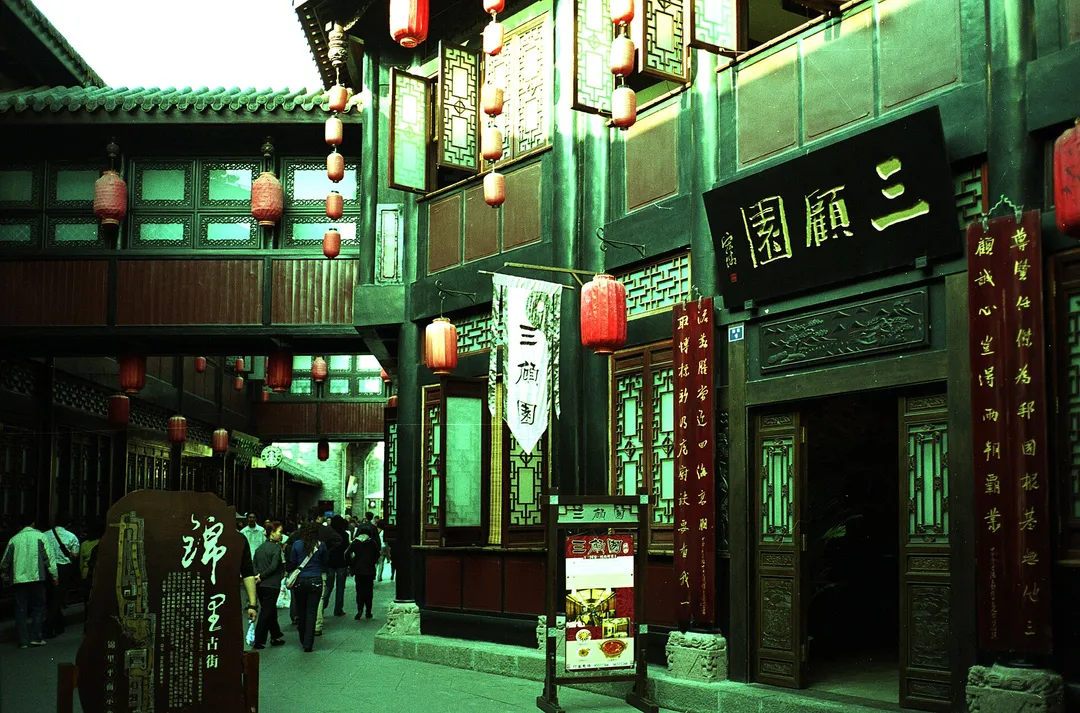
Jinli Ancient Street borders Wuhou Shrine and runs about 550 m, making it Chengdu's most representative antique-style commercial street. 'Jinli' was one of the historic names of Chengdu itself; the lane wears Ming-Qing architecture on its face while weaving together Three Kingdoms culture and western Sichuan folk elements.
Jinli is at its most charming after dark, when red lanterns and the antique facades light each other up — a prime photo spot. Come at dusk, tour Wuhou Shrine first (separate ticket), then stroll Jinli in the evening for street food and night views.
How to get there
Take Metro Line 3 to Gaoshengqiao Station, Exit C, then walk east along Wuhouci Dajie for about 10 minutes. Buses 1, 57, 77 and 334 stop at Wuhouci.
Best photo spots
- The entrance archway of Jinli (the classic angle)
- Red lanterns at night
- The old street framed against the IFS tower (modern vs classical)
- Traditional snacks being made
Tips
- Go in the evening for the lantern-lit night views
- Snack in small, varied portions — taste a little of everything
- Weekends are packed; steer clear of peak hours
- Remember to bargain when shopping
Scams to avoid
- Skip the pre-cut fruit — the deals can be traps
- Souvenir opening prices are inflated; bargain down by at least half
Frequently asked questions
Jinli or Kuanzhai Alleys — which is better?
They are different styles: Jinli centers on Three Kingdoms culture and its red lanterns are lovelier at night, while Kuanzhai Alleys showcases late-Qing and Republican-era architecture with a trendier vibe. Both are worth a visit.
Do I need a ticket?
No ticket is needed to walk Jinli Ancient Street itself, but Wuhou Shrine next door requires a separate ticket.
Is the food at Jinli authentic?
Most stalls serve tourist versions — the taste is fine but prices run a bit higher than in the rest of the city.
Read next
Other things to do in Chengdu
Baoguo Temple
A celebrated Buddhist monastery in Xindu, Chengdu, founded in the Sui dynasty, famed for its Hall of the 500 Arhats. Admission CNY 30 — a worthwhile half-day trip.
Du Fu's Thatched Cottage
The memorial park of Tang dynasty poet Du Fu — reconstructed bamboo cottage, exposed stone inscriptions, and a museum of his life. ¥50. 2 hours.
Jinsha Site Museum
A 3,000-year-old Shu civilization archaeological site — the pit of 600 ivory tusks, gold masks, and the famous 'Flying God' goldfoil, all inside a modern museum built over the excavation.
Chengdu Museum
Chengdu's largest museum, opened in 2016 with about 20,000 sqm of galleries and 200,000+ relics; free with reservation, open 09:00-20:00 and closed Mondays.
Chengdu Research Base of Giant Panda Breeding
The world's largest panda breeding facility, with the fullest captive population anywhere. Admission CNY 55, shuttle CNY 30; go in the morning when the pandas are most active.
Chunxi Road
Chengdu's busiest shopping street, laid out in 1924 and famous for the IFS climbing panda; free to enter, shops about 10:00-22:00, metro lines 2 and 3 direct.
Du Fu's Thatched Cottage
The Chengdu home of the Poet-Sage Du Fu, now a serene memorial garden steeped in Tang poetry. Admission CNY 50.
Dujiangyan Irrigation System
Li Bing built this dam-free irrigation system around 256 BCE, and it still waters ~530,000 hectares of the Chengdu Plain today. ¥80, allow 2–3 hours, 30 minutes by train from Chengdu.
Huanhua Stream
Chengdu's most poetic park, a 2 km streamside walk where the Tang poet Du Fu once lived. Opened in 2003, free and open all day; on Metro Line 4 beside Du Fu's Thatched Cottage.
Jinsha Site Museum
Remains of the ancient Shu kingdom of the Shang and Zhou eras, findspot of the Golden Sun Bird — now China's emblem of cultural heritage. Admission CNY 70; a must for archaeology lovers.
Jiuzhaigou Valley
Turquoise travertine lakes, 100+ multi-tiered waterfalls, and snow-capped Tibetan peaks in a UNESCO park at 2,000–4,500 m altitude. ¥169. 2 days recommended.
Wide and Narrow Alleys
Three restored Qing-dynasty courtyard alleys in central Chengdu (free, open 24/7), laid out on the grid of a 1718 Manchu garrison.
Leshan Giant Buddha
The world's largest stone Buddha — a 71 m seated Maitreya cut into a riverfront cliff. Entry CNY 80, river boat CNY 50 extra; the Buddha is a mountain, the mountain a Buddha.
Longmen Mountain
A national geopark on Chengdu's northern edge and a Wenchuan earthquake memorial ground, centered on Bailu town. Free in places or CNY 30; best for hiking and exploring.
Mount Emei
One of China's four sacred Buddhist mountains and the seat of Samantabhadra. Entry CNY 160 plus CNY 90 shuttle, cableways extra. The Golden Summit sunrise is the whole point — a five-star must-see.
Mount Siguniang (Four Girls Mountain)
Four Girls Mountain — a 6,250m peak and trekking paradise with 3 valleys. Yaomei Feng is China's answer to the Matterhorn. ¥150. 2-3 days from Chengdu. Alpine lakes, glaciers, Tibetan villages.
Chengdu Research Base of Giant Panda Breeding
See 50+ giant pandas including cubs at 8:00 AM feeding time in a 100-hectare bamboo-forested breeding center. The best panda experience in China. 3-4 hours.
People's Park
A free, century-old city park where Chengdu's teahouse culture plays out under plane trees — pay ¥15-30 for jasmine tea and settle in for two hours of mahjong, ear-cleaning, and people-watching.
Mount Qingcheng
One of China's four sacred Taoist mountains, birthplace of the Taoist "Way of the Celestial Masters" (142 AD). Forested paths, pavilions, Taoist temples. ¥90. 1 hour from Chengdu.
Sanxingdui Museum
sanxingdui-museum in Chengdu: Bronze masks with protruding eyes, a 2.62-meter figure, and a 4-meter sacred tree from a 3,000-year-old civilization that left no written records.
Shuangliu District
Home of Chengdu Shuangliu International Airport, 20 km from downtown. The century-old Pengzhen Old Teahouse distills old-Chengdu life — free, 15 minutes away; mornings are best.
Sichuan Opera Show (Face Changing)
A classic Sichuan culture experience: face-changing, fire-spitting and the rolling-lamp act in a show of about 70 minutes. Best caught at Shufeng Yayun or Furong Guocui.
Taiping Street
Quiet 400-metre Republican-era old street in Chengdu with brick-timber buildings; free and open all day, shops about 10:00-20:00, a 10-minute walk from Dongmenqiao metro station.
Wenshu Monastery
Chengdu's best-preserved Buddhist monastery, founded 605-618 with over 1400 years of history; free entry 08:00-17:00, a 5-minute walk from Wenshuyuan metro station, famed for its teahouse.
Wolong Panda Reserve
Sichuan's largest panda reserve and a natural habitat of wild pandas, about 130 km from Chengdu — a full-day outing. A top pick for nature lovers.
Wolong Giant Panda Nature Reserve
The original wild panda reserve — 200,000 hectares of bamboo forest, 150+ wild pandas. Volunteer programs available. 1.5 hours from Chengdu. ¥90. Full day.
Wuhou Shrine (Temple of the Marquis of Wu)
China's most famous Three Kingdoms memorial — dedicated to Zhuge Liang, the master strategist of Shu Han. Ming Dynasty architecture, 1,800-year-old cypress trees. ¥60.
Museums in Chengdu
Chengdu Museum
Chengdu's city museum at Tianfu Square, covering Shu civilization, the ancient Jinsha site and giant panda conservation. Free; verified in 2026.
Chengdu Research Base of Giant Panda Breeding
Chengdu Research Base of Giant Panda Breeding: the world's largest panda breeding center — 150+ giant pandas in a natural forest habitat, plus red pandas. ¥58.
Sichuan Museum of Traditional Chinese Medicine
A small but dense university museum with 3,000+ TCM artifacts covering Sichuan herbal medicine — plan 60–90 minutes and skip the gift-shop photo backdrop.
Jinsha Site Museum
The 3,000-year-old "Sun and Immortal Bird" gold disc — one of China's most famous artifacts — and the sister civilization to Sanxingdui. ¥80. An active archaeological site with a beautiful.
Sichuan Cuisine Museum
The world's only museum where you can eat your way through 4,000 years of Sichuan food history — and make your own Pixian chili bean paste.
Sichuan Museum
Sichuan's premier provincial museum beside People's Park in Chengdu — strong in Three Kingdoms Shu culture, Tibetan Buddhist art and ancient Shu civilization; verified in 2026.