Mount Siguniang (Four Girls Mountain)四姑娘山
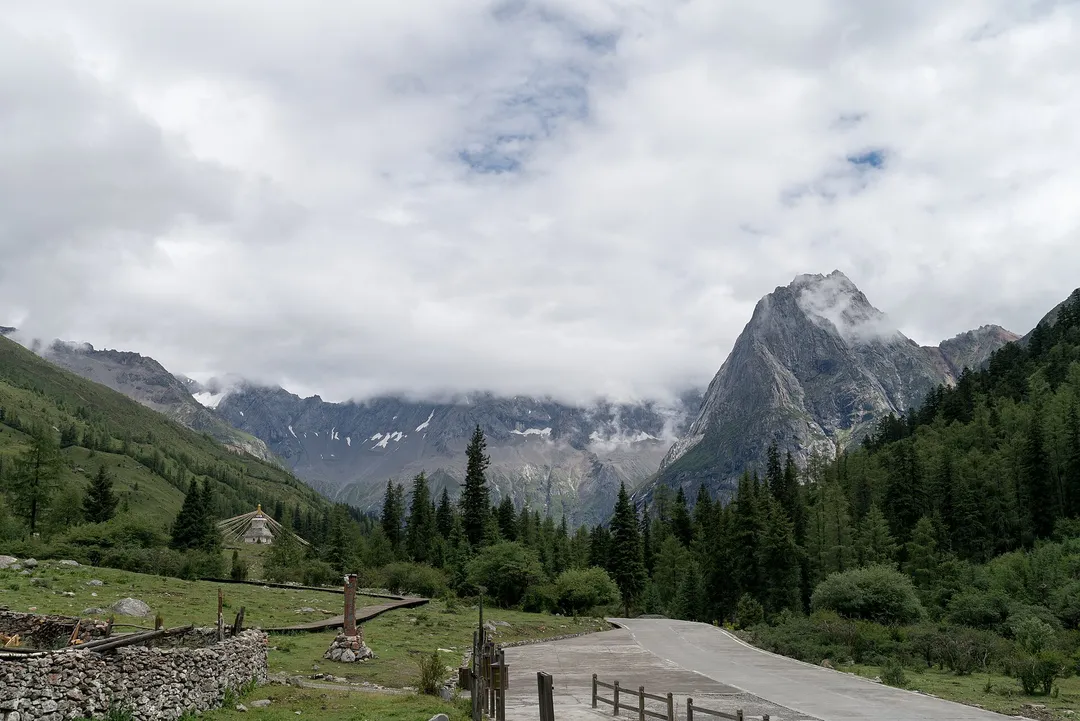
Mount Siguniang: a 6,250 m four-peak massif in the Qionglai Mountains, 220 km from Chengdu, over Shuangqiao (bus), Changping (trek) and Haizi (lakes) valleys.
Chengdu · Visitor Guide2026-10-18
Quick Answer
Is Mount Siguniang (Four Girls Mountain) worth visiting?
Four Girls Mountain — a 6,250m peak and trekking paradise with 3 valleys. Yaomei Feng is China's answer to the Matterhorn. ¥150. 2-3 days from Chengdu. Alpine lakes, glaciers, Tibetan villages.
Quick facts
| Ticket | ¥150 (Shuangqiao Valley, includes sightseeing bus). ¥90 (Changping Valley). ¥60 (Haizi Valley). Dafeng summit permit: ¥150. |
|---|---|
| Hours | 8:00-17:30 (valley entry). Sightseeing bus in Shuangqiao runs until 18:00. |
| Recommended duration | 2-3 days minimum. Day 1: Shuangqiao Valley (half-day). Day 2: Changping Valley trek. Day 3: Haizi Valley or return. Dafeng summit: 2-3 additional days. |
| Best time to visit | June-October. July-August for alpine flowers and greenest valleys. October for autumn colors (golden larch forests). May-June for snow-capped peaks and fewer crowds. |
| How to get there | Bus from Chengdu Chadianzi Bus Station to Rilong (Siguniangshan town): 4-5h, ¥95. Private car: 3.5h, ¥600-800. The road passes through the 2008 earthquake zone and the Balang Mountain tunnel (8 km, opened 2016, reduced travel time from 7h to 4h). |
| English signage | No |
| Wheelchair accessible | No |
| Highest peak | Yaomei Feng 6,250 m |
| Easiest summit | Da Feng 5,025 m |
| Valleys | 3 (Shuangqiao, Changping, Haizi) |
| From Chengdu | 220 km (4-5h) |
| Best for | Trekking, mountaineering, photography |
What to expect
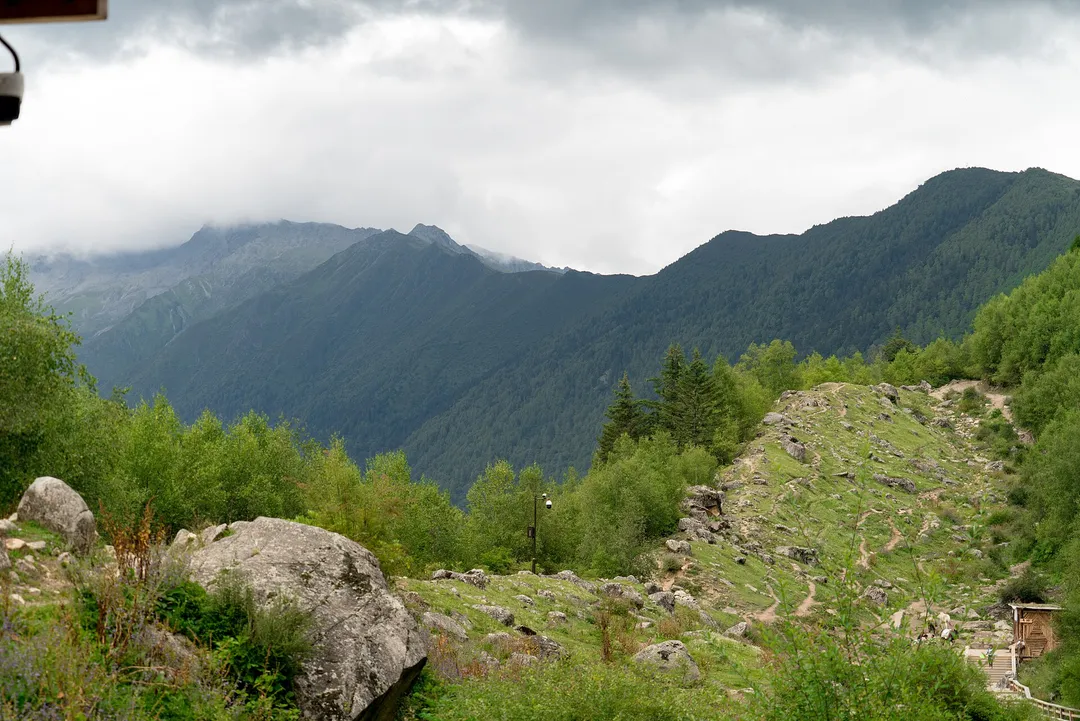
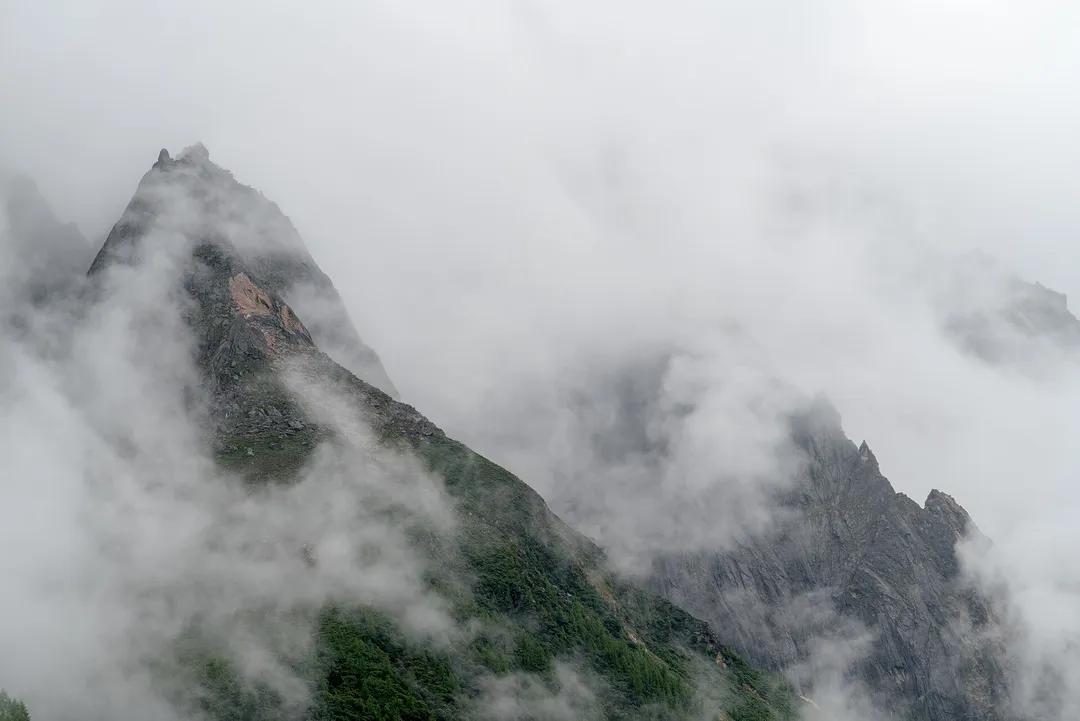
Mount Siguniang is Sichuan's trekking capital — a high-altitude paradise of alpine lakes, glaciers, Tibetan villages, and four pyramidal peaks that dominate the skyline. The mountain sits at the transition zone between the Sichuan Basin and the Tibetan Plateau, creating dramatic vertical relief: Rilong town is at 3,200m, and Yaomei Feng rises 3,000m above it. The three valleys each offer a different experience: Shuangqiao is a scenic bus tour with boardwalks and photo stops (easiest), Changping is a trekking valley with Muluozi Meadow (a high plateau at 3,800m with 360° mountain views), and Haizi Valley leads to alpine lakes and the Dafeng/Erfeng base camps.
Da Feng (5,025m) is the most climbed 5,000m+ peak in China — a non-technical snow walk (crampons + ice axe) that takes 2 days from Rilong. It is a legitimate mountaineering objective but accessible to fit beginners with a guide. Er Feng (5,276m) is slightly more technical. San Feng and Yaomei Feng are technical climbs requiring rock and ice skills.
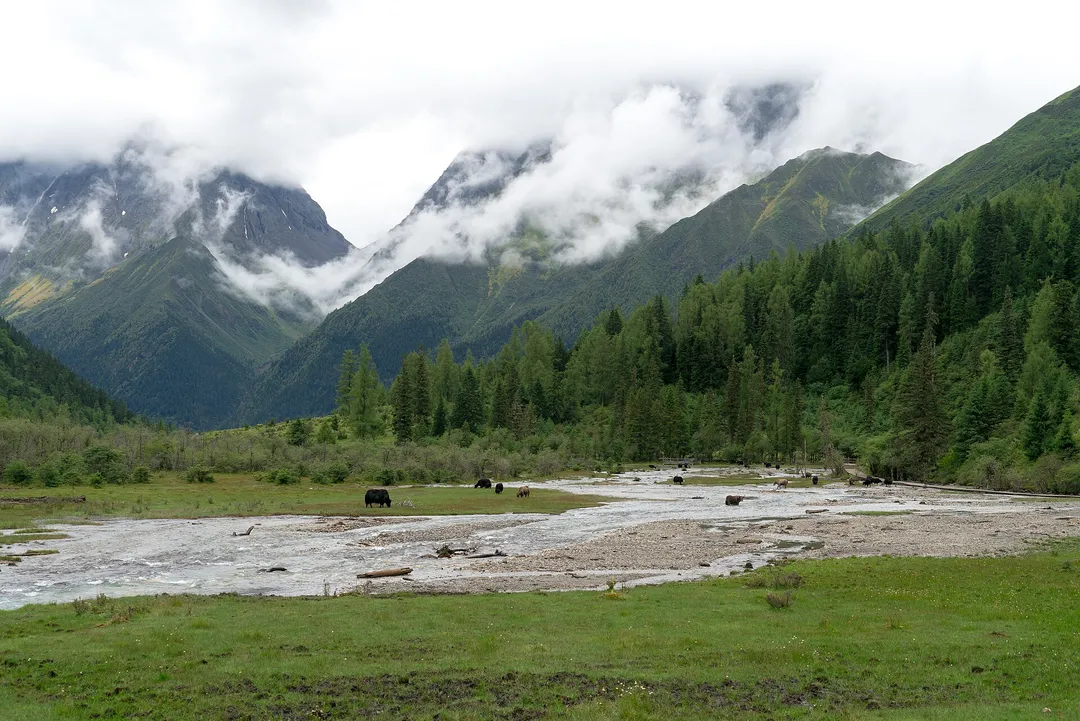
I trekked Changping Valley in late October. The larch forests were a blaze of gold, and the morning frost glittered on the boardwalks. After 4 hours, I reached Muluozi Meadow — a vast grassland at 3,800m with Yaomei Feng's north face rising 2,500m directly above. A Tibetan herder was grazing yaks by a stream. The mountain was so close it felt like I could touch it. A red fox crossed the meadow at dusk. I understood why this place is called the "Alps of the East."
How to get there
Bus from Chengdu Chadianzi Bus Station to Rilong (Siguniangshan town): 4-5h, ¥95. Departs morning (check schedule — usually 7:00-9:00 AM). Private car: 3.5h, ¥600-800. The route passes through the Balang Mountain tunnel (8 km at 3,800m). Altitude gain is significant — Chengdu is 500m, Rilong is 3,200m. Acclimatize upon arrival.
Best photo spots
- Muluozi Meadow (Changping Valley) — Yaomei Feng north face reflecting in the stream
- Shuangqiao Valley's final bus stop — the four peaks in profile (best in morning)
- Haizi Valley alpine lakes — the peaks reflected in turquoise water
- Balang Mountain pass (before the tunnel) — panorama of all four peaks from 4,500m
Tips
- Altitude: Rilong is 3,200m. Spend the first day acclimatizing (walk Shuangqiao Valley — easy, low exertion)
- Shuangqiao Valley is the easiest (sightseeing bus, boardwalks). Changping is the most beautiful (trekking). Haizi is for mountaineers and lake-baggers
- Dafeng summit: hire a guide through a Rilong agency (¥800-1,200 for a 2-day guided trip including gear rental as of June 2026)
- Weather changes rapidly — bring layers, waterproof gear, and sun protection. The UV at 3,000-5,000m is intense
- The bus from Chengdu takes 4-5h — bring snacks and water. The road is winding
- Accommodation in Rilong: guesthouses ¥100-300/night. Book ahead during October (peak autumn color season)
Scams to avoid
- "Summit guide" freelancers at the Rilong bus station without proper certification or insurance — use a registered agency in Rilong. A legitimate Dafeng guide has a Sichuan Mountaineering Association license. Check credentials before paying.
Frequently asked questions
Can I climb Mount Siguniang?
Da Feng (5,025m): yes — non-technical, 2-day guided ascent, suitable for fit beginners. Er Feng (5,276m): yes — slightly more technical, some rock scrambling. San Feng (5,355m): technical rock climbing, experienced mountaineers only. Yaomei Feng (6,250m): extreme technical climb, only a handful of ascents in history. All climbs require a guide and permit.
Which valley should I visit?
Shuangqiao Valley: easiest, sightseeing bus, boardwalks, good for acclimatization and photography. Changping Valley: best for trekking, Muluozi Meadow is the highlight, full-day hike (7-8h round trip or camp overnight). Haizi Valley: for alpine lakes and mountaineering access, strenuous, multi-day. Most visitors do Shuangqiao (half-day) + Changping (full day).
How do I get to Mount Siguniang from Chengdu?
Bus from Chengdu Chadianzi Bus Station to Rilong: 4-5h, ¥95. Private car: 3.5h, ¥600-800. The road is paved and passes through the Balang Mountain tunnel (8 km). No train. The bus is reliable and affordable.
What's the altitude — will I get sick?
Rilong town: 3,200m. Changping Valley trek: 3,200-3,800m. Dafeng summit: 5,025m. Altitude sickness is a real risk. Spend the first day acclimatizing in Shuangqiao Valley (low exertion). Symptoms (headache, nausea) usually resolve within 24h. Descend if symptoms worsen. Acetazolamide (Diamox) can help — consult a doctor before your trip.
When is the best time to visit?
July-August: greenest valleys, alpine flowers, warmest weather. October: autumn colors (golden larch forests), clearest skies, best photography. May-June: snow on peaks, fewer crowds, but some trails may be muddy. Avoid November-March (snow closes higher trails, many guesthouses close).
Do I need a guide for the valleys?
Shuangqiao Valley: no — sightseeing bus with audio guide (Chinese only). Changping Valley: no guide needed for the day hike to Muluozi Meadow (the trail is clear). Haizi Valley: recommended for multi-day treks. Dafeng summit: guide required (legally and practically). Guides available in Rilong: ¥400-600/day for trekking, ¥800-1,200 for a 2-day Dafeng summit trip.
Read next
Other things to do in Chengdu
Baoguo Temple
A celebrated Buddhist monastery in Xindu, Chengdu, founded in the Sui dynasty, famed for its Hall of the 500 Arhats. Admission CNY 30 — a worthwhile half-day trip.
Du Fu's Thatched Cottage
The memorial park of Tang dynasty poet Du Fu — reconstructed bamboo cottage, exposed stone inscriptions, and a museum of his life. ¥50. 2 hours.
Jinsha Site Museum
A 3,000-year-old Shu civilization archaeological site — the pit of 600 ivory tusks, gold masks, and the famous 'Flying God' goldfoil, all inside a modern museum built over the excavation.
Chengdu Museum
Chengdu's largest museum, opened in 2016 with about 20,000 sqm of galleries and 200,000+ relics; free with reservation, open 09:00-20:00 and closed Mondays.
Chengdu Research Base of Giant Panda Breeding
The world's largest panda breeding facility, with the fullest captive population anywhere. Admission CNY 55, shuttle CNY 30; go in the morning when the pandas are most active.
Chunxi Road
Chengdu's busiest shopping street, laid out in 1924 and famous for the IFS climbing panda; free to enter, shops about 10:00-22:00, metro lines 2 and 3 direct.
Du Fu's Thatched Cottage
The Chengdu home of the Poet-Sage Du Fu, now a serene memorial garden steeped in Tang poetry. Admission CNY 50.
Dujiangyan Irrigation System
Li Bing built this dam-free irrigation system around 256 BCE, and it still waters ~530,000 hectares of the Chengdu Plain today. ¥80, allow 2–3 hours, 30 minutes by train from Chengdu.
Huanhua Stream
Chengdu's most poetic park, a 2 km streamside walk where the Tang poet Du Fu once lived. Opened in 2003, free and open all day; on Metro Line 4 beside Du Fu's Thatched Cottage.
Jinli Ancient Street
Chengdu's most famous old street, about 550 m of Three Kingdoms culture and Sichuan folk charm beside Wuhou Shrine; free entry, shops 09:00-23:00, red lanterns glow best at night.
Jinsha Site Museum
Remains of the ancient Shu kingdom of the Shang and Zhou eras, findspot of the Golden Sun Bird — now China's emblem of cultural heritage. Admission CNY 70; a must for archaeology lovers.
Jiuzhaigou Valley
Turquoise travertine lakes, 100+ multi-tiered waterfalls, and snow-capped Tibetan peaks in a UNESCO park at 2,000–4,500 m altitude. ¥169. 2 days recommended.
Wide and Narrow Alleys
Three restored Qing-dynasty courtyard alleys in central Chengdu (free, open 24/7), laid out on the grid of a 1718 Manchu garrison.
Leshan Giant Buddha
The world's largest stone Buddha — a 71 m seated Maitreya cut into a riverfront cliff. Entry CNY 80, river boat CNY 50 extra; the Buddha is a mountain, the mountain a Buddha.
Longmen Mountain
A national geopark on Chengdu's northern edge and a Wenchuan earthquake memorial ground, centered on Bailu town. Free in places or CNY 30; best for hiking and exploring.
Mount Emei
One of China's four sacred Buddhist mountains and the seat of Samantabhadra. Entry CNY 160 plus CNY 90 shuttle, cableways extra. The Golden Summit sunrise is the whole point — a five-star must-see.
Chengdu Research Base of Giant Panda Breeding
See 50+ giant pandas including cubs at 8:00 AM feeding time in a 100-hectare bamboo-forested breeding center. The best panda experience in China. 3-4 hours.
People's Park
A free, century-old city park where Chengdu's teahouse culture plays out under plane trees — pay ¥15-30 for jasmine tea and settle in for two hours of mahjong, ear-cleaning, and people-watching.
Mount Qingcheng
One of China's four sacred Taoist mountains, birthplace of the Taoist "Way of the Celestial Masters" (142 AD). Forested paths, pavilions, Taoist temples. ¥90. 1 hour from Chengdu.
Sanxingdui Museum
sanxingdui-museum in Chengdu: Bronze masks with protruding eyes, a 2.62-meter figure, and a 4-meter sacred tree from a 3,000-year-old civilization that left no written records.
Shuangliu District
Home of Chengdu Shuangliu International Airport, 20 km from downtown. The century-old Pengzhen Old Teahouse distills old-Chengdu life — free, 15 minutes away; mornings are best.
Sichuan Opera Show (Face Changing)
A classic Sichuan culture experience: face-changing, fire-spitting and the rolling-lamp act in a show of about 70 minutes. Best caught at Shufeng Yayun or Furong Guocui.
Taiping Street
Quiet 400-metre Republican-era old street in Chengdu with brick-timber buildings; free and open all day, shops about 10:00-20:00, a 10-minute walk from Dongmenqiao metro station.
Wenshu Monastery
Chengdu's best-preserved Buddhist monastery, founded 605-618 with over 1400 years of history; free entry 08:00-17:00, a 5-minute walk from Wenshuyuan metro station, famed for its teahouse.
Wolong Panda Reserve
Sichuan's largest panda reserve and a natural habitat of wild pandas, about 130 km from Chengdu — a full-day outing. A top pick for nature lovers.
Wolong Giant Panda Nature Reserve
The original wild panda reserve — 200,000 hectares of bamboo forest, 150+ wild pandas. Volunteer programs available. 1.5 hours from Chengdu. ¥90. Full day.
Wuhou Shrine (Temple of the Marquis of Wu)
China's most famous Three Kingdoms memorial — dedicated to Zhuge Liang, the master strategist of Shu Han. Ming Dynasty architecture, 1,800-year-old cypress trees. ¥60.
Museums in Chengdu
Chengdu Museum
Chengdu's city museum at Tianfu Square, covering Shu civilization, the ancient Jinsha site and giant panda conservation. Free; verified in 2026.
Chengdu Research Base of Giant Panda Breeding
Chengdu Research Base of Giant Panda Breeding: the world's largest panda breeding center — 150+ giant pandas in a natural forest habitat, plus red pandas. ¥58.
Sichuan Museum of Traditional Chinese Medicine
A small but dense university museum with 3,000+ TCM artifacts covering Sichuan herbal medicine — plan 60–90 minutes and skip the gift-shop photo backdrop.
Jinsha Site Museum
The 3,000-year-old "Sun and Immortal Bird" gold disc — one of China's most famous artifacts — and the sister civilization to Sanxingdui. ¥80. An active archaeological site with a beautiful.
Sichuan Cuisine Museum
The world's only museum where you can eat your way through 4,000 years of Sichuan food history — and make your own Pixian chili bean paste.
Sichuan Museum
Sichuan's premier provincial museum beside People's Park in Chengdu — strong in Three Kingdoms Shu culture, Tibetan Buddhist art and ancient Shu civilization; verified in 2026.